

By Abdullahi Jamaa
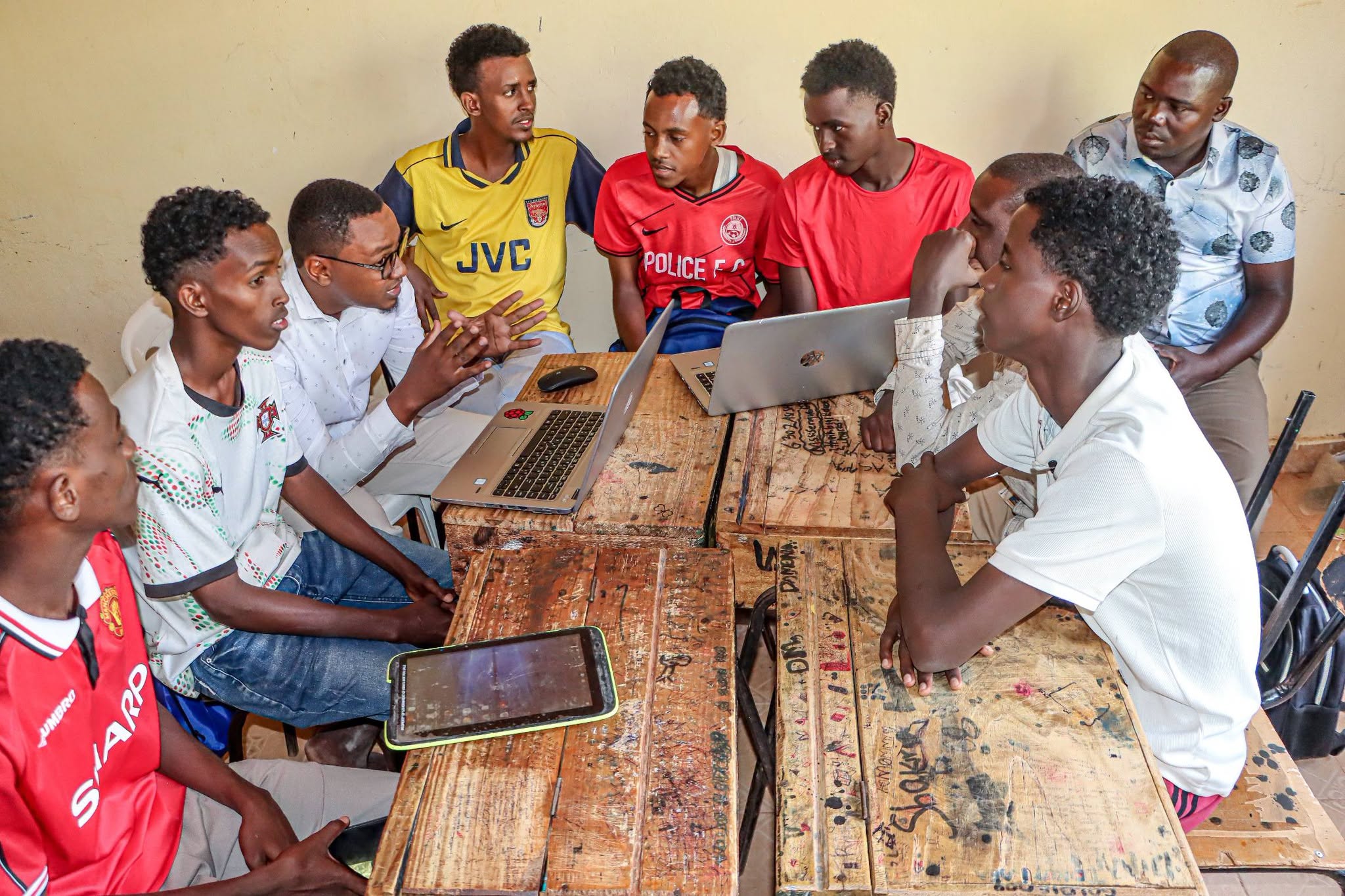
A week-long digital literacy bootcamp has concluded at Wajir Girls Secondary School after training 800 learners and young people on digital skills, artificial intelligence, online safety and technology-based entrepreneurship.
The programme, implemented by the Frontier Counties Development Council (FCDC) in partnership with the Ministry of Education, Teachers Service Commission (TSC), UNICEF, Raspberry Pi Foundation, Action Foundation and Kenya Connect, targeted 600 junior school learners and 200 out-of-school youth.
The initiative aimed to improve digital inclusion in Wajir County by equipping young people with skills considered important for education, employment and entrepreneurship in an increasingly technology-driven economy.
According to FCDC Governance and Education Lead Abdullahi Maalim, the first three days of the programme focused on learners from 20 primary and junior schools within Wajir East, while the final day concentrated on out-of-school youth.
“For the youth today, we were able to at least dive to issues related to AI, so as to aid their employability potentials. They were also being taught on issues related to digital marketing,” Maalim said in remarks shared during the closing session.
He said the sessions for learners covered foundational computer skills, spreadsheets, visual programming and Scratch coding, while youth participants were introduced to artificial intelligence and digital marketing.
The programme was conducted under UNICEF’s Last Mile Connectivity of Schools initiative, which uses selected schools as ICT model centres.
FCDC said ICT champions from those schools supported the training alongside national trainers from Kenya Connect and the Raspberry Pi Foundation.
Maalim said the programme had shown growing interest among young people but also highlighted challenges affecting digital learning in rural areas, including limited access to devices, inadequate ICT infrastructure and competing educational priorities.
“We are talking about ICT not being an add-on, but should be mainstreamed in each of the subject areas that the learners are learning,” he said.
He said technology could support teaching across different subjects by enabling learners to access digital resources, animations and educational videos to improve understanding.
The FCDC official described the programme as successful and said participating schools would continue receiving support to strengthen digital learning.
AbdIlle Mohamed, a teacher and ICT champion from Elbe Primary School in Wajir East, said the training provided learners with practical skills in computer use, online safety and basic programming.
“For the first three days we were training them on basics of computers and safety online, and we were also teaching them basic coding programming like Scratch, and it was very successful,” Mohamed said.
He added that the final session introduced youth to artificial intelligence and digital marketing, urging partners to organise similar programmes regularly to expand digital skills among young people.
Participants also welcomed the opportunity to learn about emerging technologies. Hassan Ali Abdi, an out-of-school youth participant from Barwaqo location in Wajir town, said the training exposed them to important digital developments.
“Today we gathered at Wajir Girls Secondary School for only one purpose, we have been brought here by the FCDC for the only one objective, to learn about a digital issue,” Abdi said.
Kenya Connect Senior Director of Programmes Patrick Munguti said the organisation was working with FCDC to ensure young people in marginalised communities gain technology skills similar to those available in urban areas.
“Digital skills are quite important, because they are the ones that you can be able to work anywhere in this world,” Munguti said.
He said Kenya Connect, together with FCDC and the Raspberry Pi Foundation, was supporting efforts to expand digital skills training across the country.
The bootcamp forms part of broader efforts by development partners and government institutions to address the digital divide in Kenya’s marginalised regions.
Organisers said continued investment in ICT infrastructure, teacher capacity and access to devices would be critical in ensuring young people in counties such as Wajir benefit from opportunities created by the digital economy.


