

Compiled by Abdullahi Jamaa | Source: Ann Mawadhe for defrontera.org
For years, it was called the other malaria, something distant, a disease that affects other people in other places. Then it came home to a county that was fighting battles that most of the country never sees. Wajir is remote, expansive, and semi-arid.
It’s a place where the daily fight is often about food and water for both people and their animals long before it is about disease. Here in Wajir, plasmodium vivax is forcing the health system already stretched thin to stretch further.
“There is a shift, there’s an increase of plasmodium vivax.” Says Siyad Mohamed, Wajir County Malaria Control Coordinator
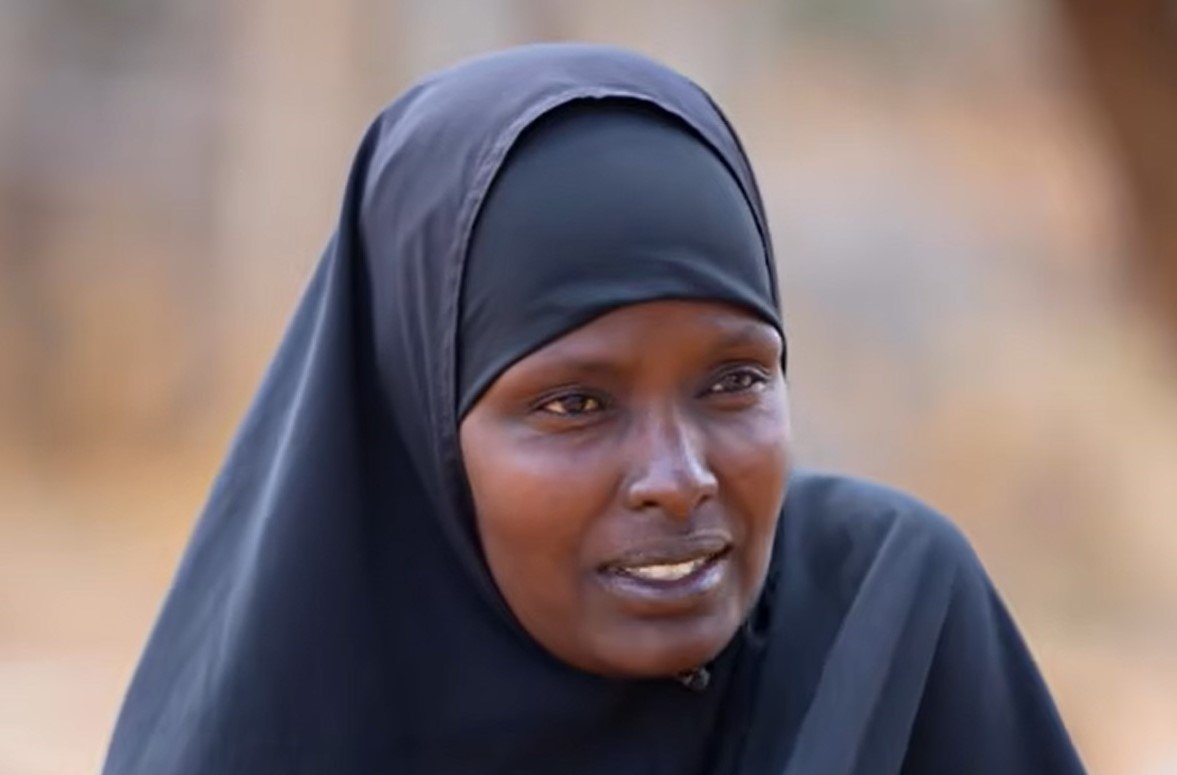
Mumina Golo all the way from Adadijole village is back at the local dispensary for her regular checkup here in Bute Sub-County, the epicenter of plasmodium vivax malaria. She has been battling malaria and she has had it three times now.
She has been in the dispensary in April, May, and then June. Each time she got treatment.
First, treated with a first-line malaria medication, followed by a four-day course of hydroxychloroquine. Mumina never received primaquine.
The parasite that causes this type of malaria can hide in the liver for weeks or even months after a person seems to have recovered. It is these dormant forms known as hypnozoites that can wake up later and cause malaria again.
Kenya’s malaria guidelines recommend that a patient is given ACTs, or Artemisinin-Based Combination Therapy, that is to clear the blood stage infection. And this is then followed by primaquine, which are the drugs that are used to clear the dormant liver stage parasites. But before administering primaquine, a G6PD testing is required. This is because primaquine can cause stress to the red blood cells as part of how they work.
“Remember last year, 2025, we had an upsurge of malaria. So, there was a lot of panic, and the county has to go out of its way to buy this drug, primaquine. We sourced it from within Kenya, and we supplied it to our facilities, and actually it has assisted us.” Noted Mohamed
That supply is gone now. It’s been six months since Wajir County ran out of primaquine, the drug that is most effective in treating P.vivax.
And there is no quick fix. Kenya Medical Supply Authority (KEMSA), the national body which procures and distributes medicines in the country, does not stock primaquine.
“Currently, primaquine is out of stock, but we have ordered for it. You know, this drug is not in the market because we don’t have a lot of people who are using it, because of the uniqueness of this disease. But we hope we might be getting it in the next two months or one month.”
Sometimes it’s the logistics that come in the way of access to care here. At her home in Adadijole village, the children have been waiting for her.
When Mumina was asked where she thinks she might have gotten P.vivax malaria from, she said, “Ogorji Hills”
She had gone up the hills in search of greener pastures for her goats, a journey she makes often dictated by the seasons and the search for grazing lands. Somewhere along that journey, she believes, the P.vivax parasite found her.
While she’s up the hills, she and the younger children shelter in a makeshift house that doesn’t really shield them from the ferocious bite of an infected mosquito. And they have no mosquito nets.
“When I had malaria, I was bedridden; I could not do any work, even cooking for the children or fetching firewood or water,” she says
Malaria response
 Kenya’s malaria response has been built around a single enemy, Plasmodium falciparum, which is the most common type of malaria in the country.
When cases of P.vivax began to rise, Wajir responded to confront the new parasite. One of the key investments the county made was in the purchase of diagnostic tests known as Pan-Malaria Rapid Diagnostic Test (PANMRDTs).
They are designed to detect all Plasmodium species. Microscopy is then used to confirm results and identify the specific species involved.
“In this county, we have a total of 162 public health facilities. We have two sub-counties that are hotspots, Wajir North and Eldas; all the facilities, 37 facilities in those two sub-counties, have pan-MRDTs. They also have a buffer stock that, if they get out of stock, we supply them,” says Mohamed
Wajir’s own data shows the number of confirmed malaria cases in 2025 was 1,163. Out of those, 83 of them had Plasmodium vivax. Between January and June this year, there have been 500 confirmed malaria cases, 36 of them are P. vivax.
But why are the P.vivax cases rising in Wajir County?
“P.vivax is endemic in Ethiopia, especially the southern part. And the close proximity in terms of distance is very near. The first case was from Ethiopia; that was 2024. That was now an imported case. But as for now, there is local transmission.” Mohamed says
Across the border, the surge is already the continent’s largest. Ethiopia is Africa’s main P.vivax malaria hotspot. According to the World Health Organisation, the country diagnosed about 1.5 million P.vivax cases in 2024, accounting for 34% of all reported cases worldwide that year.
The border between Kenya and Ethiopia is not a line that the disease respects, nor do the communities.
“When we become positive across the border, and you’re coming to Kenya, and the same mosquito or the fly is still within the country, so it will bite you, then transmit now to the other. In a nomadic society, it’s very common.” Says Mohamed Hassan, Wajir County Director of Public Health and Sanitation.
This is not the only way that the P.vivax parasite crosses border lines. There’s another one, underground.
“We have some gold mines around this area. And there are people who are coming from even other parts of the country, and even from Ethiopia. So, there might be a transmission going on in the gold mine. And quite a number of them have been tested from a gold mine in our facility, and they have tested P.vivax positive,” said Mohamed
Wajir has stratified its wards; it has bought its own drugs, purchased its own diagnostics, and still the threat persists.
“Our biggest gap is diagnostic. That is, our lab coverage is less than 30%. And this is a disease that depends on lab testing. Remember, we have 162 facilities; most of them use MRDTs. So, if we expand our lab coverage, we might be getting a lot of positive patients, who are missing right now,” Mohamed, the Malaria Control Coordinator, adds
“My humble request is, kindly take it to this national programme. Let them not treat Wajir as a non-endemic. Let them add it to the list of endemic areas. We have a very rare species that’s not found in the country, that requires a different approach to management. We have been trying as a county alone, with little support from the national government. I want them to see it, the way they are treating mosquitoes in Western Nyanza should also be considered in Wajir County.” Hassan requests
Back at Adadijole village, Mumina is doing fine now. She says, “After I was given medication, I no longer have malaria. I am fine now.”
Wajir County does not do active searches for patients, but when they walk through a clinic door, they get treatment. Every single case is line-listed.
This is the county’s effort to make sure that patients do not fall through the cracks. But then, there’s Mumina. She has been treated three times now for the parasite in her blood, not the one that could be hiding in her liver.
So, when Mumina says she’s fine now, she likely is, for now. What isn’t clear is whether the parasite left, or just went quiet again.
And Wajir says it has done what it can with what it has. Whether that’s enough before this parasite moves past its borders is a question that the rest of Kenya hasn’t had to ask yet.


