

 By Agencies
Azerbaijan’s new school uniform rules, framed as enforcing secular principles, have sparked protests after hijab-wearing girls and teachers were barred from classrooms, leading to arrests and reported social media disruptions.
On September 21, 2026, Azerbaijan’s Cabinet of Ministers adopted Resolution No. 309 amending the Descriptions of Uniforms for Students of State General Education Institutions. The rules prohibit clothing that violates a unified dress code or conflicts with the “secular principle” of general education.
Similar requirements for teachers’ professional attire took effect around October 6. Neither measure explicitly names the hijab, but schools have applied them to exclude students and staff wearing Islamic headscarves.
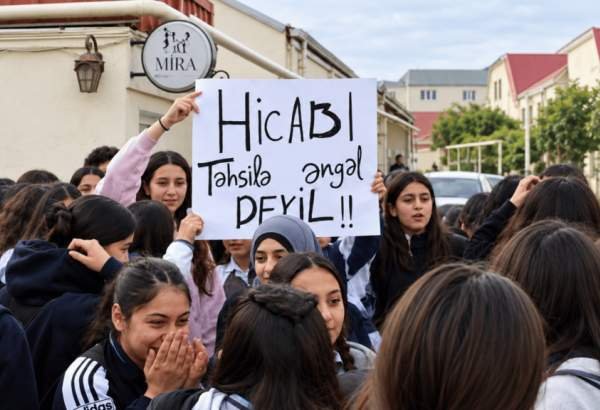
Enforcement intensified in early October. Reports and videos from Baku, Sumgait, Jalilabad, and other areas showed girls turned away at school gates. Students at institutions such as School No. 69 in Balakhany (near Baku) and others boycotted classes in solidarity, holding outdoor lessons or demonstrations with slogans including “Hijab is not an obstacle to education.”
Emotional footage circulated of students hugging teachers and crying as they were denied entry. Some teachers reported being told to remove their hijabs or resign.
Azerbaijan’s Interior Ministry said 37 people were arrested in Baku on October 12 in connection with the protests. Authorities accused them of clashing with school staff, disrupting operations and traffic, and attempting to set fires – including one that burned a school director’s car in the Garadagh district and an attempt on a school in Yasamal.
No injuries were reported. Criminal cases were opened under provisions covering actions that disrupt public order (punishable by up to three years).
Activists and some local reports claimed higher detention numbers, potentially exceeding 200, and additional short-term arrests occurred for online criticism or graffiti such as “Freedom to the hijab!” Six minors were later detained on suspicion of attempting to set fire to a school.
Users reported difficulties accessing Instagram and TikTok—among Azerbaijan’s most popular platforms—starting around the same time, with many saying the apps only worked via VPN.
Authorities have not confirmed any formal block. Watchdogs such as NetBlocks and the Open Observatory of Network Interference did not verify nationwide blackouts, though the timing fueled speculation of restrictions linked to circulating protest videos.
Imprisoned journalist Polad Aslanov, serving a long sentence after a 2020 high-treason conviction, announced a hunger strike in protest, arguing the rules violate constitutional guarantees of freedom of conscience and the right to education. His wife publicized the statement.


