


By Abdullahi Jamaa & Azizah Abdullahi
Aspiring Governor Yahya Mohamed Dahiye on Friday stepped up his grassroots campaign in Wajir town, hosting residents of Bulla Hodan for a public engagement forum.
The youthful candidate laid his political muscle bare, holding a bold, face-to-face conversation with the residents, as he seeks to carve out a new path in the county’s political landscape.
Driven by his determination to secure the county’s top leadership position, Dahiye is rewriting the political playbook in a region where clan arithmetic has traditionally taken centre stage.
He has often criticised the role of negotiated democracy in contemporary Wajir politics, arguing that elections should be based on ideals, performance and reforms capable of steering the county towards sustainable development.
He reminded Hodan residents that the time had come to grasp the nettle and decisively confront political kingmaking, cartelism and arm-twisting, which he believes have denied the people of Wajir the leadership they deserve.
“The position of the governorship is one that requires no intermediaries. The seeker must engage with the people directly, and that is my principle of seeking the governorship of Wajir,” Dahiye told residents.
“The reason is to make the people of Wajir feel and see the governance they are seeking. The person who is seeking to vie as a governor needs to engage with the people in every forum.”
Taking aim at the wheeler-dealing of elders in the local electoral landscape, Dahiye is championing a new breed of politics in which citizens’ voices are heard, their problems understood and a fresh roadmap for good governance developed.
“My political ideals are driven through direct engagement with the people. There will be no traditional elders or another third party between us,” he vowed.
The aspirant has strongly criticised the role of clans in the county’s leadership and governance structures, declaring that the time for negotiated democracy has ended.
“Politics based on clan endorsement has failed to work. Elders’ endorsement of an individual for the governorship or membership of parliament has failed to work,” he said.
Dahiye argued that county leadership built around the rudimentary arrangement of clan endorsement undermines the will of the people, creating a situation in which voters’ interests and aspirations are often left unmet.
“Every time we use the mechanism of clan endorsement, where elders play a role, it happens that the interests of the people are not met,” he said.
Leadership
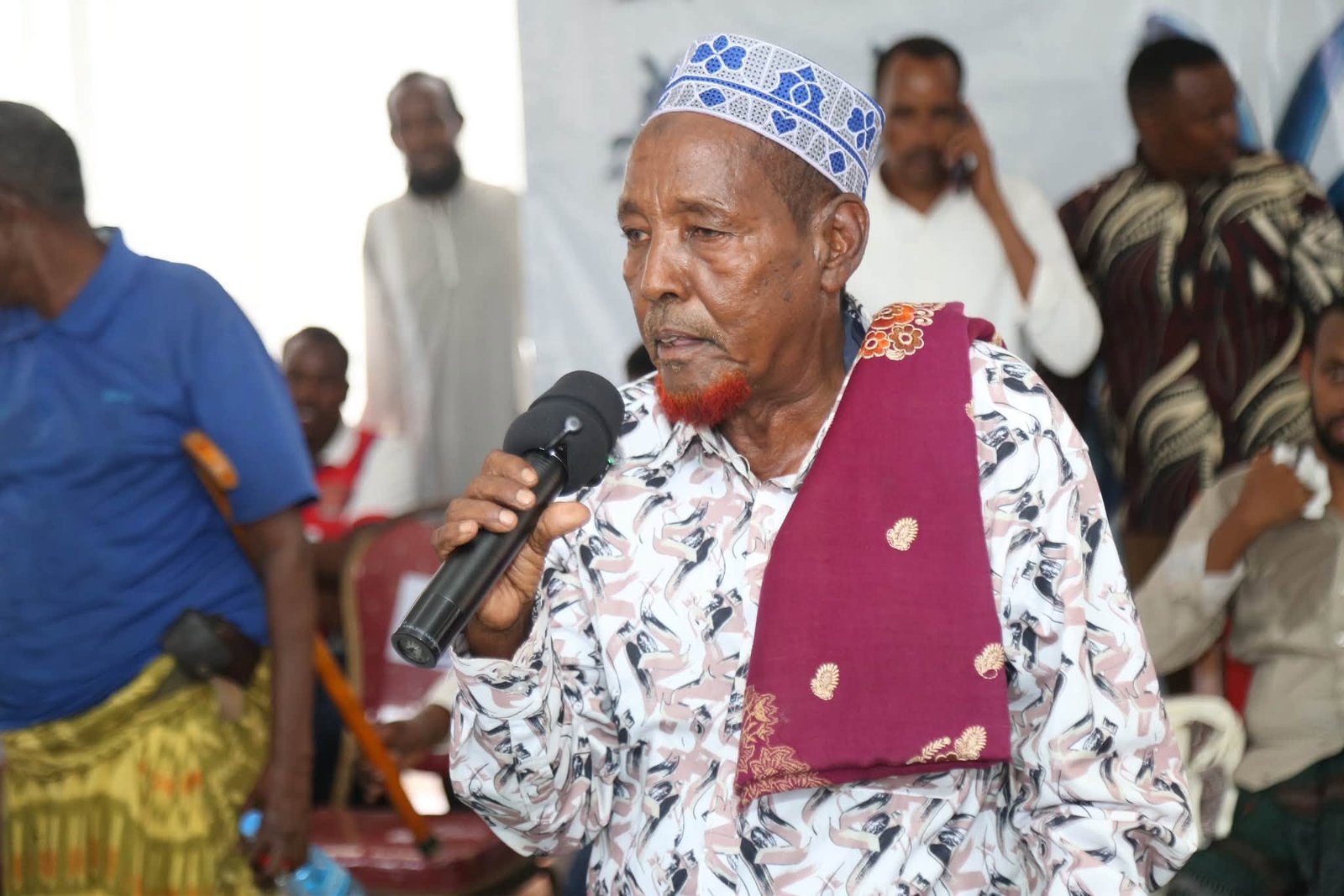
For Hodan residents, the forum provided an opportunity to question the aspiring governor about his leadership ambitions while raising concerns about politicians who disappear from the public eye once elected to office.
“As people of Wajir, we are now enlightened and understand things better than ever before. We have encountered problems with politicians here,” an elder from Hodan told the gathering.
Dahiye explained his reasons for seeking the county’s top leadership position, pledging to address key challenges affecting Wajir, including persistent gaps in the collection of the county’s own-source revenue.
He said closing those gaps would require prudent leadership that understands the county’s economic realities.
“We, as the people from this region, have not been collecting enough local revenue. I will look at the sectors that will help us generate more revenue and increase the collection,” he promised.
He further pledged to transform the early childhood education sector through increased investment in resources and infrastructure, saying the measures would improve the quality of education across the county.
“I will put more effort, build more facilities and improve the welfare of the young children in our learning centres,” he said.
Touching on public welfare, Dahiye also promised to enhance the aesthetic and recreational appeal of major centres in the county, creating spaces suited to modern living, leisure and community interaction.
“Another area that I will work on is the management of our municipalities. As a community, we have not been very active in looking at the welfare of the general public,” he said.
He said he wanted to make Wajir a better place for residents, particularly young people seeking open spaces for sports, recreation and leisure.
“We will establish parks, fields and recreational areas. I will put more effort, especially in Wajir town and other municipalities in the county,” he said.
As political activity gathers momentum ahead of the 2027 elections, Dahiye’s approach is seeking to tap into growing calls for a break from the county’s long-standing culture of negotiated democracy and clan-based political bargaining.
For residents yearning for a new generation of leaders, his message of direct engagement, improved service delivery and governance reforms could offer an alternative political proposition.
Banking on his youthful energy and experience, Dahiye is positioning himself to ride the emerging political wave, appealing particularly to young people and women, who form a significant part of the county’s electorate.


