

By Abdullahi Jamaa | Wajir Today
Media leaders have called on journalists in Wajir County to strengthen fact-checking, resist political interference and promote inclusive political participation as Kenya prepares for the 2027 General Election.
The calls were made during the third annual Wajir County Media Summit, organised by Media Citizen Front (MCF) under the theme Upholding Truth and Integrity for Free, Fair and Peaceful Elections.
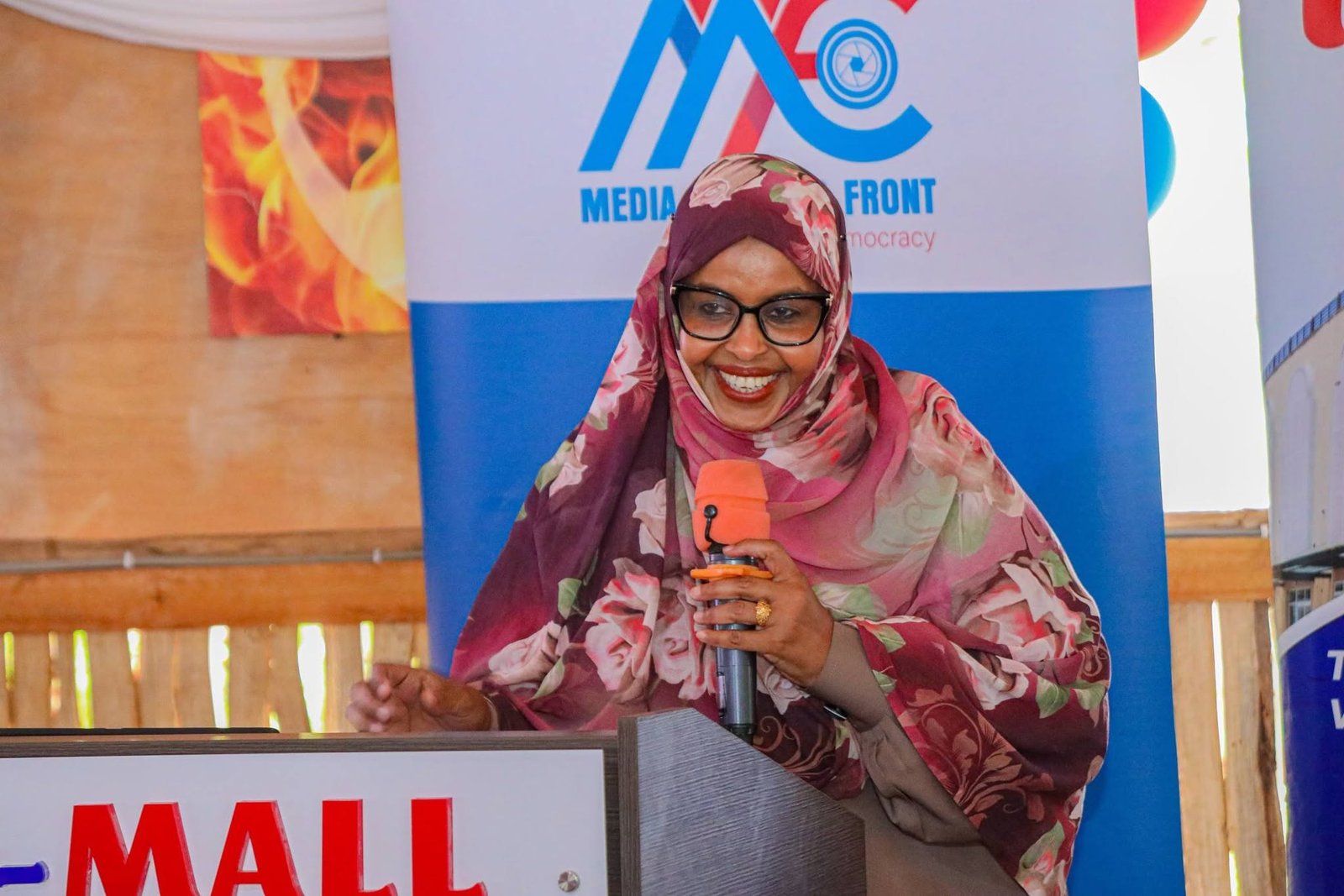
Chief guest Dr Fatuma Hirsi urged journalists to guard against misinformation, politically manipulated content and divisive reporting, warning that irresponsible coverage could undermine electoral integrity and deepen community tensions.
In her keynote address, Hirsi challenged media practitioners to examine their role beyond reporting political developments, arguing that the media must actively safeguard democratic accountability, credible elections and national cohesion.
“Is our media simply reporting democracy, or is it helping to safeguard it?” she posed.
She identified three fundamental responsibilities of the media: informing citizens through accurate and balanced reporting, holding those in power accountable and providing platforms for diverse voices, particularly groups often excluded from political discussions.
Hirsi cautioned journalists against becoming instruments of political interests, saying the media should not serve as the government’s public relations department, the opposition’s campaign machinery or the mouthpiece of the highest bidder.
Her remarks also addressed the growing influence of clan politics and negotiated leadership arrangements in Wajir, where political discussions frequently involve clan elders, sub-clan interests and community endorsements.
She urged journalists to scrutinise the inclusivity of such arrangements, particularly the participation of women, young people and persons with disabilities.
“When political decisions are negotiated, who sits at the table? Who speaks for the women? Who represents the youth?” she asked.
“Consensus without meaningful inclusion risks becoming exclusion dressed up as agreement,” she added.
The chief guest acknowledged the historical role of traditional elders in dialogue, reconciliation and maintaining community harmony but said cultural traditions should complement democratic institutions rather than undermine citizens’ political rights.
She also challenged journalists to move beyond personality-driven election coverage and give greater attention to public accountability, policy proposals and service delivery.
Hirsi said issues such as water scarcity, education, healthcare, youth employment, women’s economic empowerment and security should feature prominently in election reporting.
“We should spend less airtime asking, ‘Who will get the seat?’ and more time asking, ‘What will they do with it?'” she said.
Artificial intelligence
She further warned that artificial intelligence was creating new challenges for election reporting, with manipulated videos, fabricated speeches and synthetic images capable of spreading false political narratives.
She urged newsrooms to develop procedures for verifying digital content and disclosing the use of artificial intelligence where relevant, emphasising that technology could support journalism but could not replace human judgement and editorial accountability.
On election results, Hirsi cautioned against the pressure to break news before competing media houses, saying inaccurate declarations could create confusion and undermine public confidence.
She urged journalists to distinguish between projections, provisional tallies and officially declared results, noting that the Independent Electoral and Boundaries Commission (IEBC) had reminded participants that it was the sole authority for announcing election results.
“Being first with the wrong result is not a scoop. It is a failure of editorial responsibility,” she said.
Hirsi also highlighted the importance of gender-sensitive election reporting, challenging newsrooms to treat women as substantive political actors rather than merely participants in campaign rallies.
She called for greater coverage of women’s positions on legislation, public finance, education, healthcare and governance, while urging journalists to confront sexist stereotypes and online harassment targeting women seeking political office.
The summit also heard a call for greater recognition of Wajir’s achievements beyond the recurring coverage of drought, insecurity and political competition.
Hirsi cited the success of Hafsa Ibrahim Adan and Asha Harun Yarow, students from Senior Chief Adano Girls Day Secondary School, who won first place overall at the ninth Young Scientists Kenya National Science and Technology Exhibition in August 2026.
The students developed an artificial intelligence-based environmental monitoring and drought-risk prediction system designed to provide early warnings to vulnerable communities.
Their achievement, she said, demonstrated the need for more reporting on local innovation, education and the contributions of young people.
Media Charter
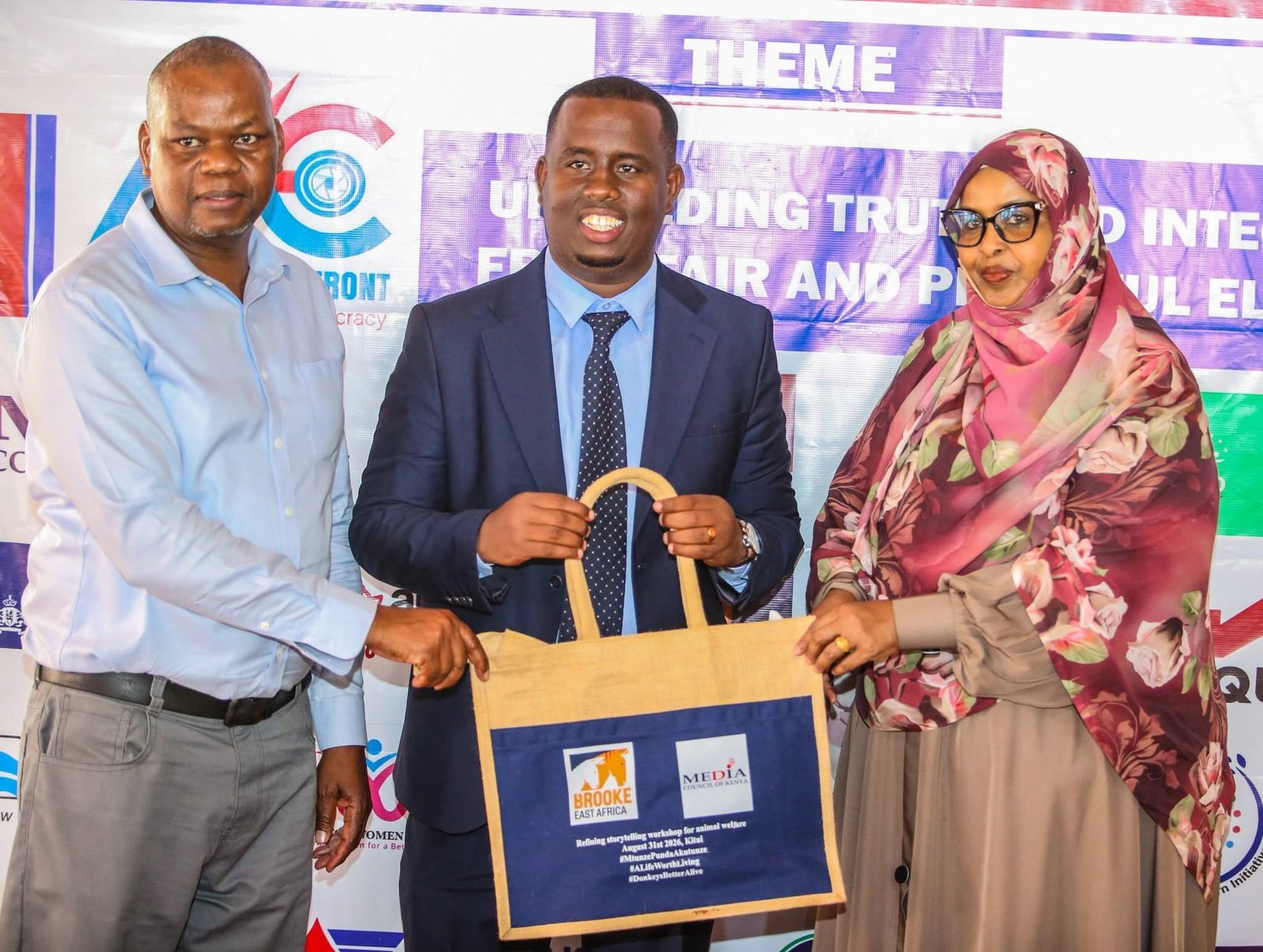 As part of her recommendations, Hirsi proposed that MCF, the Media Council of Kenya, the Kenya Editors Guild and local journalists consider developing a Wajir Media Charter for Ethical and Peaceful Election Reporting, supported by a practical fact-checking network ahead of the 2027 polls.
She said the summit should produce measurable commitments rather than remain a platform for speeches and discussions.
“The ballot belongs to the voter, not the clan broker. The microphone belongs to the public, not the highest bidder,” she said.
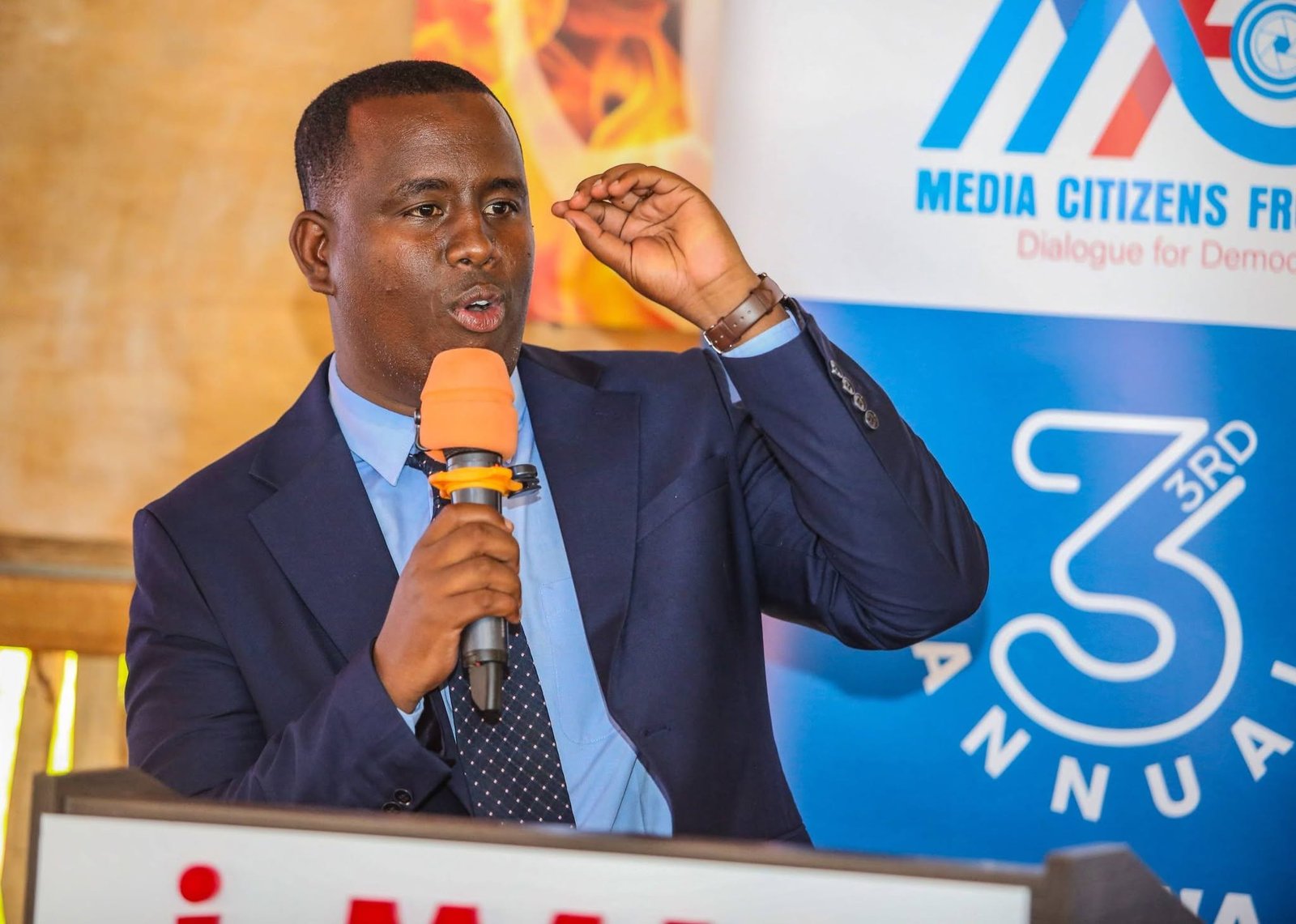
Media Citizen Front chief executive officer Abdirahman Rashid Farah said the summit was intended to strengthen the media’s contribution to credible elections, democratic accountability and peaceful coexistence.
Farah said misinformation and disinformation, amplified by social media and artificial intelligence, posed growing challenges to the integrity of electoral processes.
He urged journalists, editors, media owners and digital publishers to resist pressure to prioritise online visibility, political influence and breaking-news competition over accuracy.
“Being first to publish is not more important than being right,” he said.
Farah also called for balanced political coverage, fair opportunities for candidates to express their positions and evidence-based reporting on alleged electoral malpractice.
He said journalists had a responsibility to challenge hate speech, ethnic profiling and political incitement while ensuring that women, young people and marginalised communities were represented in public debate.
The MCF chief executive further emphasised the need to protect journalists from intimidation, threats and political interference, saying independent media was essential to a peaceful electoral environment.
The two-day summit, running from 31 October to 1 November 2026, brought together media practitioners and stakeholders to discuss the role of journalism in protecting electoral integrity, promoting accountability and preventing election-related tensions.


