
 By Abdullahi Jamaa | Wajir Today | Saturday, November 7, 2026
A new national health survey has exposed significant gaps in health insurance coverage across Kenya’s North Eastern region, with Mandera, Garissa and Wajir counties recording some of the lowest coverage levels in the country.
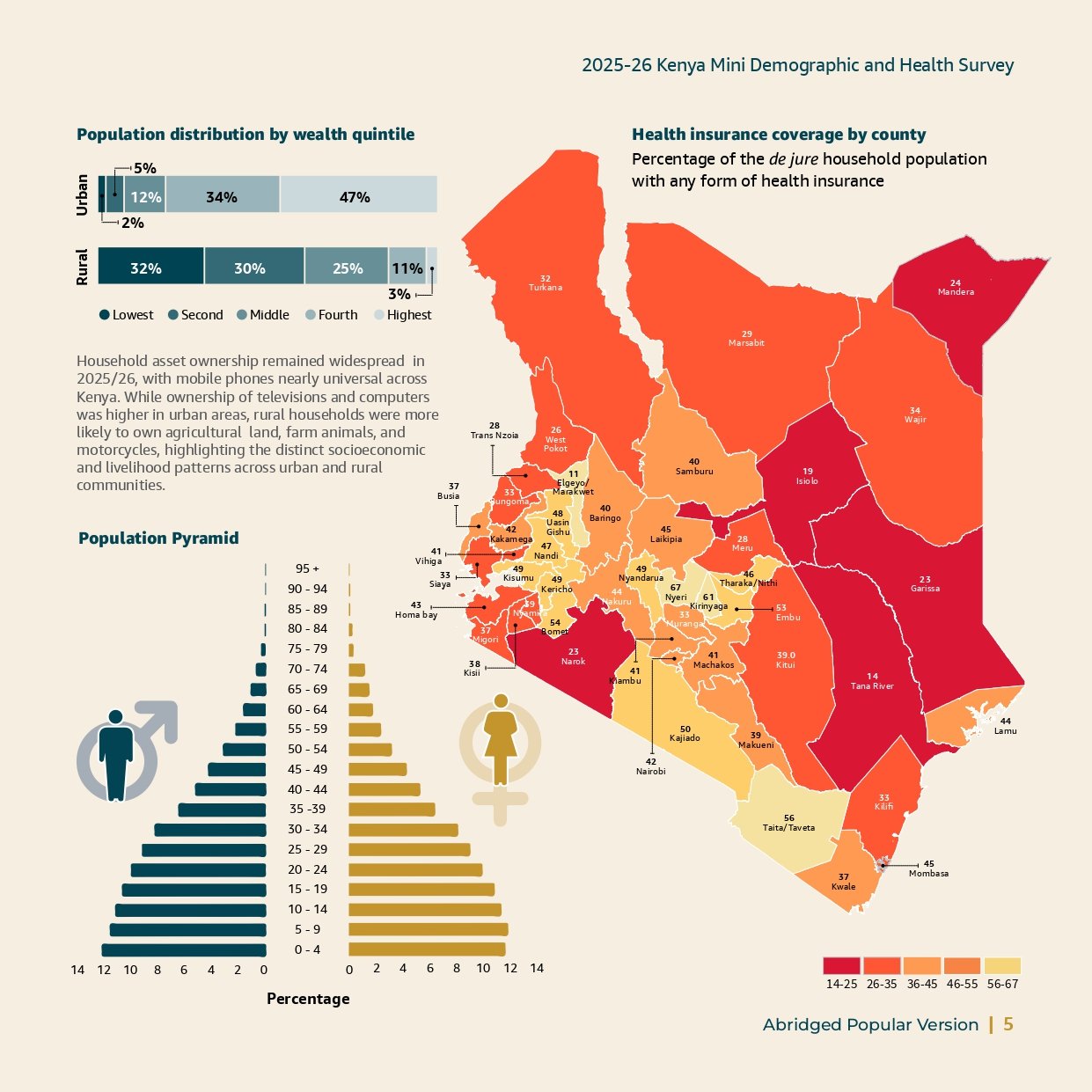
According to the 2025–26 Kenya Mini Demographic and Health Survey (KMDHS), only 24 per cent of Mandera residents have some form of health insurance, compared with 23 per cent in Garissa and 34 per cent in Wajir.
The findings place Garissa and Mandera among the counties with the lowest health insurance coverage nationally, raising questions about access to affordable healthcare and the effectiveness of efforts to expand health coverage in the region.
The survey shows that Wajir performs relatively better than its two neighbouring counties, although its 34 per cent coverage rate remains below the national average of 40 per cent.
The figures highlight a substantial disparity in access to health insurance across the three counties, with Garissa recording the lowest coverage, followed closely by Mandera.
The findings come at a time when Kenya is pursuing expanded health coverage through the Social Health Authority (SHA), which replaced the National Health Insurance Fund.
Nationally, the survey established that 40 per cent of Kenya’s household population had some form of health insurance, with most insured people covered under SHA.
However, the figures for the three North Eastern counties show that a significant proportion of residents remain outside health insurance coverage.
Garissa has a coverage gap of 17 percentage points against the national average, while Mandera trails by 16 points and Wajir by six points.
The 2025–26 Kenya Mini Demographic and Health Survey was conducted by the Kenya National Bureau of Statistics (KNBS) in collaboration with the Ministry of Health and other stakeholders.


