

By Abdullahi Jamaa
Barwaqo is no longer a sleepy neighbourhood.
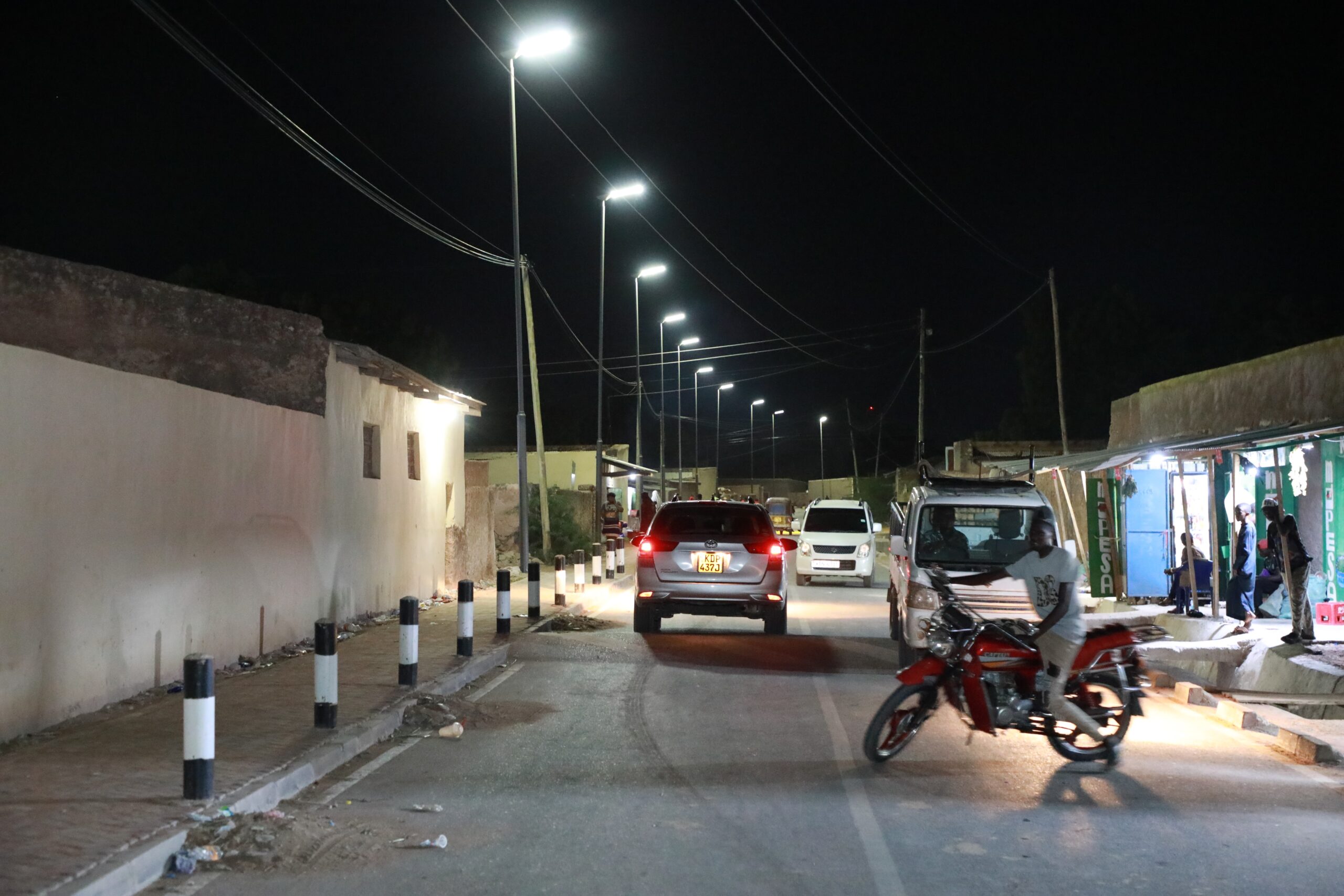
Today, one of the oldest settlements in Wajir town comes alive after sunset with a bustling nightlife.
The transformation is a far cry from what Barwaqo used to be, when darkness, dusty roads and poor infrastructure defined daily life.
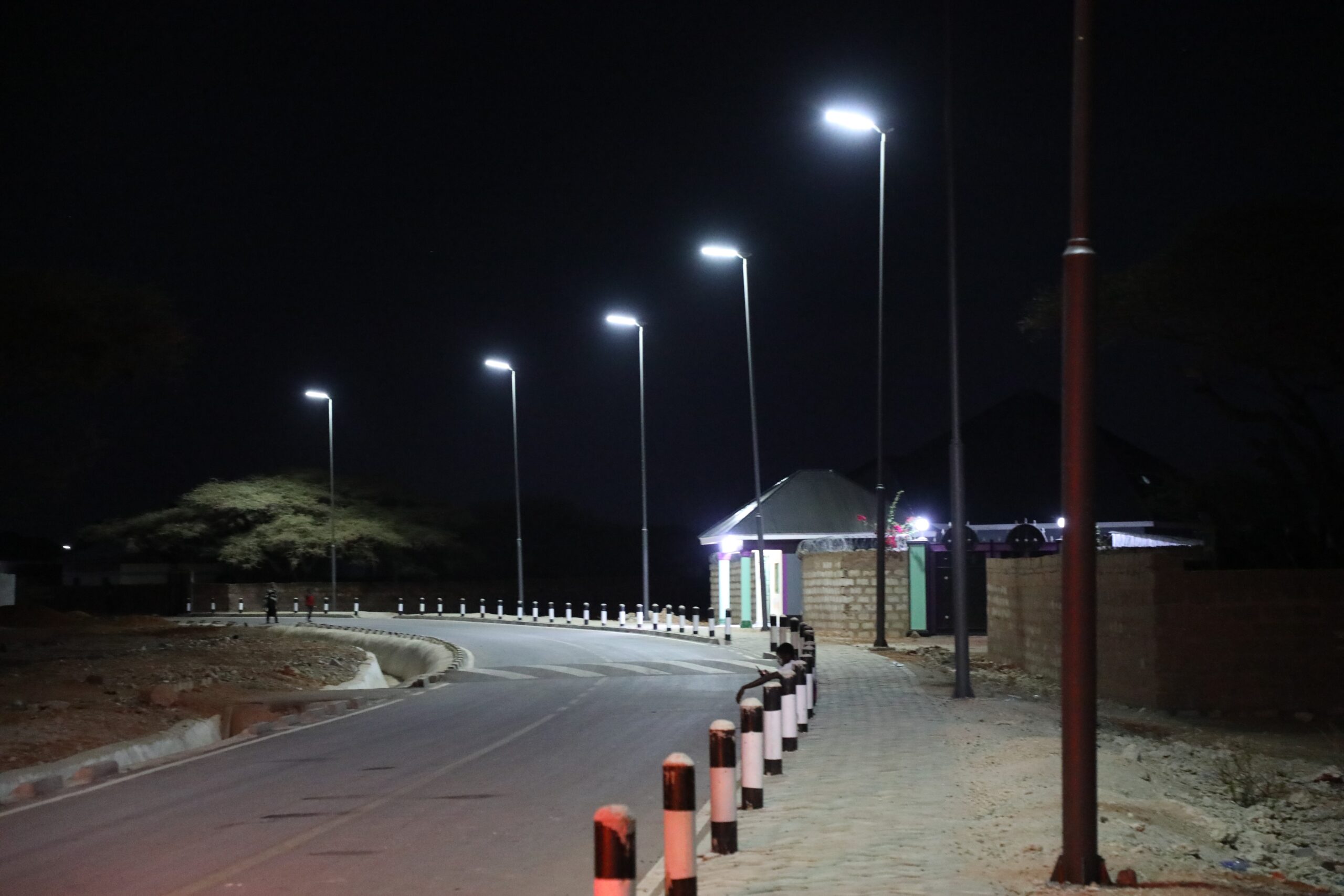
A snaking line of solar street lights along a newly tarmacked road brightens the area, giving the settlement a long-awaited modern facelift.
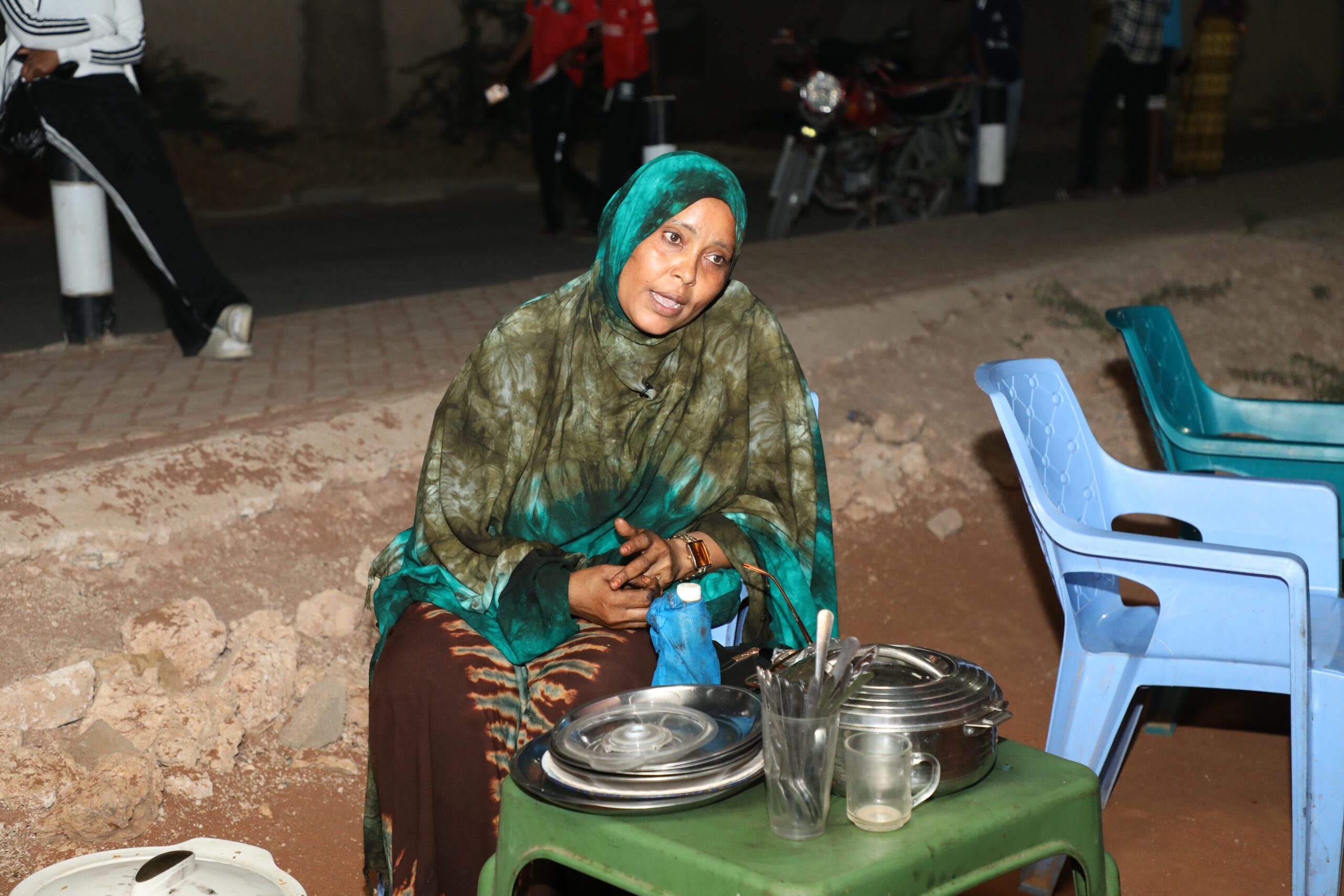
For Fatuma Haji Ali, a street food vendor, the changes have transformed both her neighbourhood and her livelihood.
“This road used to be in a very bad shape and whenever it rained it was worse,” she says. “Our business was doing badly and we struggled a lot.”
Fatuma is among many residents benefiting from the new opportunities created by the improved infrastructure. Better roads and lighting have boosted businesses while allowing residents to enjoy a quality of life.
“We are happy about the new infrastructure. With the road and street lights, our businesses are improving compared to our previous condition,” she says.
Drawn by the glowing solar street lights, new businesses have started dotting the area, while existing ones like Fatuma’s have experienced increased customer traffic and sales.
“Now we are doing good. I am cooking a variety of dishes including rice and fries, and I stay here up until 10PM,” she says.
For Fatuma and many other residents, the facelift has transformed the general outlook of Barwaqo, gradually raising living standards in a settlement that had long suffered from neglect.
Like many villages in Wajir, Barwaqo bore all the hallmarks of inadequate infrastructure. Roads were in poor condition and public amenities were limited.
Although residents say much more still needs to be done, the new infrastructure has brought them closer to the experience of city life.
For people like Fatuma, the project represents more than a road. It has delivered tangible improvements after years of marginalisation.
Daud Mohamed, another longtime resident of Barwaqo, describes the project as life-changing.
“Before the project, this road was impassable with huge deposits of sand. It was worse whenever it rained,” he says.
With improved traffic flow and solar street lighting supporting activity after dark, residents say their neighbourhood feels transformed.
“It has brought us a lot of benefits. People now feel like they are living in a city just like Nairobi and Mombasa. We thank God,” Mohamed says.
Better roads
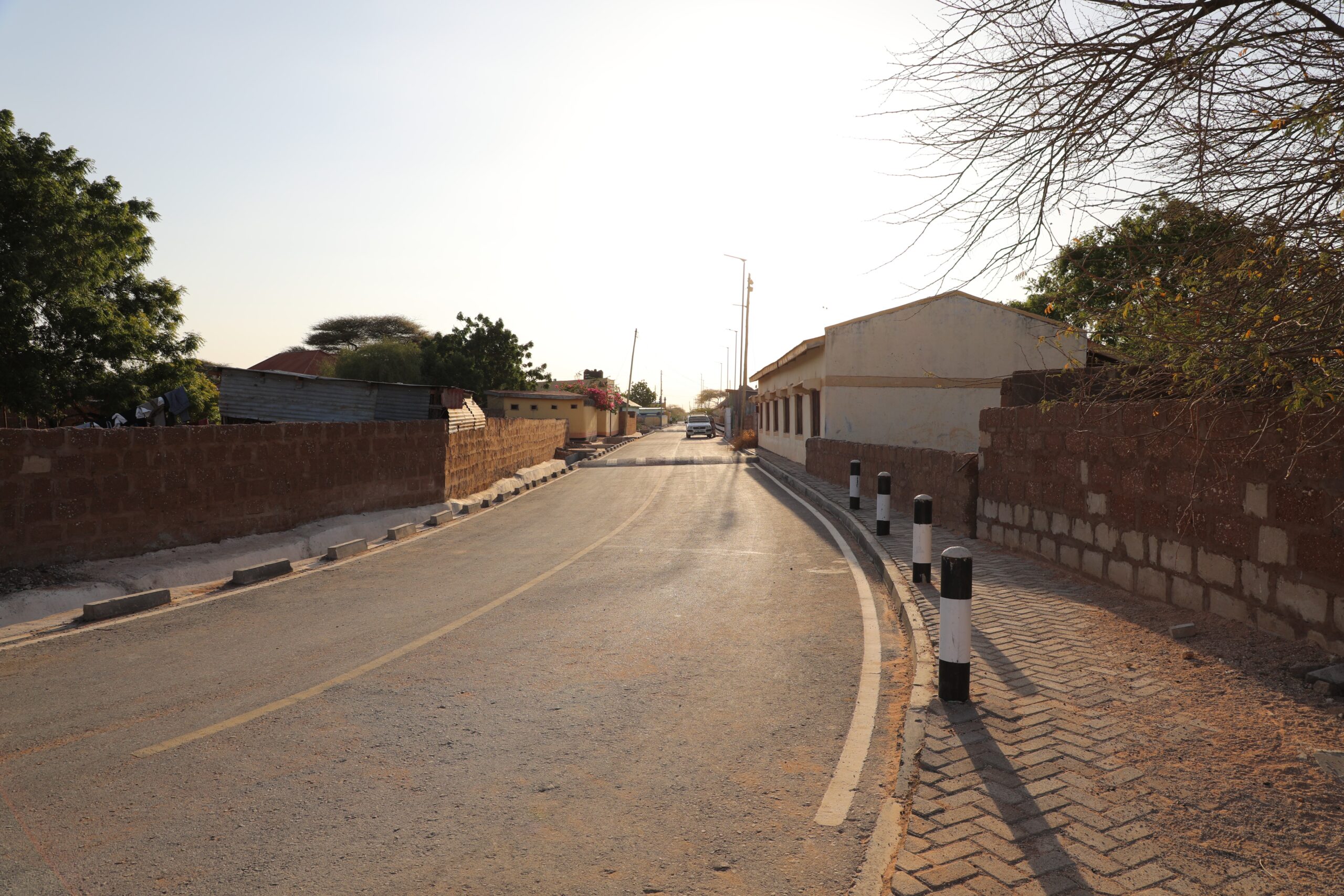
Barwaqo is one of six settlements upgraded under the Second Kenya Informal Settlements Improvement Project (KISIP 2).
The transformation is part of a national government-led initiative supported by development partners, including the World Bank, Agence Française de Développement (AFD) and a grant from the European Union (EU).
Other settlements, including Shallatey, Hodhan, Wagberi, Jogoo and Halane, have also received infrastructure upgrades aimed at improving residents’ quality of life through better roads, lighting and public spaces.
In Shallatey, residents say the development has opened up business opportunities, improved neighbourhood security and enhanced access to schools and health facilities.
“Before this project, this place was like a bushland. But nowadays when the street lights illuminate the neighbourhood at night, people come out to take photos and videos. Those who watch them can’t believe this is in Wajir. They call it half London,” says resident Mohamed Ali.
The illuminated road has also attracted investment and increased land values.
“Businesses are booming and land prices have appreciated since the construction of the road. A lot of things are changing in our neighbourhood,” he says.
His neighbour, Isnina Nur Abdi, says residents no longer contend with dust clouds trailing behind vehicles or constant fears about insecurity.
“We had no proper road in our area. It used to be dusty and people suffering from asthma had a lot of issues. The road brought us relief and has improved security. We really appreciate it,” she says.
In Halane, another settlement upgraded under KISIP 2 with new roads, solar street lights and a flood mast, residents report increased economic activity.
“As a vegetable seller, the street lights have really lit up our public spaces. As you know Wajir suffers from erratic electricity and the street lights are beneficial to us,” says Rukia Abdullahi.
Access to services
Residents say the improved infrastructure has enhanced access to markets, schools and health facilities, creating opportunities to improve their living standards.
At Barwaqo Girls Junior and Primary School, solar-powered electricity is supporting girls’ education by ensuring the school remains lit even during power outages.
“When connected to the solar, even when the town is in blackout, we have lights on. The girls are able to read at night and do other activities very comfortably. They are using the solar lights even to improve their academic performance,” says headteacher Abdirashid Adan.
In neighbouring Hodhan village, health workers at the county-run dispensary report improved access to healthcare after a new road was constructed up to the facility’s gate.
“Initially the number of patients accessing the facility was low compared to now. Access to the facility in relation to seeking services has improved. Patients can walk in even at night,” confirms Hodhan Dispensary Nurse in Charge Adow Billow.
Education has also benefited in Wagberi, where schools are experiencing improved accessibility, reduced dust and enhanced security.
“As you have seen, our classrooms were towards the road and when it was murram we had two issues: a lot of noise from moving vehicles and dust affecting the classrooms. We also have street lights that have helped us in terms of security. We welcome such a project. In fact, it is very, very important for us,” says Ismail Abdikadir, Manager at Excel Academy in Halane.
KISIP 2 blueprint
According to project officials, KISIP 2 has significantly improved living conditions across the six settlements, giving residents a new experience of modern urban infrastructure.
The project took about 18 months to complete and included the construction of 8.45 kilometres of tarmac roads, 8.45 kilometres of drainage, 120 vertical drains, 413 solar street lights and three flood masts.
“This project was designed between September and December 2023, began in August 2024 and ended in February 2026,” says Assistant Resident Engineer Emmanuel Musyoka.
Project Manager Eng. Dan Owore says implementation was completed successfully with all planned components delivered.
“We are happy the project has come to an end very successfully, with all the components implemented according to the projected design and serving the beneficiaries quite well,” he says. “This has changed the face of Wajir in the sense of access to various facilities including markets, health centres and schools.”
The County Government of Wajir maintained a team on the ground throughout implementation to oversee the project from beginning to completion.
“The impact that this project has contributed to the people of Wajir is numerous. It has boosted the economy and security” says Project Coordinator Mohamed Adow.
Project Engineer Blanton Gitau says the transformation extends across all six settlements. “We are here in Wajir to highlight a significant transformation in the informal settlements of Halane, Wagberi, Barwaqo, Shallatey, Jogoo and Hodhan.”
The transformation, he says, goes beyond visible infrastructure. It is an effort to improve the quality of life for thousands of residents who have long lived with inadequate services in some of Wajir’s oldest neighbourhoods.
“For many years the residents of these informal settlements have endured different hardships in terms of impassable roads, flooding and security risks due to unlit public spaces.”
He says the project is changing that reality.
“We are glad to report that this narrative is shifting and it is changing due to targeted interventions under the KISIP 2 Project.” “We are looking at laying the foundation for equity, opportunity and hope. We are promoting dignified living for all the residents of Wajir.”
Back in Barwaqo, Fatuma watches customers continue arriving under the glow of the solar street lights. Her final words capture what many residents believe the project has brought to their lives.
“Walaahi,” she says. “Our businesses are doing good.”


