

 By Our Reporter
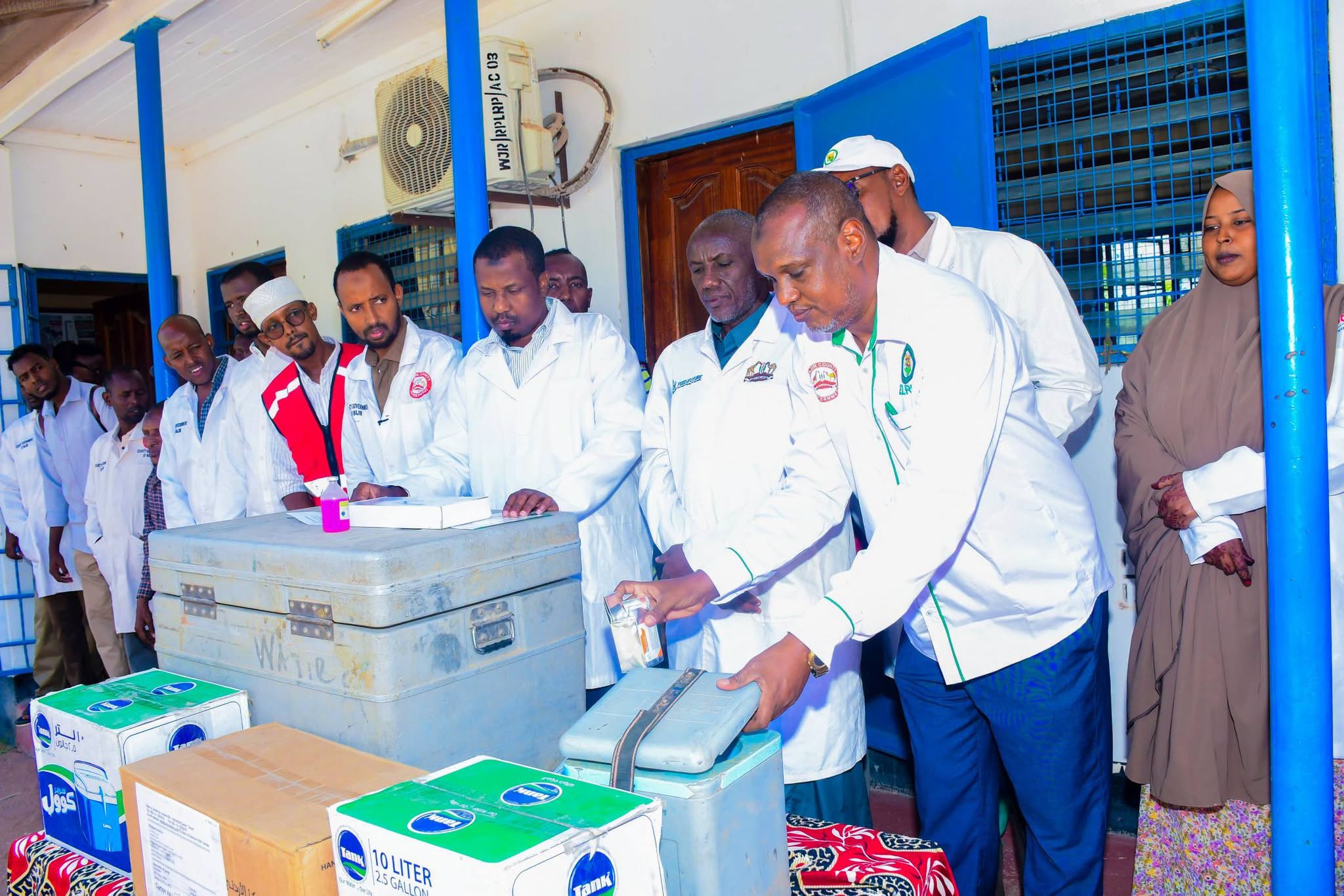
Wajir County has launched a 10-day livestock vaccination campaign targeting 250,000 animals as part of efforts to control major infectious diseases affecting pastoral livelihoods, according to a statement from the county government.
The campaign, implemented through the Department of Livestock and Veterinary Services, is targeting Foot and Mouth Disease (FMD) in cattle, Peste des Petits Ruminants (PPR) in sheep and goats, and Contagious Caprine Pleuropneumonia (CCPP) in goats.
Officials said the exercise will cover all six sub-counties and is expected to reach 200,000 sheep and goats and 50,000 cattle over the next ten days. In addition to vaccinations, the programme will include mass deworming and treatment for sick and weak animals.
The initiative is being implemented in partnership with the National Government under the E-Voucher Livestock Vaccination Programme, supported by the Food Systems Resilience Project (FSRP). It also receives support from the British Red Cross through the Kenya Red Cross Society.
Under the e-voucher system, the Foot and Mouth Disease vaccine will be administered at a subsidised cost of 50 Kenyan shillings per head of cattle, while the PPR vaccine will cost 3 shillings per sheep or goat. Other vaccines and treatment drugs will be provided free of charge, according to the county statement.
The county government said the intervention is designed to strengthen disease prevention systems in the livestock sector, which is the backbone of livelihoods in the arid region.
“This initiative reflects the department’s commitment not only to addressing immediate livestock health challenges but also to strengthening resilience, improving productivity, and supporting sustainable livelihoods for livestock keepers across Wajir County,” the statement read.
Livestock diseases such as FMD and PPR are recurrent threats in northern Kenya, often leading to significant economic losses for pastoralists who depend heavily on animal health for income, food security, and trade. Veterinary officials have in previous campaigns warned that outbreaks can spread rapidly across communal grazing areas if not controlled early.
The use of subsidised vaccination programmes and donor-supported interventions has become a key strategy in Kenya’s arid and semi-arid regions, where limited veterinary access and mobility challenges often hinder routine animal health services.
Authorities did not immediately indicate whether additional surveillance or movement control measures would accompany the vaccination exercise.
The campaign is expected to conclude after ten days, with officials aiming to achieve high coverage across all targeted livestock populations.


