

By Abdullahi Jamaa
WAJIR, Kenya, July 28 – Religious leaders in Wajir have called for a coordinated response to rising cases of human trafficking and illegal migration in northeastern Kenya, urging parents, political leaders, security agencies and the wider community to take stronger action to protect young people.
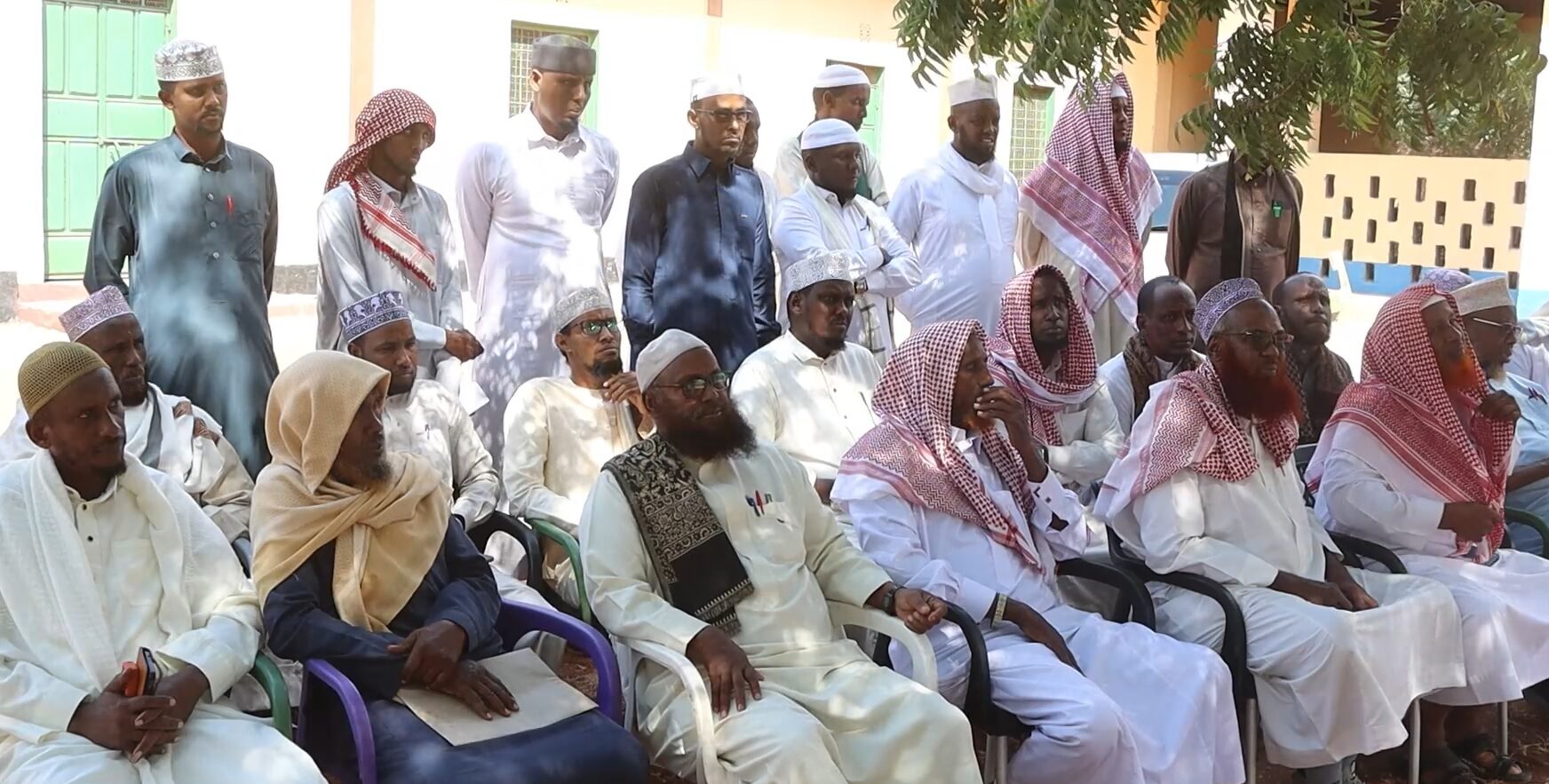
The appeal was made on Monday during a meeting of imams and Islamic scholars in Wajir town that focused on the growing threat of human trafficking and its impact on communities across the region, particularly among the youth.
The meeting was led by the Supreme Council of Kenya Muslims (SUPKEM) Northeastern regional coordinator, Dr. Adam Yunis.
Scholars said religious leaders have a responsibility to help raise awareness about the dangers of trafficking while working with families and government institutions to prevent the crime.
They addressed what they described as the increasing vulnerability of young people to traffickers and called for greater collaboration between religious institutions, parents, community leaders and state agencies to address the problem.
Speaking during the meeting, Hutheifah Mosque Imam Sheikh Abdullahi Amiri urged parents to closely monitor their children, saying traffickers were exploiting vulnerable families in Wajir and across the wider Northeastern region.
“We are appealing to the parents to be vigilant and aware about their children. There is a worrying problem in our county and in the entire Northeastern region. There are people who are taking our children as commodities, and we are all aware about human trafficking,” Sheikh Amiri said.
He described traffickers as “marauding and lurking hyenas” and urged parents to remain alert to protect their children from criminal networks.
The imam also appealed to elected leaders to give greater attention to the issue, saying stronger political leadership was needed before the situation worsened.
“We call upon the local leaders to address the problem and expand their responsibilities to protect the community against traffickers,” he said.
The religious leaders further called on government agencies and security authorities to intensify efforts against trafficking networks operating in Wajir and elsewhere in the region.
They said law enforcement agencies have sufficient knowledge of activities taking place within the town and should take stronger preventive action against those involved.
“Government agencies are aware about what is happening in the town. They are aware about all movements. We are calling upon the government agencies to deal with traffickers and protect the community,” he said.
The scholars also condemned those involved in cross-border trafficking, urging perpetrators to abandon what they described as illegal activities that undermine the wellbeing of the community.
“The perpetrators of this crime must stop this and fear God. We also urge the community to join the fight against trafficking as this is all our responsibility,” Sheikh Amiri added.
Sheikh Hassan Ahmed, an official with SUPKEM, said parents needed to play a more active role in supervising their children.
He argued that some parents had failed to fulfil their responsibilities, particularly by allowing children to remain outside their homes late into the night.
“Parents have failed to take full responsibility of their children. Your children are staying out of your homes very late at night hours. This is not the conduct of an ideal Muslim parent,” Sheikh Hassan said.
He urged parents to discourage children from gathering on the streets during late-night hours, saying greater parental supervision could reduce their vulnerability to criminal exploitation.
“Stop your children from the streets at night. As parents you are responsible for your children and you must act to stop them from sitting on the streets at the wee hours of the night,” he said.
Sheikh Hassan also criticised political leaders, saying human trafficking had received insufficient public attention despite its growing impact on the region.
“No leaders talk about this problem of human trafficking,” he said.
He further accused security agencies of failing to adequately prevent trafficking and illegal migration, claiming authorities were aware of the problem but had not done enough to stop it.
“Security agencies have failed their responsibilities. Security agencies are aware about the problem that we are facing as a community. They must stop this problem,” Sheikh Hassan added.
Human trafficking and irregular migration remain persistent concerns in Kenya’s northeastern counties because of their proximity to international borders and established cross-border movement routes.
Monday’s meeting reflects growing concern among religious leaders in Wajir that combating human trafficking requires a coordinated response involving families, community leaders, religious institutions and government agencies.


