

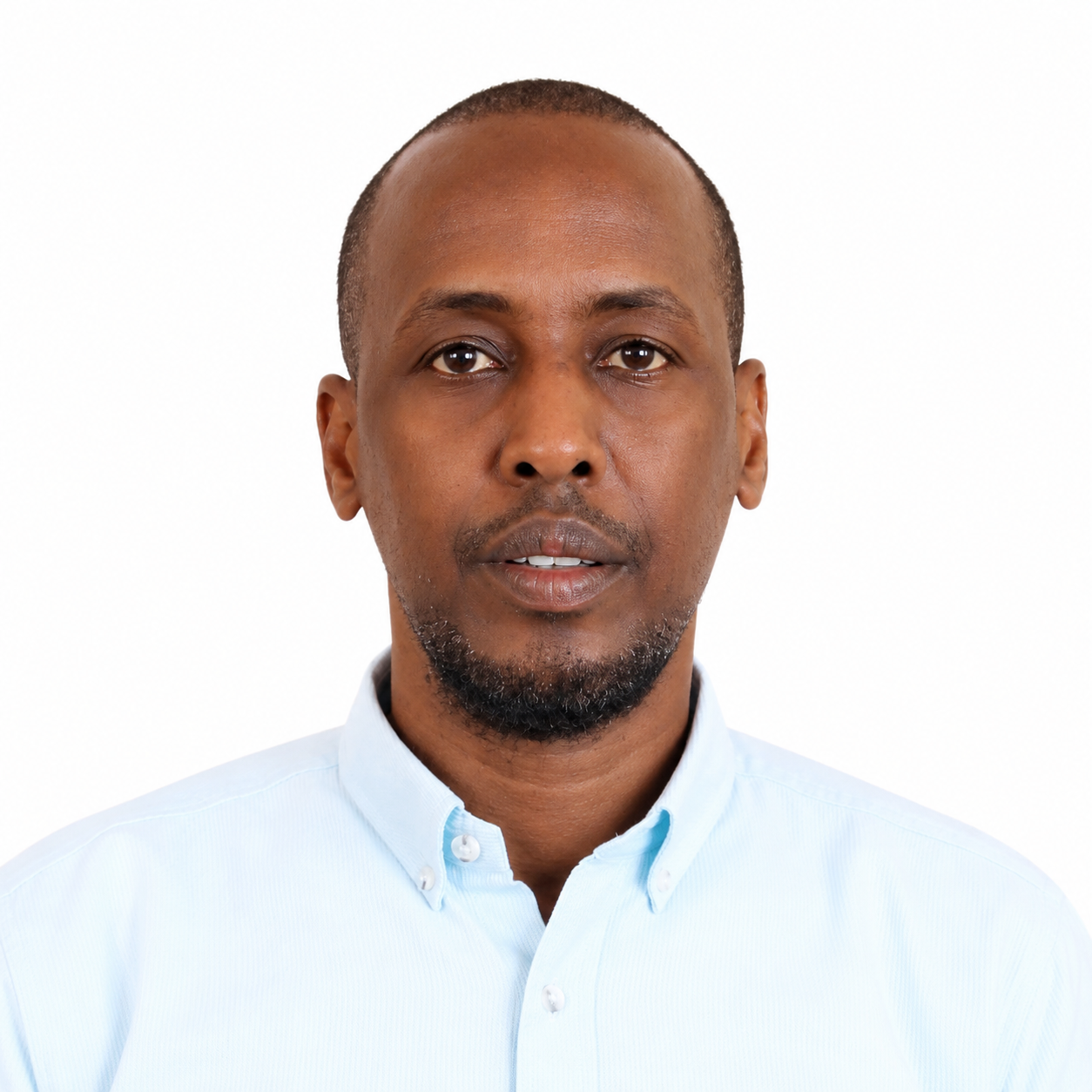
By Hassan Abdi Omar
Every October 5, the speeches begin. This year’s World Teachers’ Day theme, “Standing with teachers: 60 years of protecting the profession, advancing its status and shaping our futures,” asks us to do more than speak.
Teachers are rightly called the backbone of society. Parents send messages of appreciation, while photographs of smiling award winners circulate. But I spent years in the classroom as a physics teacher, and I know that applause does not mark exercise books, fill a staffroom or stock a laboratory.
This year, events thousands of kilometres away offer a timely reminder of why we must look beyond the celebrations.
In France, high school students have taken to the streets to protest poor classroom conditions, overcrowding, deteriorating school infrastructure and teacher shortages. What began in schools in the Paris suburbs has spread across the country, with protests affecting more than 1,200 high schools.
Students have complained about missing teachers and inadequate facilities, while teachers, parents and unions have also raised concerns about staffing and school resources.
The protests have, in some places, descended into violence, arrests and damage to schools. Those actions should not be celebrated or excused. But beneath the disorder is a legitimate question that educators and policymakers everywhere should take seriously: What happens when learners believe the education system is failing to provide them with the conditions they need to learn?
One student’s protest sign reportedly captured the deeper issue: “Our address should not decide our future.” That message resonates far beyond France.
In Northern Kenya, World Teachers’ Day should therefore be more than a celebration. It should be a moment of honest reflection about what we ask teachers to do, the conditions in which they work and whether we are giving them the support they need to succeed.
Think about the reality facing a teacher in parts of Wajir, Garissa, Mandera, Marsabit or Isiolo.
A teacher may report to a school with too few colleagues, too few textbooks, unreliable connectivity and, in some areas, the constant worry of insecurity. Yet that same teacher is expected to deliver excellent results for children whose circumstances are anything but ordinary.
That is the contradiction we must confront: Northern Kenya has some of the country’s most committed teachers, working in some of its hardest places to teach.
Across the region, teachers continue to report to work through drought, poverty, long distances and difficult living conditions. They are often much more than instructors. They are counsellors, mentors and community mobilisers and, in some communities, among the most reliable public servants a child will encounter.
For many children, the teacher is the first person to tell them that where they begin in life does not have to determine where they end.
That commitment has produced real progress. More children are in school. More girls are staying in school. Parents who never had the opportunity to complete their own education are making sacrifices to keep their children learning.
Teachers sit at the centre of that progress. But progress should not blind us to what remains unfinished.
Learning cannot flourish where people are afraid. In parts of Northern Kenya, insecurity has resulted in displacement, disrupted schooling and children being kept at home. Teachers can also hesitate to accept postings in areas perceived to be dangerous.
The consequences are rarely immediate enough to make headlines. A missed term becomes a learning gap. The learning gap becomes poor performance. Poor performance can gradually weaken a child’s confidence and eventually contribute to dropping out of school altogether.
This is why we should stop treating education and security as separate policy questions.
A safe school is an educational intervention. A child who remains in school is not only acquiring academic knowledge but also learning dialogue, citizenship, cooperation and ways of resolving disagreements without violence.
There is another conversation we should not avoid: indiscipline.
Teachers and parents across Kenya worry about disrespect, absenteeism, bullying, substance abuse and violence in schools. Northern Kenya is not immune. But we should also resist the temptation to reduce the problem to “bad students” or “bad parenting”.
Today’s learner is growing up in a different world. Social media shapes how young people think, communicate and relate to authority. Peer pressure can be relentless, while families are under economic pressure. Some children carry the additional burden of displacement, family separation or difficult home circumstances.
None of this excuses misconduct. Schools need clear rules, engaged parents and firm but lawful disciplinary systems. Children must also learn that rights come with responsibilities.
But discipline should teach, not simply punish.
We ask teachers to raise examination performance, implement curriculum reforms, adopt new technologies, identify learners with special needs, counsel troubled children, manage behaviour and engage parents. And when the system struggles, we often ask why teachers are not doing more.
The better question is: what more are we doing to support the teacher?
Teachers need enough colleagues to manage their workload. They need meaningful professional development, learning materials, safe schools, fair working conditions and genuine opportunities for professional growth and promotion.
This is particularly important in Northern Kenya, where the difficulties of geography, insecurity, poverty and infrastructure can make the work considerably harder.
The digital divide is another test. Kenya is embracing digital education and artificial intelligence, and the opportunity for Northern Kenya is significant. But technology by itself is not the answer.
A computer without electricity is just a box. Connectivity that families and schools cannot afford is an illusion. Digital content without a trained teacher is not education. And no software can replace the relationship between a teacher and a learner.
The real challenge is building an ecosystem in which teachers and children can use technology effectively, with reliable electricity, affordable connectivity, appropriate digital content, teacher training and continued human support.
The same principle applies beyond school. Every child from Wajir, Gariisa, Mandera or Marsabit who earns a university or college place is proof that the classroom worked. But that place means little if poverty then closes the door.
This matters now because Parliament is considering the Tertiary Education, Placement and Funding Bill, 2026. In its August advisory to the National Assembly, the Kenya National Commission on Human Rights welcomed a coordinated funding system but warned that the Bill leans heavily on loans. It does not guarantee non-repayable support for students who cannot reasonably take on debt.
The Commission proposes a mixed model of grants, bursaries and income-sensitive loans, with clear means-testing and explicit protection for students from ASAL and marginalised communities and those affected by displacement or insecurity.
That is the right principle. No academically qualified Kenyan should be turned away because of their family’s income. For a child from Northern Kenya, whose teacher may have worked without enough books or colleagues, an unaffordable loan would undo what that teacher achieved.
So, this World Teachers’ Day, let us examine the whole chain.
Are there enough teachers where they are needed most? Are hardship schools receiving the support they require? Are teachers and learners adequately protected? Do teachers have the tools and training to respond to changing forms of indiscipline? Do digital investments actually reach the child in the remotest corner of Northern Kenya? And when our learners earn their places, will poverty still decide who gets to take them up?
Teachers cannot answer these questions alone.
Government, communities, parents, education leaders and development partners must share the responsibility.
Northern Kenya does not need pity. It needs equitable investment.
Its teachers do not need applause once a year and struggle for the other 364 days. They need resources, protection, professional support and respect.
So yes, let us celebrate the teacher, and let us stand with the teacher.
But let us also listen. Let us ask what makes teaching difficult, what would make it better, and what must change if every child, regardless of where they are born, is to receive a meaningful education.
Because behind every examination statistic is a teacher who stood before a class, often under difficult circumstances, and tried to make a difference.
The teacher deserves our gratitude. More than that, the teacher deserves our commitment.


