

By Abdullahi Jamaa
WAJIR, Kenya — The Kenya Agricultural and Livestock Research Organization (KALRO) has begun establishing forage grass demonstration plots in Wajir County as part of a government-backed initiative aimed at improving rangeland management and strengthening livestock production in the arid region.
The activities are being carried out under the Food Systems Resilience Project (FSRP) by the organisation’s Beef Research Institute Red Meat Value Chain team in collaboration with the Wajir County government.
The team, led by Dr. Fred Kemboi and Wajir County Project Extension Lead Ms. Hodhan Omar, is conducting field demonstrations designed to encourage pastoral communities to adopt improved rangeland grass management practices that support sustainable livestock production.
KALRO said the initiative involves close engagement with local leaders as part of the planning and implementation process.
“Engaging local leadership in the planning process emphasizes KALRO’s commitment to collaborative research, knowledge transfer, and resilience building in pastoral communities,” the organisation said
The organisation said the demonstration plots are expected to support capacity building, promote the adoption of improved technologies and contribute to sustainable livestock production, with the broader goal of enhancing food security and livelihoods in Wajir County.
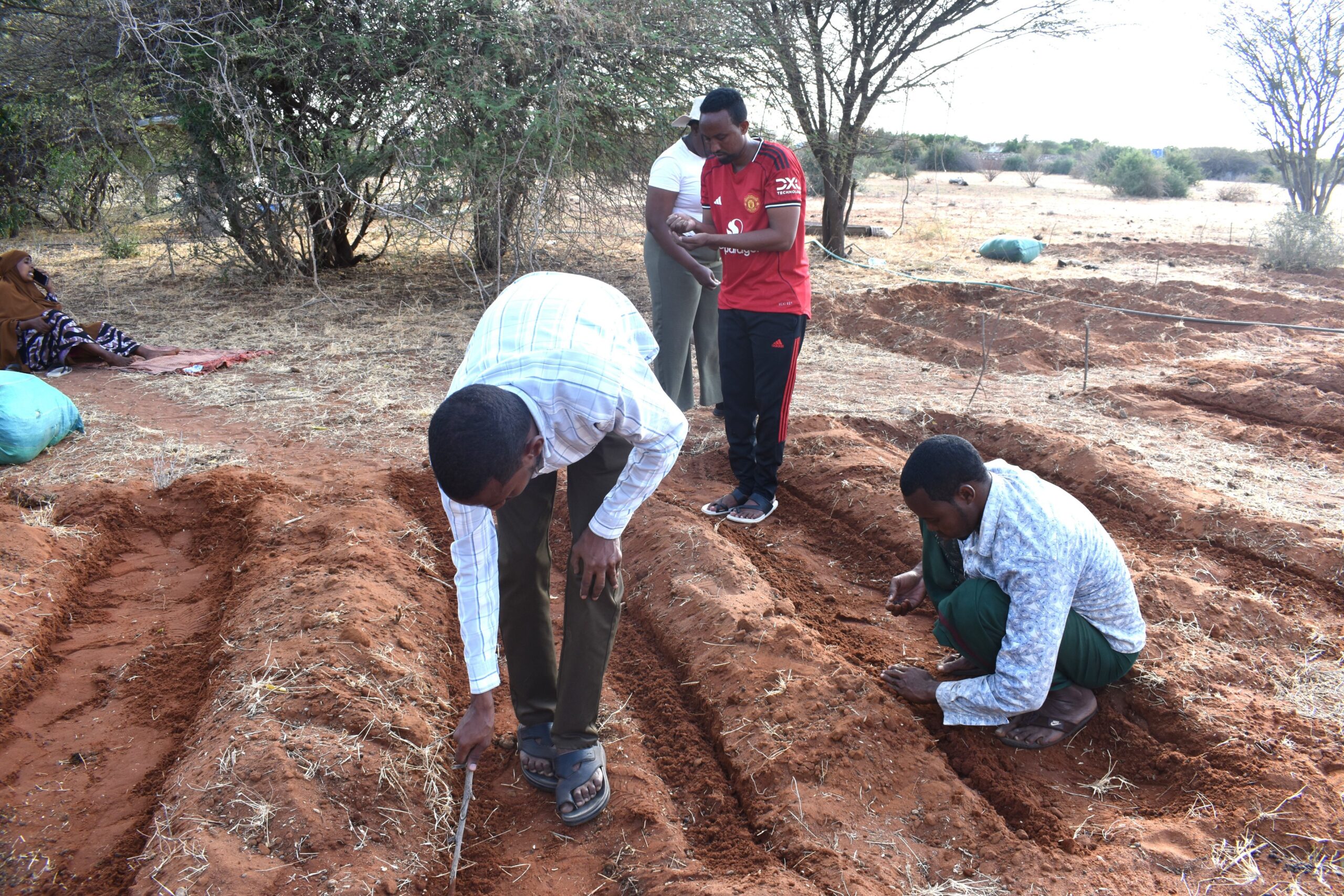
On the second day of the field mission, the Red Meat Value Chain team worked with county officials and local farmers to prepare land and plant forage grasses across 13 demonstration plots in Wagberi Ward in Wajir East Sub-County.
KALRO said the plots were planted with several forage grass species selected to improve livestock feeding systems and increase rangeland productivity. The species included teff, Brachiaria, forage and dual-purpose sorghum, Maasai love grass and Boma Rhodes grass.
According to the organisation, the demonstration sites are intended to serve as practical learning centres where farmers can observe and apply improved forage establishment and pasture management techniques.
“These demonstration plots will act as practical learning hubs for farmers, providing hands-on exposure to best practices in forage establishment and management,” KALRO said.
The organisation added that showcasing the technologies in farmers’ fields is expected to strengthen local capacity in pasture development and sustainable livestock production.
The Food Systems Resilience Project is a regional programme that seeks to strengthen food systems and improve resilience to climate-related shocks, particularly in vulnerable areas where communities rely heavily on agriculture and livestock for their livelihoods.
Wajir County, located in Kenya’s arid and semi-arid lands, depends predominantly on pastoralism, making livestock production a key pillar of the local economy. However, recurrent droughts, pasture degradation and climate variability have increasingly threatened livestock productivity and household incomes.
The establishment of demonstration plots is expected to provide farmers and pastoralists with practical evidence of improved pasture technologies that can be replicated across the county if successfully adopted.


