

By Abdullahi Jamaa
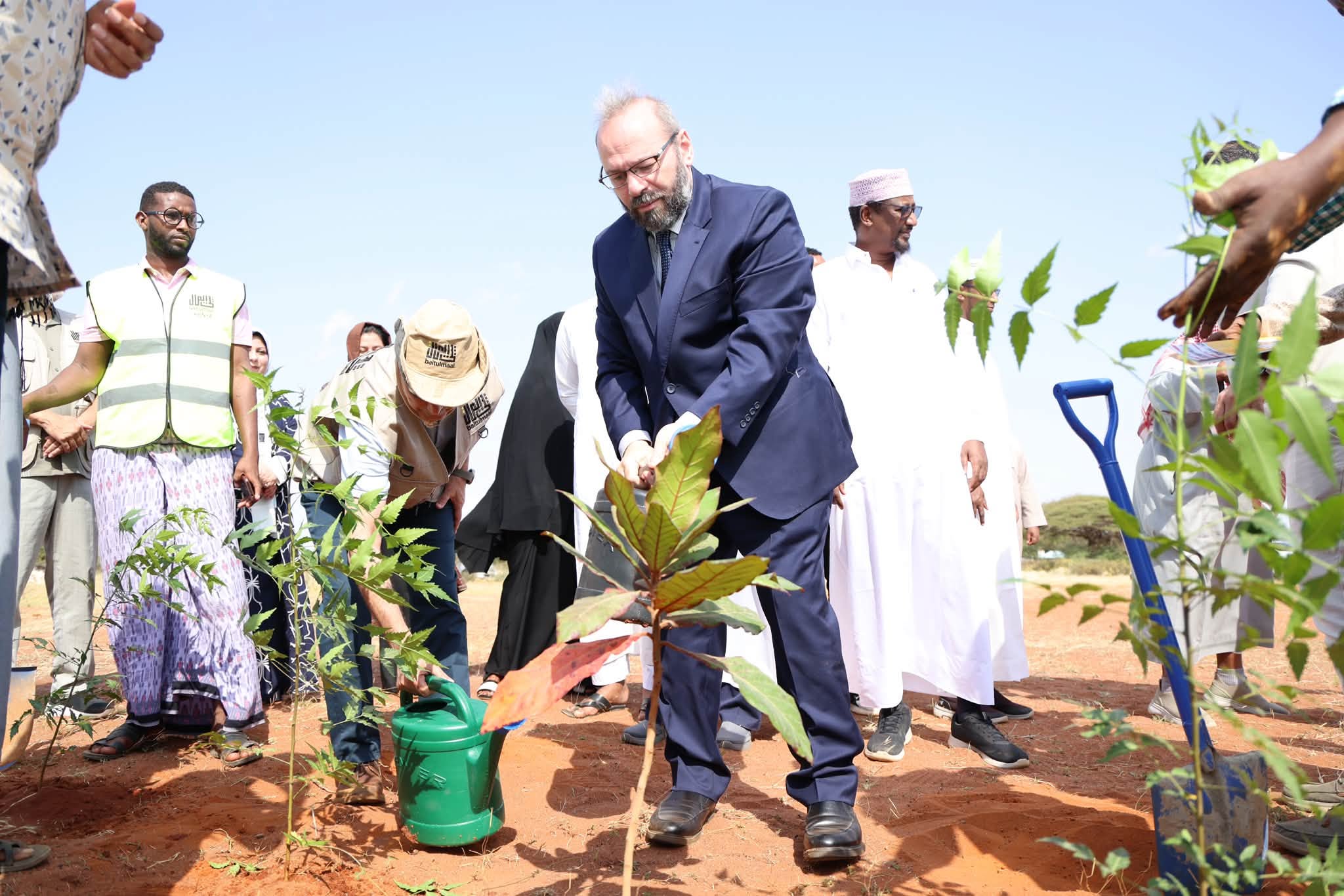
Construction of the Baitulmal Hope Hospital officially began in Wajir Town on Saturday after county leaders, officials from the Islamic charity Baitulmal and community representatives gathered for a groundbreaking ceremony.
The project, spearheaded by Baitulmal, aims to establish a modern hospital with specialised medical departments designed to improve access to healthcare in Wajir County and surrounding areas.
The facility is expected to serve patients from across the wider Horn of Africa once completed, although no timeline was announced.
The ceremony was attended by representatives from the County Commissioner’s Office, members of the Wajir County Executive Committee, Members of the County Assembly, religious leaders, elders, officials from the Islamic University and members of the public.
Speaking during the event, Baitulmal Co-founder Ugas Sheikh Mohamed described the hospital as an effort to reduce the need for patients to travel long distances in search of specialised treatment.
“What we launched today is far more than a construction project. It is a promise , a promise that quality healthcare should never be a privilege reserved for those who can afford to travel hundreds of kilometres,” he said.
Mohamed said the hospital would be built around what he described as four pillars: modern medical equipment, quality service delivery, affordable healthcare and specialised medical services.
According to Mohamed, the planned facility will include outpatient clinics, emergency and trauma services, operating theatres, maternity and maternal health services, a kidney dialysis centre, an isolation unit, a newborn nursery, a laboratory, a radiology department and a dental unit.
He also said the hospital is intended to serve as a training centre for healthcare professionals by hosting local and international medical specialists for regular professional training and surgical outreach programmes.
The hospital’s first phase will begin with a 36-bed capacity, according to remarks by Baitulmal International Chief Executive Officer Muktar Mazen.
Addressing the gathering, Mazen said the organisation viewed the project as a long-term investment in healthcare and community development.
“Real change happens with development. Real change happens by making things that can last, that can transform communities,” Mazen said. “I thank Allah that I am able to be here at the groundbreaking of a hospital that makes it possible for people to get the healthcare that they deserve.”
He added that Baitulmal hopes the hospital will eventually benefit “thousands and thousands” of patients annually beyond its initial bed capacity.
Wajir County Executive Committee Member for Health Habiba Ali welcomed the project and said it would complement the county government’s ongoing investment in healthcare infrastructure.
Ali said the county currently has about 1,200 healthcare workers on its payroll and six Level Four hospitals, while seven additional hospitals have been constructed and are awaiting operationalisation.
She said the county government was particularly interested in expanding maternal and child healthcare services and encouraged Baitulmal to consider incorporating a dedicated integrated maternal and child health unit into the hospital’s future development.
“We have improved in terms of delivery, but still we are not where we want to be,” Ali said, noting that additional maternity services could help improve maternal health outcomes.
She also said the county had established intensive care and high dependency units, specialist services, a satellite blood bank and an expanded ambulance fleet to strengthen emergency referrals.
Wajir County has historically faced significant healthcare challenges, including shortages of specialised services, long referral distances and limited access to advanced medical treatment. Many patients requiring complex procedures are referred to hospitals in Nairobi or neighbouring counties.
The proposed Baitulmal Hope Hospital is expected to add specialist capacity within the county and could reduce referrals if completed and equipped as planned.
If completed as outlined, the facility would represent a significant addition to Wajir’s healthcare infrastructure and could strengthen access to specialised medical services for residents of northern Kenya and neighbouring parts of the Horn of Africa.


