

 By Abdullahi Jamaa
For many families in Wajir and across Northeastern Kenya, a day rarely begins or ends without a steaming cup of shaah macaan, sweet Somali tea. It is served to guests, shared during family gatherings and consumed during countless breaks throughout the day.
But health experts are warning that this cherished tradition may be quietly contributing to a growing burden of lifestyle diseases in the region.
Tea itself is not the problem. In fact, it has long been part of the culture and social fabric of communities. The concern, nutritionists say, lies in the amount of sugar added to each cup and the frequency with which it is consumed.
That sugary infusion, repeatedly consumed in the region’s hot and often unforgiving climate, may be doing more harm than many people realise.
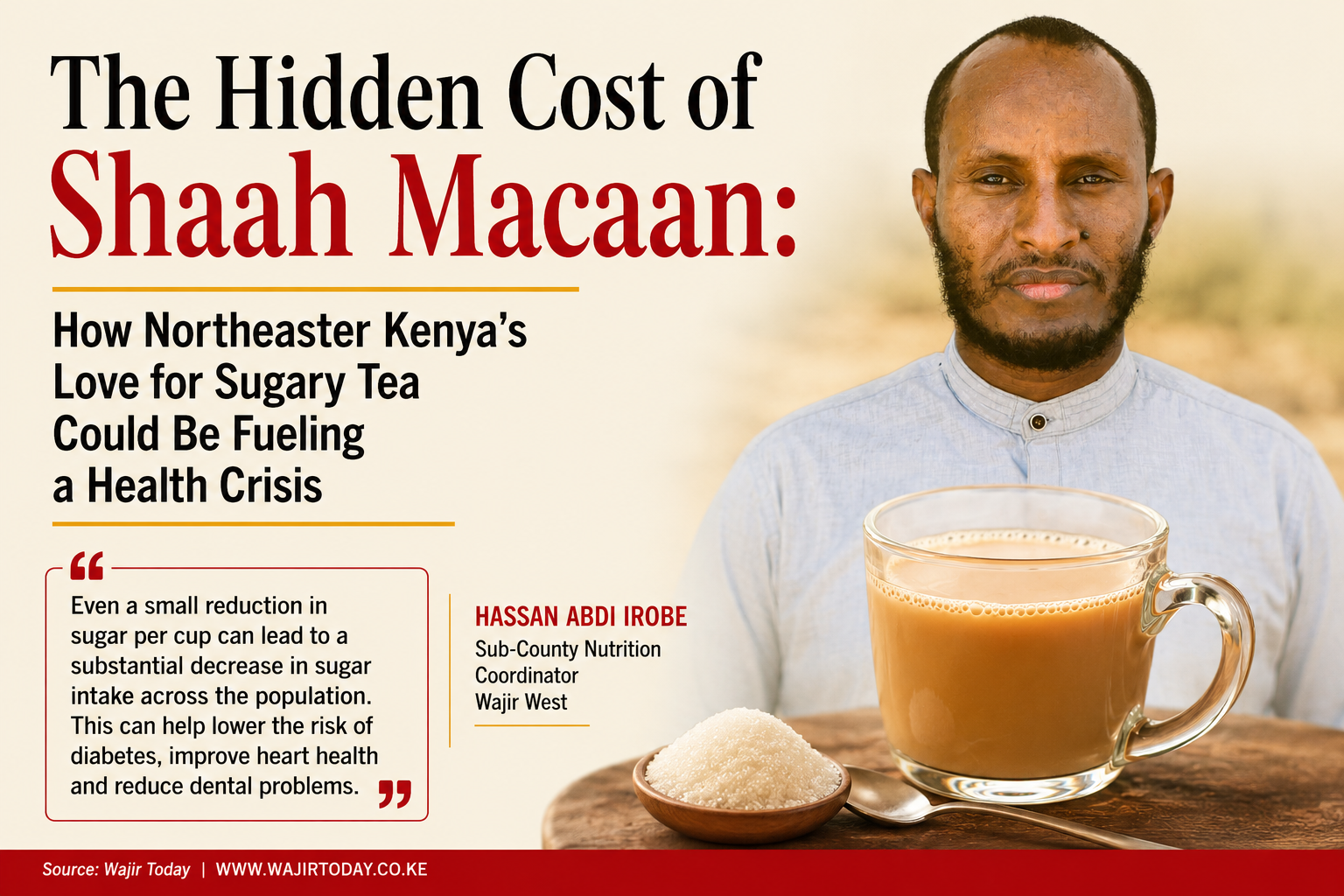
“Many people in Northern Kenya drink tea several times a day, often with generous amounts of sugar. Traditional Somali tea recipes use four to six tablespoons of sugar per cup of about 150 millilitres, creating a solution approaching saturation, approximately 200 grams of sugar per litre,” says Hassan Abdi Irobe, the Wajir West Sub-County Nutrition Coordinator.
According to him, this level of sweetness is far above what is commonly found in tea elsewhere and poses significant health risks over time.
“This is three to four times sweeter than typical sweet tea consumed in many parts of the world. Excessive sugar intake may contribute to weight gain, dental problems, increased risk of Type 2 diabetes and other non-communicable diseases,” he says.
The region’s relationship with tea is defined not only by heavy sugar use but also by the sheer quantity consumed daily. What would otherwise be a healthy beverage is transformed into something entirely different.
For nutritionists like Irobe, the issue is not tea itself, but how people consume it.
“Regular tea consumption becomes a health concern when large amounts of sugar are added, when tea is taken with meals, and when tea begins to replace nutritious foods,” he says.
Iron absorption
 Another lesser-known concern is tea’s effect on iron absorption.
Medical experts say tea contains natural compounds called polyphenols, which bind to iron in the digestive tract and make it harder for the body to absorb. This particularly affects non-heme iron, the type found in plant-based foods such as beans, lentils, peas, whole grains and leafy vegetables.
As a result, excessive tea consumption with meals can contribute to iron deficiency, especially among vulnerable groups including pregnant women, breastfeeding mothers, infants and young children, adolescent girls, the elderly and people already suffering from low iron levels.
“I recommend drinking tea between meals rather than with meals, at least one to two hours before or after eating. People should also consume vitamin C-rich foods such as oranges, lemons and tomatoes alongside iron-containing meals,” Irobe advises.
Nutritionists are also increasingly concerned that tea is replacing proper meals and even plain drinking water.
“Tea has become the primary source of daily fluid intake for many people, displacing plain water. This reduces the intake of other important nutrients, including carbohydrates, proteins, vitamins and minerals,” Irobe says.
According to health experts, the World Health Organization recommends limiting free sugar intake to about 25-50 grams a day. Yet many people in the region may be consuming several times that amount through tea alone.
“A single cup of traditional shaah macaan contains four to six tablespoons of sugar. Drinking four to six cups a day can deliver between 300 and 400 grams of sugar, up to eight times the safe daily limit, and that is before accounting for other sugary drinks such as juices,” says Irobe.
This excessive intake may partly explain the growing number of people living with diabetes, obesity, hypertension and heart disease in Northeastern Kenya.
Once considered problems of affluent urban populations, non-communicable diseases are increasingly becoming a reality in pastoral communities as lifestyles and eating habits change.
“Increased consumption of sugary drinks, processed foods, excess salt and reduced physical activity are important contributing factors,” says Irobe.
“Across the region, urbanisation, sedentary lifestyles, processed foods and sweet tea are fuelling a quiet but growing non-communicable disease crisis that was once considered an urban problem.”
Sugar reduction
 Yet experts insist that preserving culture does not have to come at the expense of good health.
Simple and affordable changes, they say, can make a big difference without forcing communities to abandon cherished traditions.
Families are being encouraged to gradually reduce sugar in tea and other beverages, drink tea between meals rather than with food, increase their intake of fruits and vegetables, limit salt consumption and remain physically active.
They are also urging people to reconnect with traditional diets that sustained previous generations.
“Return to traditional foods, including meat and milk from local livestock. Reduce dependence on white rice, pasta and mandazi, and where possible add sorghum and legumes to meals,” advises Irobe.
Because tea is consumed daily, even small changes can have a significant impact on public health.
“Even a small reduction in sugar per cup can lead to a substantial decrease in sugar intake across the population. This single change could help lower the risk of diabetes, reduce excess weight gain, improve heart health and minimise dental problems,” he says.


1 Comment. Leave new
Great advise Irobe