

By Abdullahi Jamaa
WAJIR, Kenya — Livestock experts, pastoralists, traders and county officials have begun consultations on the proposed establishment of a Camel Centre of Excellence, an initiative aimed at strengthening research, improving productivity and addressing long-standing challenges facing Kenya’s camel industry.
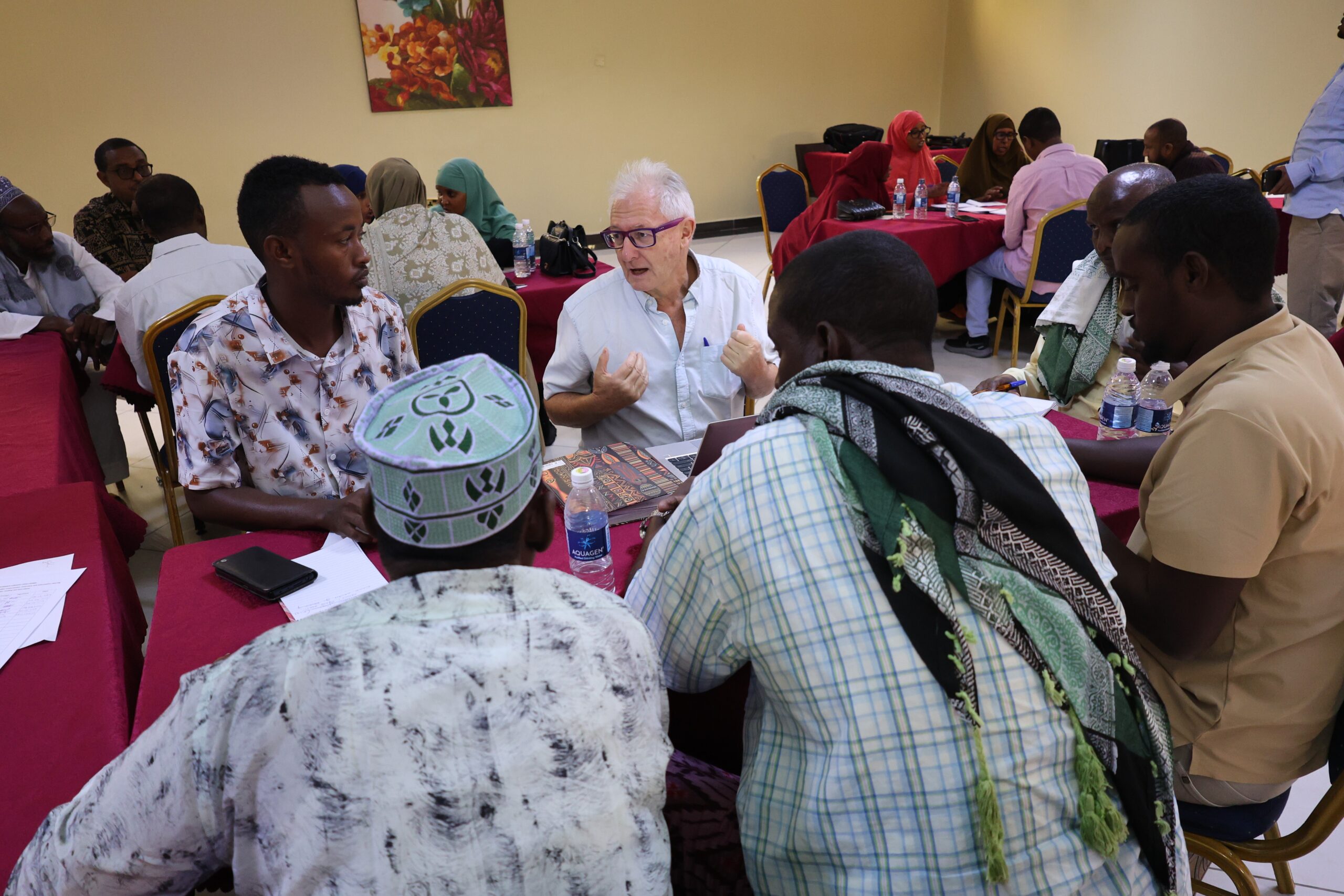
The consultations, convened by Mercy Corps through its Regional Livestock Programme, brought together stakeholders from Wajir and Mandera counties to gather views that will inform the design of the proposed centre, following a presidential directive issued during the 2024 Pastoral Leadership Summit.
The one-day inception workshop launched a series of Focus Group Discussions and Key Informant Interviews intended to identify knowledge gaps and priorities across the camel value chain, including animal health, breeding, rangeland management, processing, value addition and market access. According to the project organisers, the findings will provide evidence to guide the establishment of a national Camel Centre of Excellence.
Speaking during the consultations, camel specialist and consultant Piers Simpkin, who is leading the consultancy to design the proposed centre, said Kenya’s camel sector has historically received limited research and investment despite its growing economic importance.
“For many decades, the camel has been ignored. There’s very little research carried out on it,” Simpkin said. “The cattle and the sheep and goat sectors are very well covered… whereas the camel has always been a bit of a distant remote animal in the remote lands.”
Simpkin said the consultations were intended to ensure the proposed institution responds directly to the needs of pastoral communities rather than functioning solely as an academic institution.
“The real reason we want the stakeholders involved is because any centre of excellence should be responding to the farmer’s needs. It shouldn’t just be an academic institution up in the clouds, far removed from the reality,” he said.
Participants discussed challenges affecting the camel industry, including emerging animal diseases, constraints in camel milk marketing, barriers to livestock exports and concerns over food safety. Simpkin said these issues would help shape the research agenda of the proposed centre.
He said priority areas under consideration include improving disease surveillance and animal health services, strengthening breeding and genetics, enhancing rangeland management, promoting value addition and expanding research on camel production systems.
Simpkin, who has studied camels since the 1980s and currently owns a herd of about 100 animals, said Kenya remains one of the world’s leading camel-producing countries but lacks sufficient data and coordinated research to unlock the sector’s full potential.
On grazing and climate resilience, Simpkin urged pastoral communities to strengthen cooperation in managing shared rangelands as droughts and floods become more frequent.
“We’ve got to work together as communities,” he said. “We’ve got to work united… The rangelands can only support a certain number of animals and if it gets too many then it’s going to be destroyed.”
 Value addition
North and Northeastern Development Initiative (NEDI) Coordinator Simba Gulled said the proposed Camel Centre of Excellence could enhance value addition and improve livelihoods in pastoral areas if successfully established.
“The establishment of the Camel Centre of Excellence will benefit our pastoral communities especially in creating value addition to the livestock sector,” Gulled said. “It is important that we have it and that is why this discussion is important today.”
According to Mercy Corps, the consultative process seeks to collect stakeholder perspectives on the entire camel value chain, including production systems, animal health, feed and water availability, processing, marketing, research and policy. The information will be used to design a centre capable of supporting innovation, research, technology transfer and policy development across Kenya’s camel industry.
The organisation said the proposed centre is expected to improve camel productivity through better husbandry and breeding practices, strengthen veterinary and extension services, increase market opportunities for camel milk and meat products, and improve coordination between producers, researchers and policymakers.
It also aims to create employment opportunities for young people and women while enhancing food security and climate resilience in Kenya’s arid and semi-arid lands.
The consultations in Wajir form part of a wider engagement process that also includes discussions in Garissa, Tana River and Turkana counties before recommendations are submitted to the national task force overseeing the initiative. The task force is expected to determine the centre’s location and mobilise resources for its establishment.


