

 By Abdullahi Jamaa
The rhythmic discipline and the proud pageantry of marching troops during a military parade rehearsal have excited residents of Wajir. It is something many had never witnessed in their hometown before.
Above them, the once-silent skies have been broken by sudden roars as Kenya Defence Forces jets conduct preparatory airshows.
For the young and old alike, it feels like a film unfolding in real life. It is often said that seeing is believing, and in Wajir today, that saying could not ring truer.
When President William Ruto, who now appears to have become something of a political favourite in the long-neglected northern region, announced a few months ago that Madaraka Day would be hosted in Wajir, many thought it was a mere roadside declaration, the kind of political promise that fades with time.
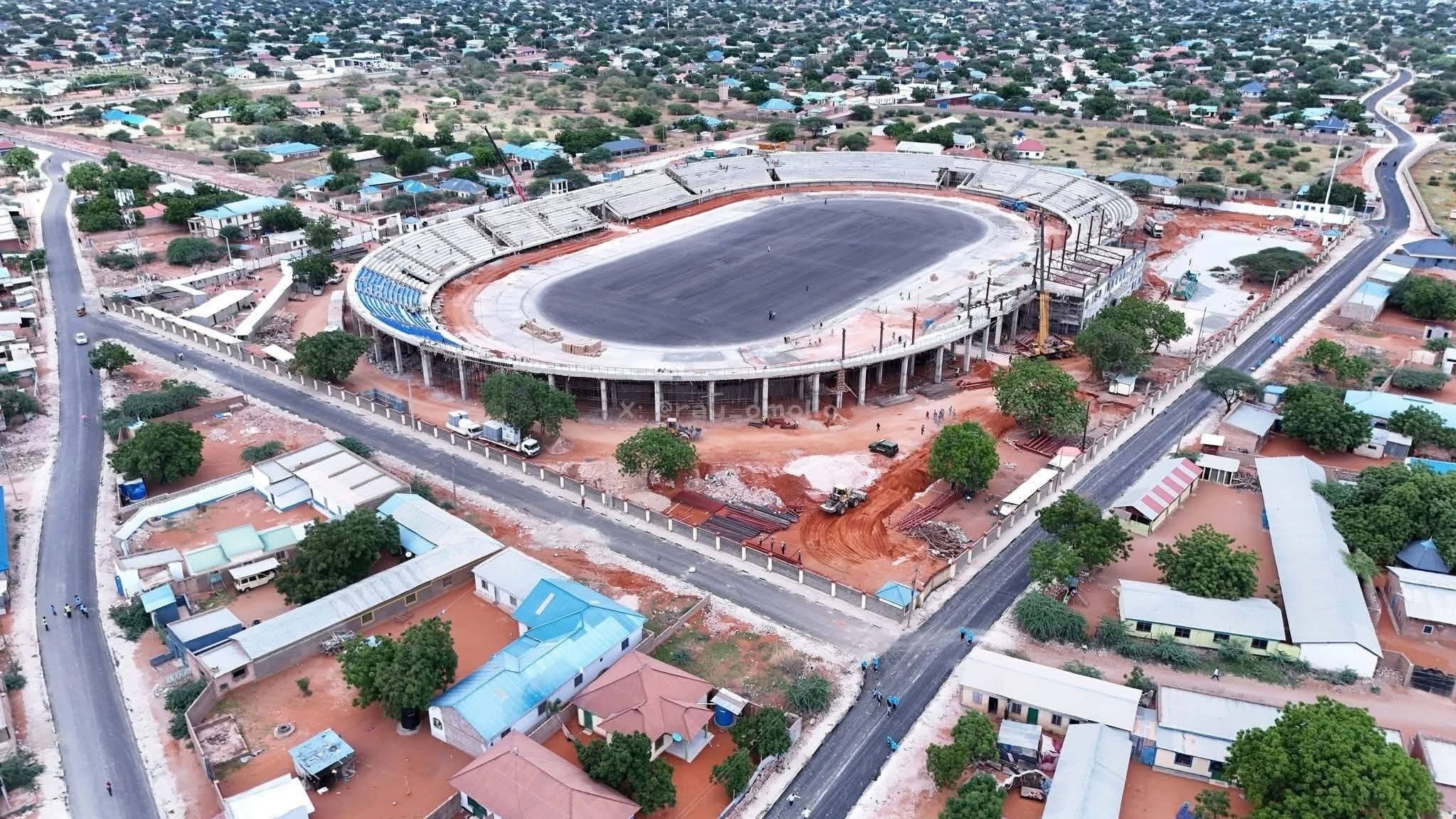
Yet Wajir is now bursting with activities, road construction, the building of a new stadium, and the visible presence of government machinery from across the country.
All of this points to the fact that the President’s words are no longer just rhetoric but a reality taking shape on the ground.
In a few days’ time, the nation will turn its attention to Wajir, which will host the Madaraka Day celebrations, the first of its kind in the entire Northern Kenya region, an area that has, for decades, remained on the periphery of national identity and development.
For residents here, it goes beyond celebration. Since independence, many have felt like second-class citizens, far removed from the reach of a centralised state.
The feeling has often been that development moves at a snail’s pace, while other regions move ahead. Yet today, many can hardly believe what their eyes are seeing.
For the people of Wajir and the wider region, this moment feels long overdue, but the timing may be just right.
Bringing a national celebration to Wajir, a town that has endured decades of marginalisation, underdevelopment, and limited state presence signals a shift in Kenya’s national direction. More importantly, it represents a symbolic “new dawn” for Wajir and the wider northern region.
President Ruto’s choice of Wajir as host for the national celebration is therefore more than symbolic, it is a powerful statement that every corner of Kenya matters.
For a day as significant as Madaraka Day, the selection of Wajir sends a clear message, the country’s unity must not only be spoken about but also demonstrated in practice.
Madaraka Day in Wajir has also become a symbol of a country trying to move forward together, a united nation where diversity is not a weakness but a strength.
It feels like a Kenyan reunion, echoing the spirit of independence. Above all, it has wiped tears from the faces of many in Northern Kenya, tears of marginalisation, exclusion, and long-standing neglect.
From the painful memories of the Shifta era in the 1960s to the scars of clan conflicts, insecurity, and state absence, this moment appears to rewrite the history of a region that has long struggled under the weight of underdevelopment.
There is a growing sense that history may finally be turning a page. In the words often repeated in moments of change, “every cloud has a silver lining.” The heavy cloud of neglect may now be slowly giving way to new possibilities.
The fervour among residents marks a renewed sense of patriotism and belonging. On D-Day, when the people of Wajir wave the national flag from the terraces of the newly built stadium, it will be both emotional and historic.
For more than 63 years, residents of this region have lived within a system that many feel did not fully work for them. In the quiet frustration of underdevelopment, marked by poor roads, limited hospitals, and inadequate infrastructure, the Madaraka Day celebrations in Wajir stand as a defining moment in history.
In Wajir, the epicentre of national celebrations, almost everyone is speaking about the legacy of President William Ruto in reshaping the face of a region long neglected by successive governments. Supporters argue that this moment reflects not just infrastructure investment but a shift in national attention.
The UDA administration has, in the eyes of many locals, won hearts and minds, not only by initiating development projects but also by placing Northern Kenya firmly on the national map.
A vote for Ruto, therefore, is seen by some as a debt of gratitude that Northern Kenya must reckon with, especially if the transformation currently unfolding in Wajir is anything to go by.


