

By Abdullahi Jamaa
Educationists, teachers and school heads in Wajir have been urged to intensify efforts to curb examination cheating.
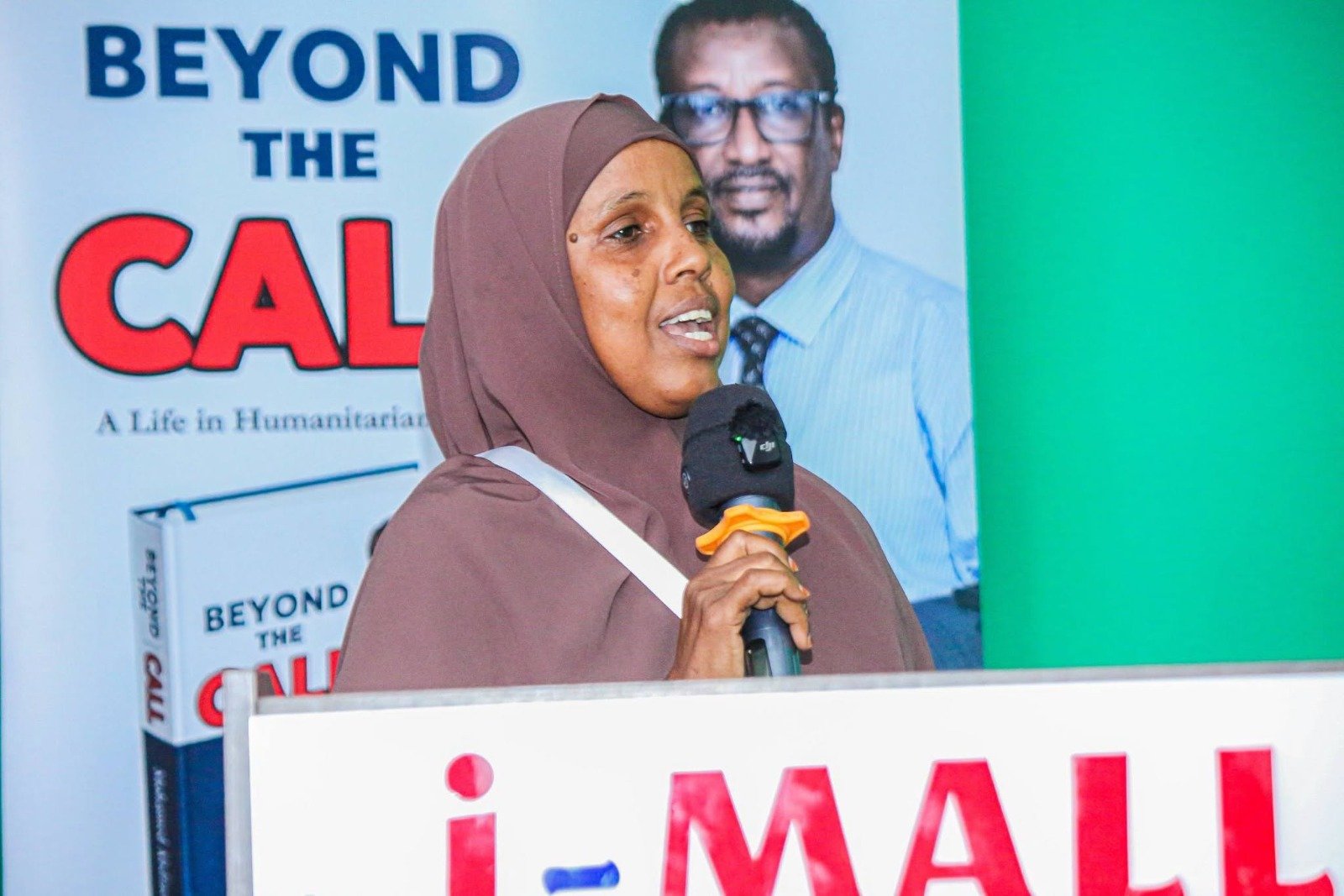
The call was made during the launch of Beyond the Call: A Life in Humanitarian Service and Disaster Resilience Leadership and Humanitarian Action, two books authored by Professor Mohamed Abdinoor, the Vice Chancellor of the Islamic University of Kenya.
Wajir Community Radio Station Manager Halima Kahiye challenged teachers and school principals to take greater responsibility in addressing examination malpractice, which she described as a growing and normalised problem in schools.
“My message today goes to the teachers and principals, you have a role to fight cheating in schools,” Kahiye said. “We must stop this problem if we want progress.”
Kahiye warned that declining education standards could have consequences beyond schools, affecting the social and economic aspirations of communities in Wajir.
“Let’s try our level best to deal with cheating in our schools. If we don’t, it means the next generation will face problems,” she said.
She also called for schools to strengthen reading and writing among learners, saying the culture was essential to improving the quality of education.
“We need to inculcate the culture of reading and writing in our schools otherwise the next generation will have no time to read and write,” she said.
The remarks came as education in Wajir continues to face challenges, including concerns over the quality of learning and examination performance.
Book launch

The book launch brought together professionals, leaders and humanitarian practitioners from across the county, who also reflected on Professor Abdinoor’s decades of experience in humanitarian work and his use of writing to examine crises and the responsibilities of individuals and communities.
Abdinoor Ole, one of the speakers at the event, said Beyond the Call captures the author’s interactions with different people and experiences, including his life in Wajir and his reflections on the Wagalla tragedy.
He said the book challenges readers to reflect on their responsibilities and the choices they make in their lives.
Abdinur Maalim, a publisher with Avicenna Publishers, said Professor Abdinoor’s extensive humanitarian experience gave him a strong basis for writing about crises and humanitarian action.
“Professor Mohamed Abdinoor has decades of experience in humanitarian. He has the authority and legitimacy in the field,” Maalim said, adding that the author had experienced humanitarian catastrophe first-hand.
Another speaker, Mukhtar Ogle, described the discussion around humanitarian action as important at a time when societies have become accustomed to recurring catastrophes.
“This is an ideal conversation for an ideal world where we have monotonised catastrophe. I think it is important to reflect on what this means for us,” Ogle said.
Professor Abdinoor said his books were informed by about 25 years of involvement in humanitarian work, during which he drew lessons from his experiences, observations and interactions.
“I was involved in humanitarian work for 25 years and I picked a lot from my work in this field, including my experience, my views and knowledge,” he said.
He said Beyond the Call examines his life as an aid worker and seeks to contribute to debates about the future of humanitarian action.
A central theme of the book is humanitarian service as a responsibility, presenting assistance to people affected by crises not only as an obligation but also as a moral responsibility to humanity.
The book also examines disaster resilience, focusing on how individuals and communities respond to adversity, recover from disasters, adapt to changing circumstances and emerge stronger.
Abdinoor said he had also devoted significant attention to the role of local communities in disaster management and humanitarian assistance, questioning how citizens can be more meaningfully recognised and involved in responding to crises.
-Wajir Today – Telling Northeastern –


