

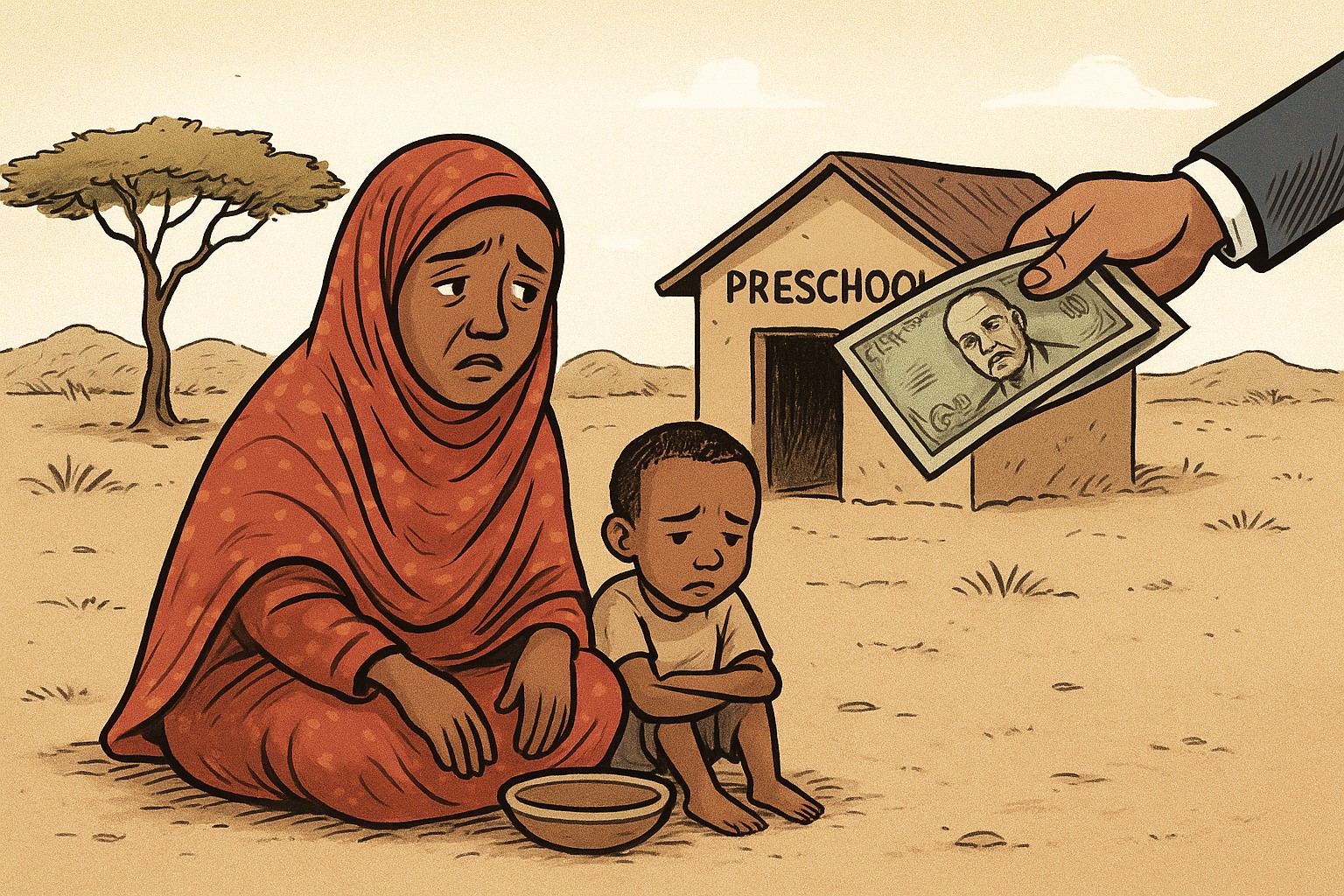
 In Wajir, beneath the recurring headlines of drought, another crisis quietly unfolds. It is the plight of single mothers abandoned by former husbands who refuse to shoulder the most basic responsibility, raising their children. This is not simply a family dispute; it is a violation of human rights and an indictment of systems that allow men to walk away with impunity.
Divorce or separation in Wajir often signals the start of a mother’s lonely battle for survival. Without financial or emotional support, these women are forced into an exhausting cycle of casual labour, petty trade, and dependency on relatives. Their children, caught in the middle, pay the highest price, lost education, poor nutrition, and diminished futures.
Statistics underscore the gravity of the crisis. Wajir County records one of the highest dependency ratios in Kenya.Poverty levels are equally grim where about 70 percent of residents live below the poverty line.
For single mothers without child support, these figures translate into daily desperation. Some cannot afford school uniforms, others must choose between food and medical care. The cycle of deprivation is not abstract, it is lived reality.
This situation is not just morally wrong; it is legally indefensible. Kenya’s Constitution is unequivocal; every child has the right to parental care and protection from both parents. The Children’s Act of 2022 compels fathers and mothers alike to provide food, shelter, education, and medical care. Yet in Wajir, enforcement is practically non-existent. Courts are distant, legal fees are prohibitive, and cultural silence shields neglectful fathers from accountability. For Wajir’s single mothers, justice remains elusive.
In Islam, both parents are entrusted with the sacred duty of caring for their children. The Qur’an reminds believers that “Do not kill your children out of poverty; We provide for you and them” (Qur’an 6:151), underscoring that provision is a divine obligation, not a choice.
Fathers, in particular, are commanded to provide food, shelter, and education, regardless of marital status or personal grievances. Prophet Muhammad (peace be upon him) said: “It is sufficient sin for a man that he neglects those whom he is responsible for.” Yet in Wajir, these clear injunctions are ignored.
Cultural silence often shields fathers who abandon their responsibilities, leaving mothers to carry a burden that Islam places equally upon both parents. From an Islamic justice perspective, such neglect is not only a social failure but also a grave spiritual accountability before Allah.
The costs of this neglect go beyond individual households. UNICEF research consistently links the absence of paternal support to higher school dropout rates, child labour, and early marriage especially for girls.
In Wajir, this fuels a generational cycle of poverty, undermining the county’s broader development goals. Put bluntly, when fathers abandon their responsibilities, the entire community bears the burden.
It is time to treat this issue not as a private matter, but as a public crisis demanding accountability. Fathers must be held responsible morally, culturally, and legally. Religious and community leaders, who wield enormous influence in Wajir, should challenge the practice of men remarrying while neglecting their first families.
Their silence enables injustice. The county government, too, cannot stand aside. Establishing legal aid desks, strengthening enforcement of maintenance orders, and partnering with civil society organisations to raise awareness are urgent steps.
But beyond laws and policies, there is a deeper question of values. Somali culture in Wajir has long prided itself on kinship and communal care. How then can a society built on such principles allow its most vulnerable single mothers and their children to be left behind?
This editorial calls for clarity, parenting is not optional. It is not negotiable. It is a duty that transcends personal differences between former spouses. To abandon one’s children is to commit an act of betrayal not only against them, but against the community at large.
The mothers of Wajir have shown resilience, but resilience should not be mistaken for consent to injustice. They should not be condemned to carry burdens that belong equally to the fathers who walked away.
The children of Wajir deserve more than empty promises and absent fathers. They deserve food, education, and dignity. They deserve a society that recognises neglect not as a private failing, but as a collective crisis. Until that recognition translates into action, single mothers in Wajir will remain trapped in the shadows of abandonment and their children will continue to inherit a cycle of poverty and despair.
The choice is ours: to continue turning a blind eye, or to demand accountability from absent fathers, action from authorities, and solidarity from our communities. Silence is no longer an option.


