

By Staff Reporter | Wajir Today | Tuesday, 9 December 2025
The National Drought Management Authority (NDMA) has raised the alarm over a worsening drought in Wajir, placing the county on alert phase alongside Garissa, Kilifi, Kitui, Marsabit, Kwale, Kajiado, Isiolo, and Tana River.
According to NDMA’s latest drought situation update, the county is grappling with the impacts of a poor short rains season, with conditions deteriorating sharply in recent weeks.
Wajir West and Wajir South have been identified as drought hotspots, triggering urgent calls for intervention.
The report highlights emerging risks to food security, water access, and pasture availability across the region.
The county, home to over 870,000 residents, is facing a significant humanitarian challenge.
NDMA estimates that approximately 174,200 people are in urgent need of food assistance, as households struggle to cope with rising hunger and malnutrition.
Alarmingly, there has been a spike in both moderate and severe acute malnutrition among children, with experts warning of long-term consequences if relief efforts are delayed.
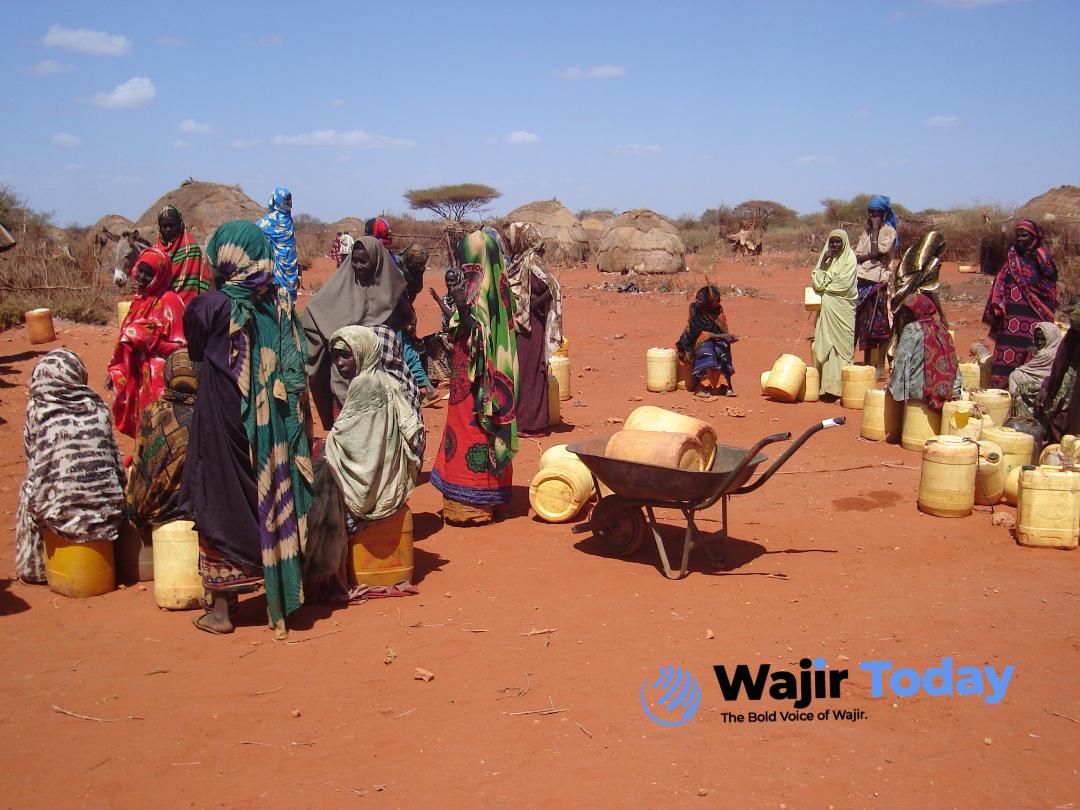
Water scarcity is compounding the crisis. Communities in hotspot areas face limited access to water for domestic and productive use, with the drought agency recommending water trucking to ensure basic needs are met.
The drought is also taking a severe toll on livestock, a vital source of income in the arid region. The report notes increased livestock forage deficits, declining body condition, and rising mortality rates.
Experts warn that the crisis could drive further migration-related diseases and parasite outbreaks, as residents are forced to move in search of food and water.
The agency has recommended close monitoring of the nine counties under alert and urged government agencies, humanitarian partners, and local communities to scale up emergency response measures.
With the short rains performing poorly, analysts fear the drought could intensify in the coming months, leaving tens of thousands of families vulnerable to hunger, disease, and loss of livelihoods.


