

 By Staff Reporter | Wajir Today | Thursday, 22 January 2026
Journalists and social media influencers in Wajir County have been urged to report on governance objectively and responsibly as a step towards advancing sustainable development in the county.
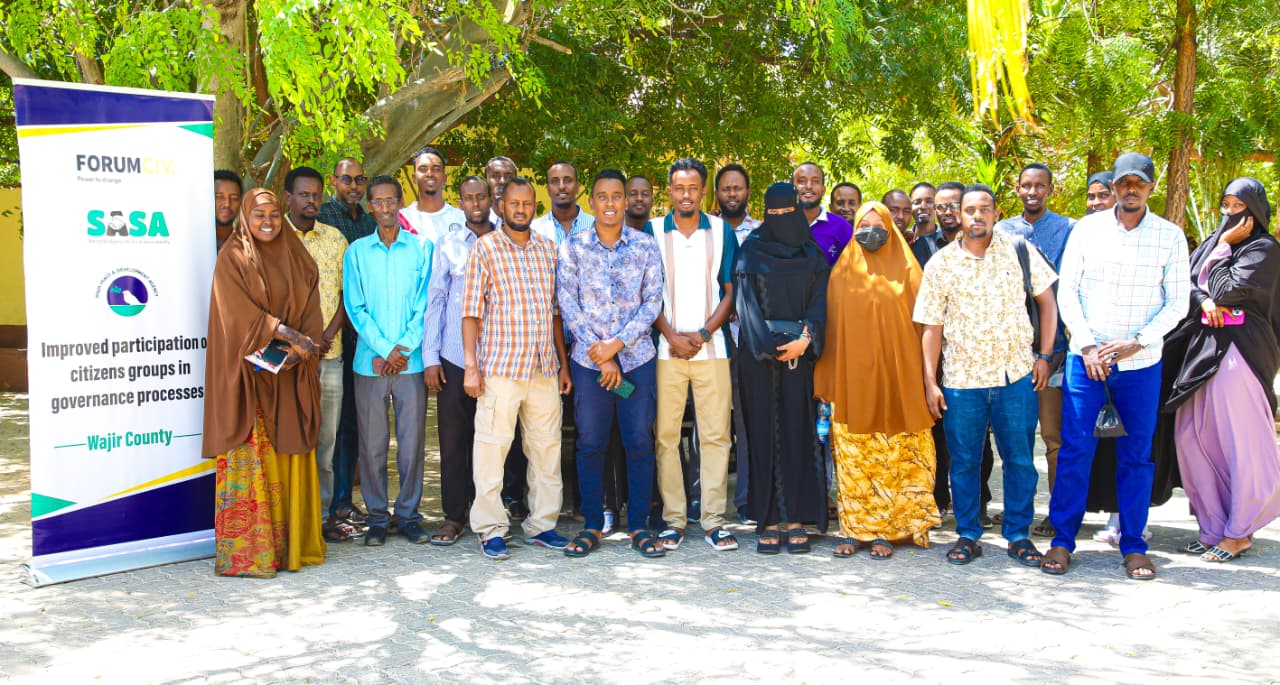
The call was made during a capacity-building forum that brought together local journalists, bloggers and online influencers, organised by the Wajir Peace and Development Agency (WPDA).
The gathering focused on the growing influence of both mainstream media and social media in shaping public opinion on governance, service delivery and development.
Participants were reminded that ethical, accurate and law-abiding reporting remains central to improving governance and public accountability in the county.
The forum forms part of a series of governance support initiatives implemented by WPDA in partnership with Forum CIV under the Strengthening Agency for Social Accountability (SASA) project.
Critical role
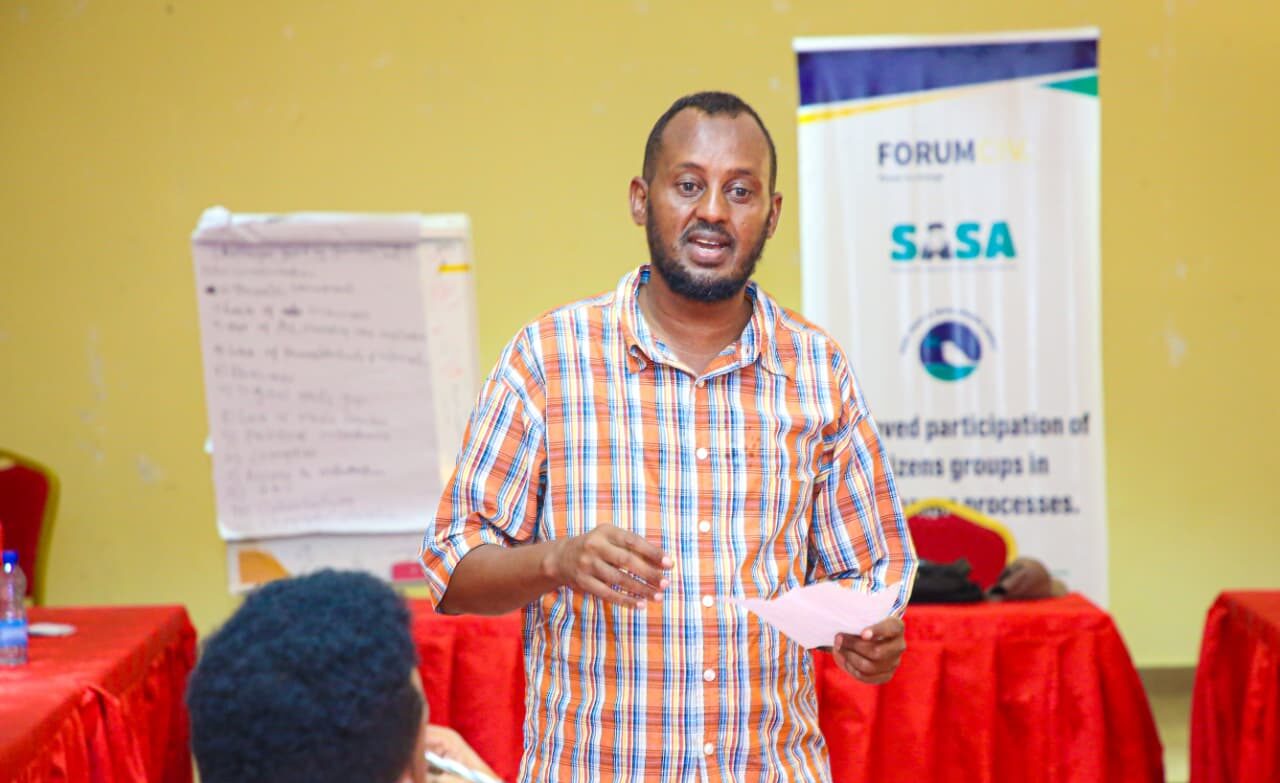
Addressing the participants, WPDA Programme Officer Mr. Abdinoor Omar explained the purpose of the engagement and the role of journalists in county governance.
“We are discussing the challenges facing journalists and social media influencers when reporting about governance,” said Mr. Abdinoor.
He said the forum was also examining how reporting can be balanced, constructive and grounded in facts while still holding leaders to account.
“We are also having a discussion about how journalists and bloggers can positively report about community projects such as the ongoing construction of Isiolo-Mandera Road,” he said.
Mr. Abdinoor emphasised that journalists and digital content creators are not peripheral actors in governance debates.
“The journalists and social media influences are very important in efforts to improve governance. This forum is about sharing ideas on how to empower and improve positive reporting.”
Challenges
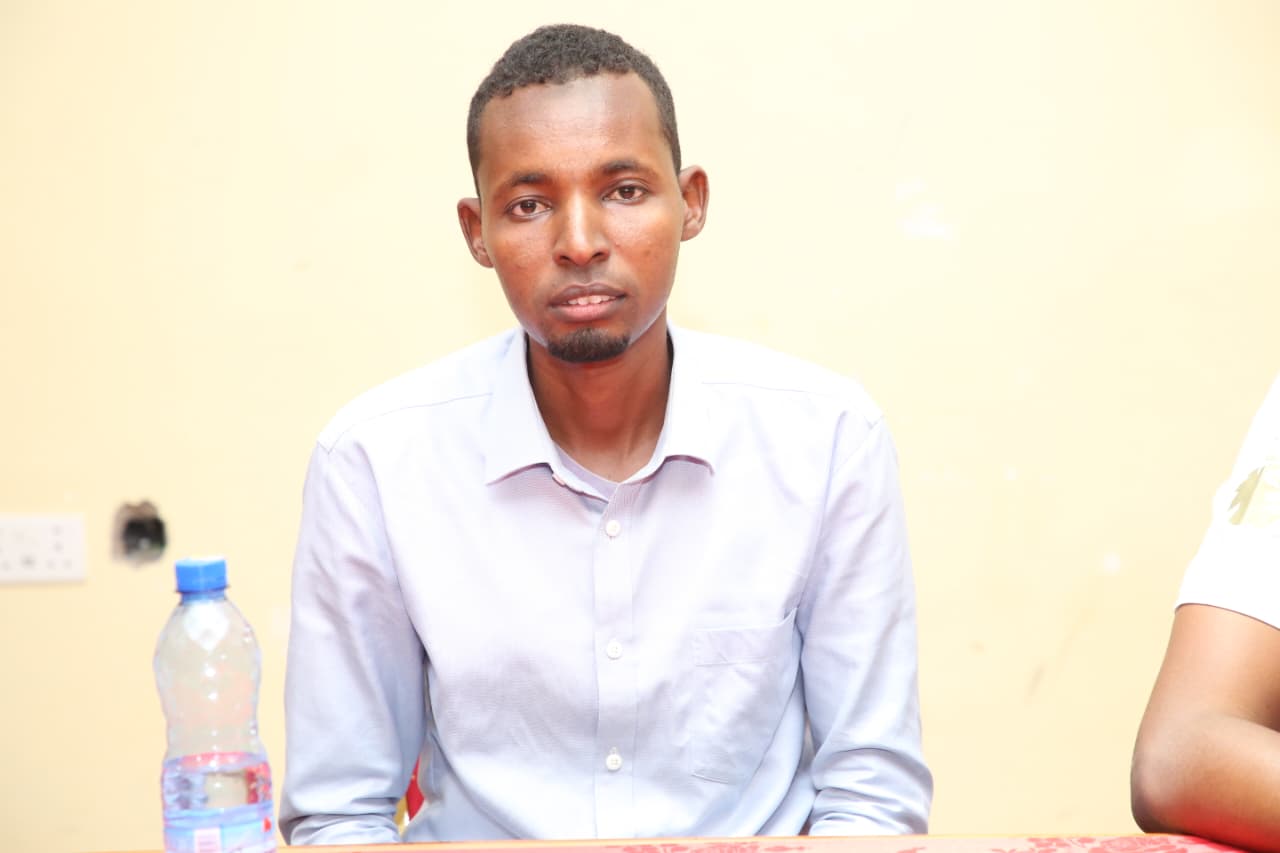
Local reporters and bloggers say the realities on the ground make objective reporting difficult. They used the forum to raise a catalogue of challenges they face in their daily work.
They cited lack of adequate resources, political interference and corruption as some of the key hindrances to objective governance reporting in Wajir.
Local journalist Hassan Kashuqji painted a grim picture of the pressures reporters face when covering sensitive governance issues.
“We face threats, harassment or political interference, especially when exposing corruption, abuse of power or poor service delivery,” he said.
He warned that reporting on governance in places like Wajir exposes journalists and bloggers to real physical danger.
Mr. Kashuqji added that limited resources continue to undermine the quality and depth of reporting.
“We as the local journalists and bloggers face low funding and inadequate tools to conduct in-depth governance reporting,” he said.
Journalists also pointed how growing mistrust between the public and the media weaken good governance and administration.
“Public skepticism toward media can reduce the impact of governance reporting, especially where trust in institutions is already low.” Notes Mr. Kashuqji
Harassment
Ms. Habiba Abdi Noor, a local female journalist, cited how harassments and barriers to effective reporting hinder their work.
“We face safety and harassment risks while covering certain stories,” says Ms. Habiba. “Other challenges include barriers to accessing key information and official proceedings,” she said.
Ms. Habiba agrees that logistical and resource constraints for media practitioners in Wajir continue to undermine objective journalism.
“Logistical and resource constraints due to under-resourced media houses is a big challenge here,” she said.
The forum also examined how journalists and bloggers can cover major community infrastructure projects objectively without sliding into propaganda or misinformation.
Discussions focused on striking a balance between accountability reporting and development-focused storytelling.
Senior journalist Noordin Elmoge urged reporters to embrace development journalism as a tool for driving positive change.
He said journalists and bloggers must go beyond scandals and conflicts to highlight stories that promote progress and accountability.
“Journalists can focus more on development journalism by focusing on stories about community and county development,” said Mr. Elmoge. “This is one way that journalists can advance governance in the county,” he said.
Renewed calls
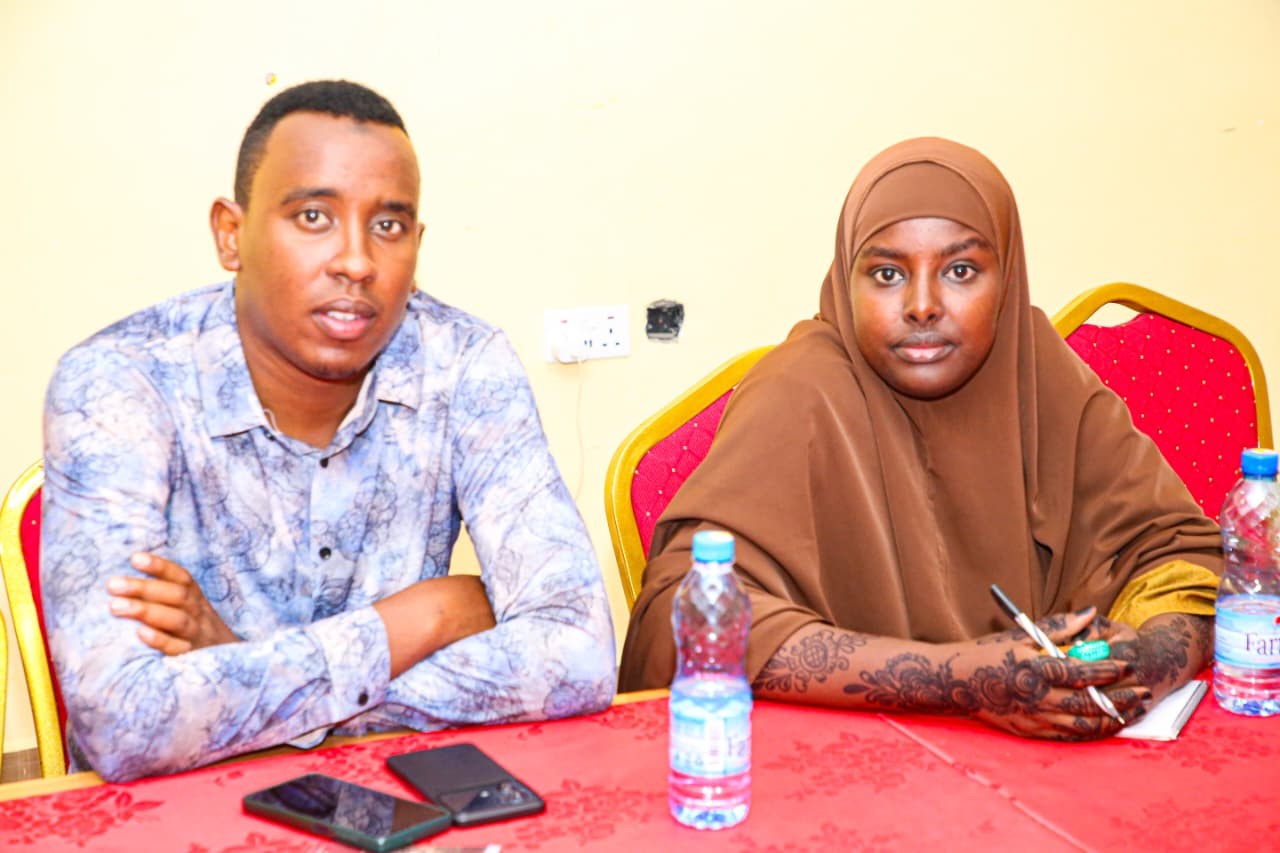
The forum concluded with renewed calls for stronger media engagement and sustained capacity building for local journalists and bloggers.
Participants agreed that improving governance reporting in Wajir requires more resources and more informed journalists and bloggers.
“Addressing these challenges requires coordinated efforts from the government bodies, press freedom fighters, journalists and civil society to strengthen protections, improve access to information, and support local journalists’ capacity in Wajir County,” says Ms. Habiba


