

By our reporter | Wajir Today | Thursday, 8 January 2026
Wajir County is facing a worsening drought crisis, with more than 170,000 residents now classified as food insecure, according to the latest rapid assessment by the National Drought Management Authority (NDMA) and partners.
The report, produced in collaboration with the Wajir County government, World Food Programme, WASDA, and Save the Children, warns that without urgent intervention, the situation could spiral into emergency levels.
Currently, Wajir is classified in crisis phase where about 20 percent of the population, roughly 174,200 people, are in need of immediate humanitarian assistance.
“With continued deterioration in rangeland resources and livestock productivity, more households are projected to move into Phase 3 and even Phase 4 (Emergency) over the next three months if assistance is not scaled up,” the report states.
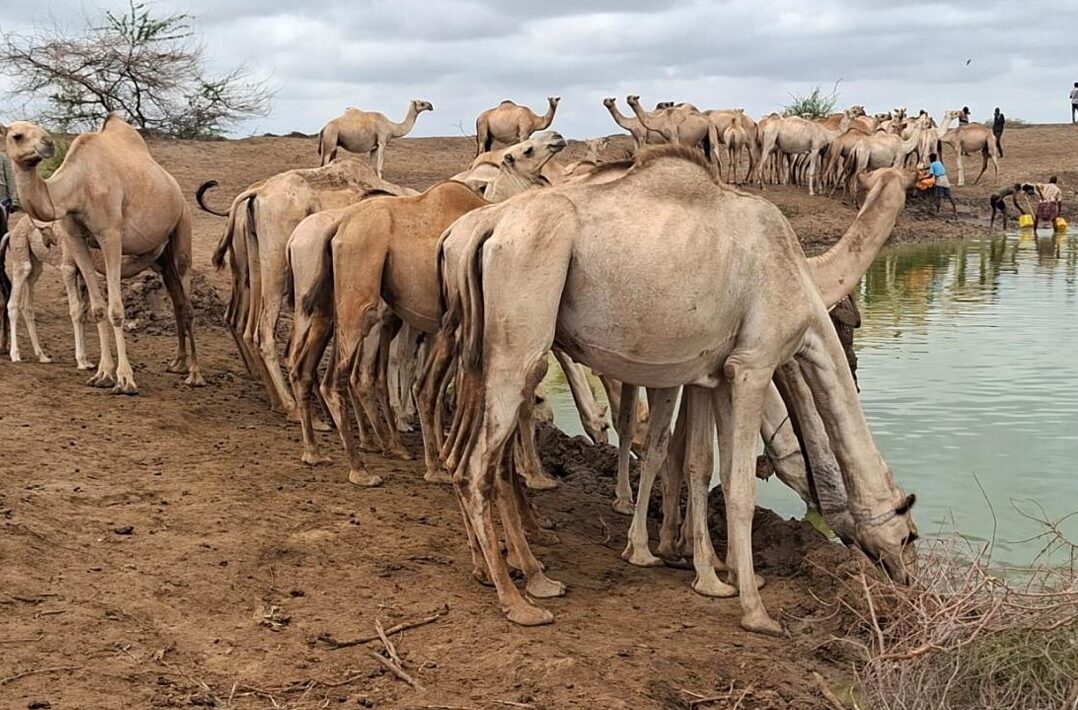
The assessment highlights the severe impact on livestock, a lifeline for pastoralist communities. Livestock trade at primary markets is at a historic low due to falling demand and declining animal health.
“Livestock prices are extremely low. Camels fetch between 20,000 and 40,000 shillings, cattle 18,000 to 30,000, sheep 2,000 to 2,500, goats 3,000 to 4,000, and donkeys 6,000 to 9,000,” the report notes.
Secondary markets have also been disrupted. Key trading hubs including Wajir town, Habaswein, Khorofharar, Dagahley, Diif, Griftu, and Bute are reporting minimal livestock sales.
Without a coordinated, multi-sectoral response, the report warns of worsening food insecurity, increased malnutrition, livelihood erosion, and heightened risk of resource-based conflict in the county between January and March 2026.
Humanitarian agencies are calling for urgent action to avert further catastrophe. The NDMA report urges immediate support for food aid, livestock interventions, and livelihood recovery programmes to prevent Wajir from slipping into a full-scale emergency.


