

By Staff Writer | Wajir Today | Monday, 1 December 2025
Wajir County marked World AIDS Day on Monday with growing concern over rising HIV infections, raising doubts about goal to end AIDS as a public health threat by 2030.
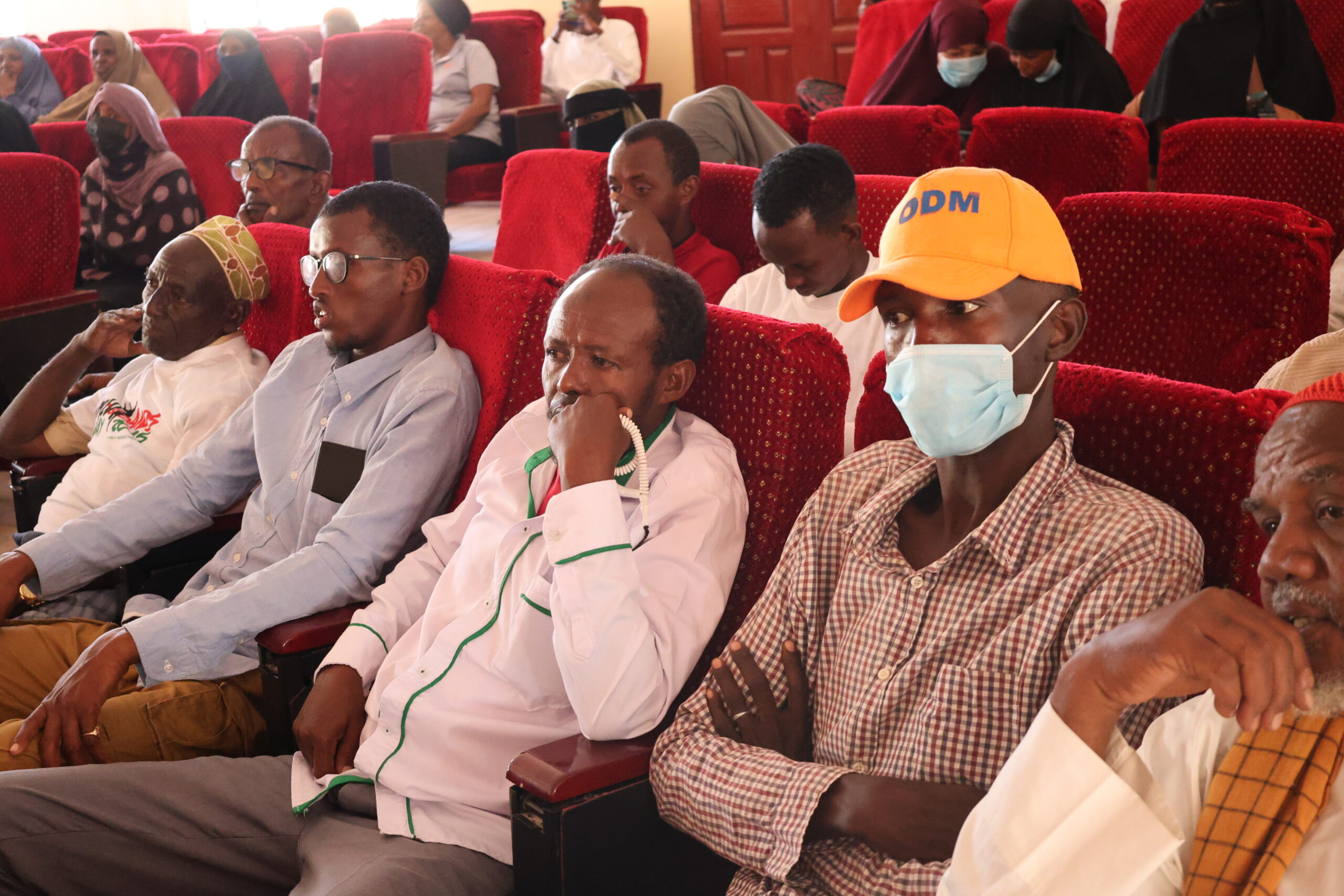
At an event held at the ICT Hall, health officials, civil society groups, and community representatives called for intensified awareness campaigns and stronger stakeholder engagement.
They warned that the predominantly Muslim county faces unique social and cultural barriers that could undermine progress.
The town’s rapidly changing demographics, increasing drug use among youths, and erosion of traditional norms were highlighted as major drivers of new infections.
Stakeholders said these trends are pushing Wajir to the other side of AIDS prevalence, with the county recording higher HIV rates each passing year.
Wajir is among the counties where HIV prevalence is steadily rising. Health officials said the situation is worrying and called for bolder campaigns to accelerate progress toward eliminating AIDS in the next four years.
According to county health data, 362 individuals are currently on antiretroviral therapy, including 32 children.
However, public health activists believe the true figure may be higher due to low uptake of voluntary HIV testing, with many residents reluctant to know their status.
“We should address these concerns. We need to step up our campaigns and we need to come together as stakeholders,” said Ms. Halima Dahir, a representative from the National Syndemic Diseases Control Council (NSDCC).
The event underscored the vital role of community involvement in reducing new infections and ending AIDS. People living with HIV shared personal testimonies to dispel myths, correct misinformation, and challenge persistent stigma.
“It is better if everyone in our community do the test. The community have a perception that the disease is a killer but I am living with it for 18 years,” said Amina Abdi, who is living with AIDS.
County Progress
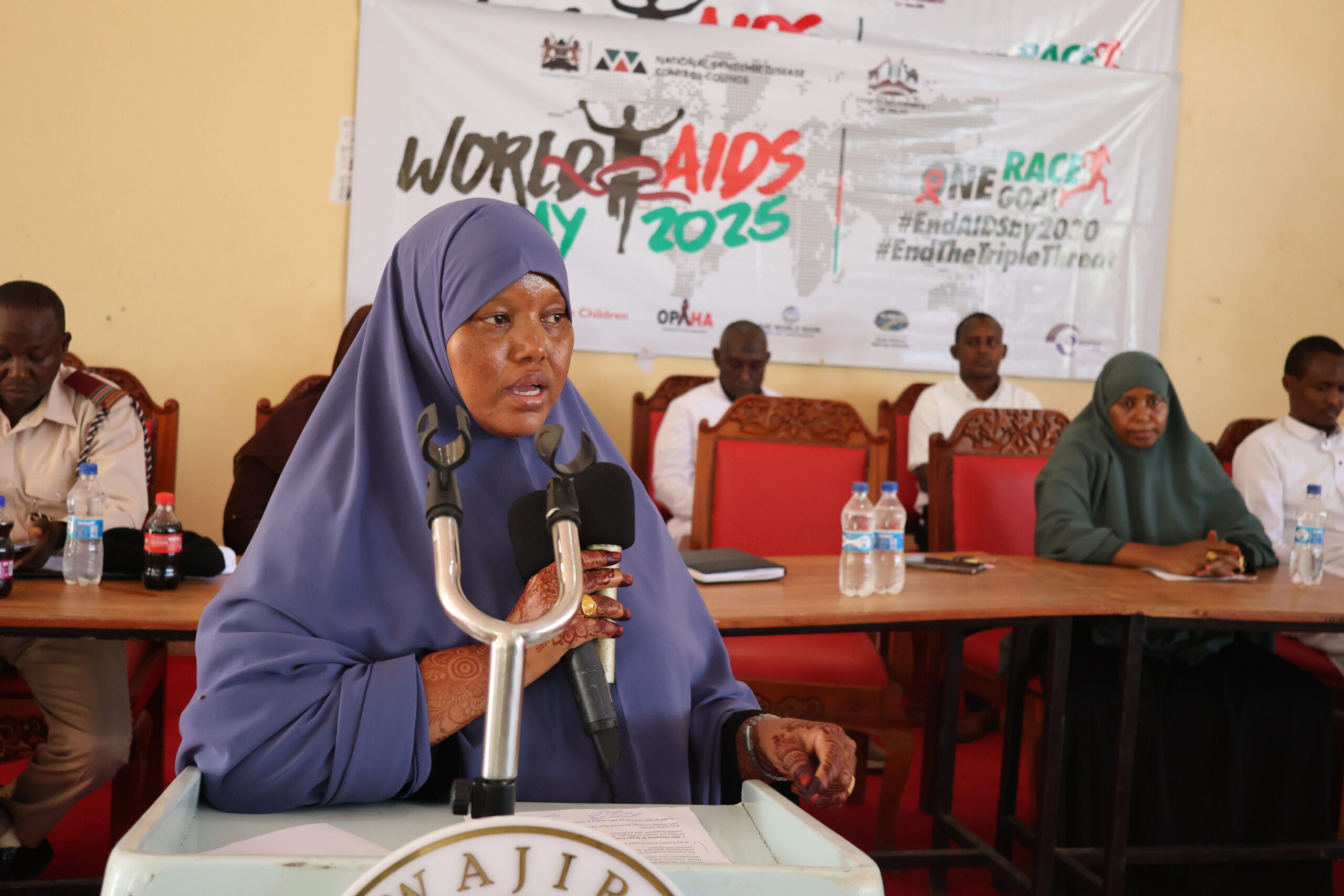
County government representatives, led by the CECM for Health Services, Ms. Saadia Ahmed Abdi, praised recent progress in HIV interventions.
Speaking on behalf of Governor Ahmed Abdullahi, she outlined improvements achieved over the past few years.
“Despite our unique challenges, Wajir County has made significant progress in HIV testing, treatment, and awareness. HIV testing coverage increased from 38% in 2022 to 66% in 2024,” she said.
She added that thousands of residents have undergone voluntary HIV testing across the county, contributing to national efforts to end the epidemic by 2030. “We have targeted 28,000 people for HIV testing in 2025” she said.
The county has also strengthened community campaigns aimed at improving viral suppression rates. Ms. Saadia said the progress is largely due to robust adherence support and expanded outreach efforts.
“We have improved viral suppression rates due to strong adherence support. We have expanded awareness in schools, mosques, madrassas, and community forums to reduce stigma. These achievements confirm that epidemic control is attainable,” she said.
However, officials noted that the “Triple Threat”, new HIV infections, unintended pregnancies, and sexual and gender-based violence, continues to disproportionately affect adolescents and young people. This remains one of the county’s biggest obstacles to achieving national HIV goals.
“We are strengthening youth-friendly services, expanding school health education, improving SGBV response mechanisms, and working closely with community and religious institutions to ensure young people are protected, informed, and supported,” Ms. Saadia said.
As the county looks ahead, achieving “Zero new infections, Zero AIDS-related deaths, Zero stigma and discrimination” will be difficult.
Rising prevalence and new infections suggest that Wajir will need stronger partnerships, greater community participation, and sustained investment in health systems.
World AIDS Day ended with renewed calls for collective action, with stakeholders urging residents to embrace testing, care, and treatment as Wajir confronts a growing public health challenge.


