

By Abdullahi Jamaa | Wajir Today | Monday, 22 December 2025
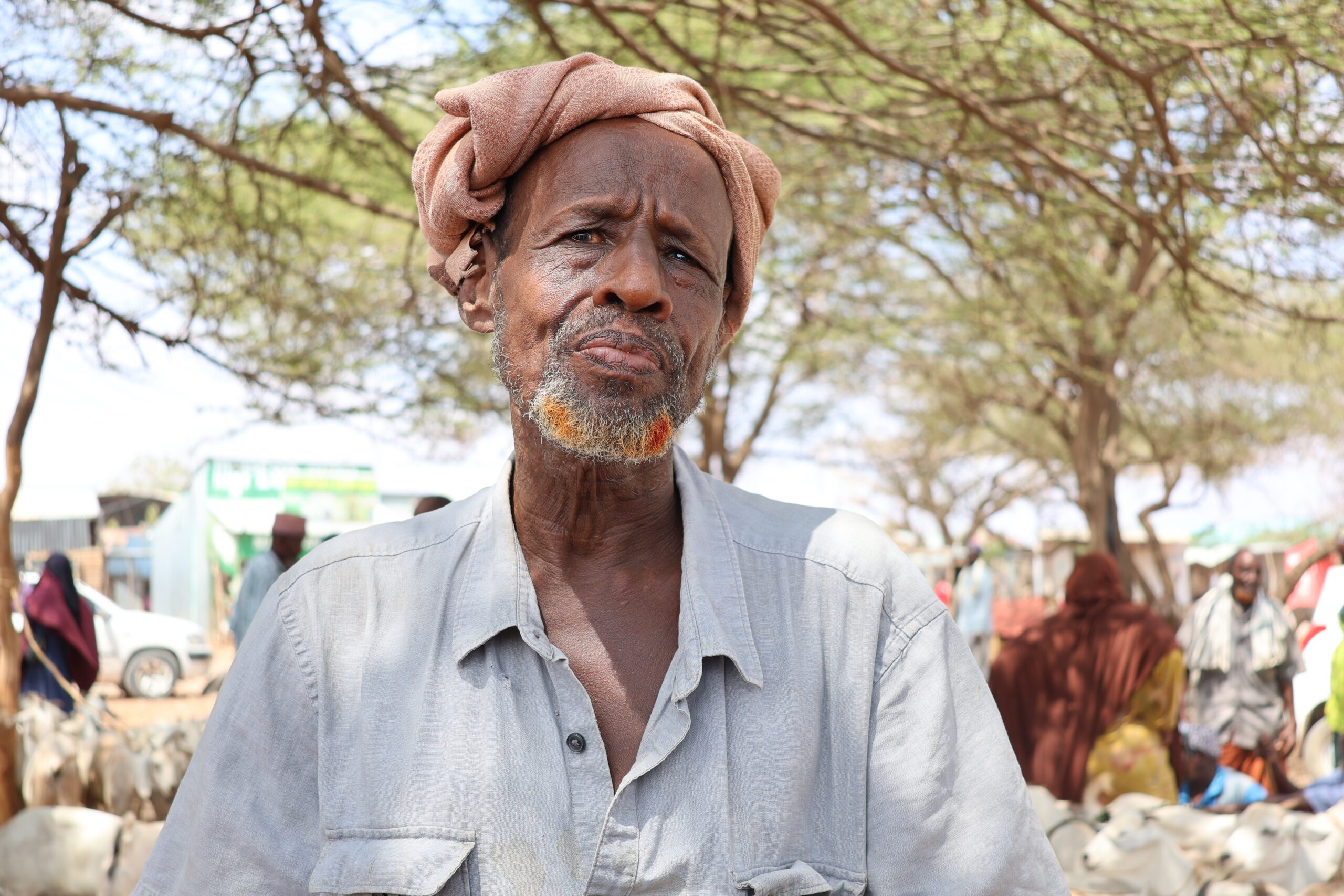
He wears a head turban, leans on a walking stick while standing under an old acacia tree, a spot that has always been his second home almost every single day for decades.
Mr Muhumed Mumin is one of the long-time livestock traders in Qorahey market at the heart of Wajir town, a business that no longer sustains his family bills.
Mr Mumin, ageing and tired, is seemingly helpless and clings on to his line of business to pay his family bills. But like many traders in the market, he survives on the edge.
The livestock trade is no longer viable. In the last three months, his daily earnings have plummeted as he stares ahead into a period of uncertainty.
“Can someone with nine or eight children survive on 300 shillings a day? Life has become hard. That is what is happening,” Mr Mumin told Wajir Today, seemingly seething with frustrations.
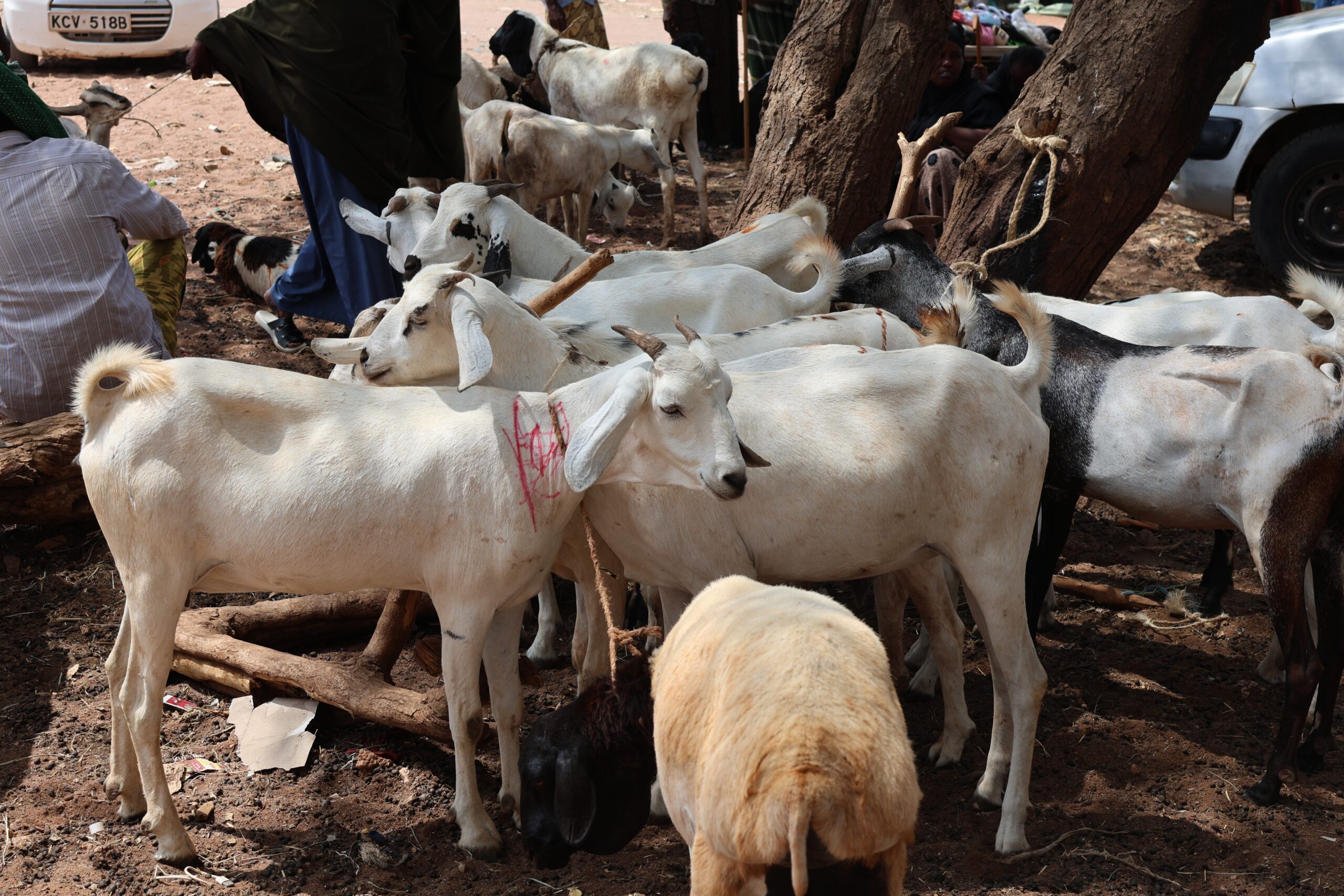
As he narrated his ordeal to this writer, he pointed to a herd of goats tied to a nearby tree at the centre of the market, where the midday sun was biting.
The goats are so skinny that they are sold at throwaway prices, some as low as Ksh 2,500, the lowest price since the last drought that ravaged Wajir County.
“We used to do good business and meet our daily bills from here, but now it is tough. We survive by God’s grace and things are getting tougher,” Mumin narrates.
On a bad day, Mumin used to take home more than 1,000 shillings. It is no longer business as usual. For him and many others, it is now more likely to go home with empty pockets.
“With the current market situation, I earn at most 300 shillings daily. Life has become harsher and we do not have support from the government,” he says.
Livelihood crisis
Mr Mumin is not the only one facing a livelihood crisis. Mr Mohamed Osman, a livestock trader of more than 50 years, is a man economically under siege.
He says he has never witnessed anything similar to the current market conditions, which have forced many traders and their families to wallow in a livelihood crisis.
“We are affected by drought now, livestock are weak and prices are down in Wajir. People who are depending on the market are really in danger,” Mr Osman observes.
Mr Osman, who knows the trade like the back of his hand because of his five decades in livestock trading, has seen the situation change from bad to worse.
These days, he says, many local women from the largely conservative community have joined men in the market in competition for survival, as a dwindling economy forces housewives and single mothers to seek family bills.
“The women who were supposed to be at home are here competing with us for survival. That is how bad the situation is, and you can see how even women are struggling,” says Mr Osman.
Looming shortage
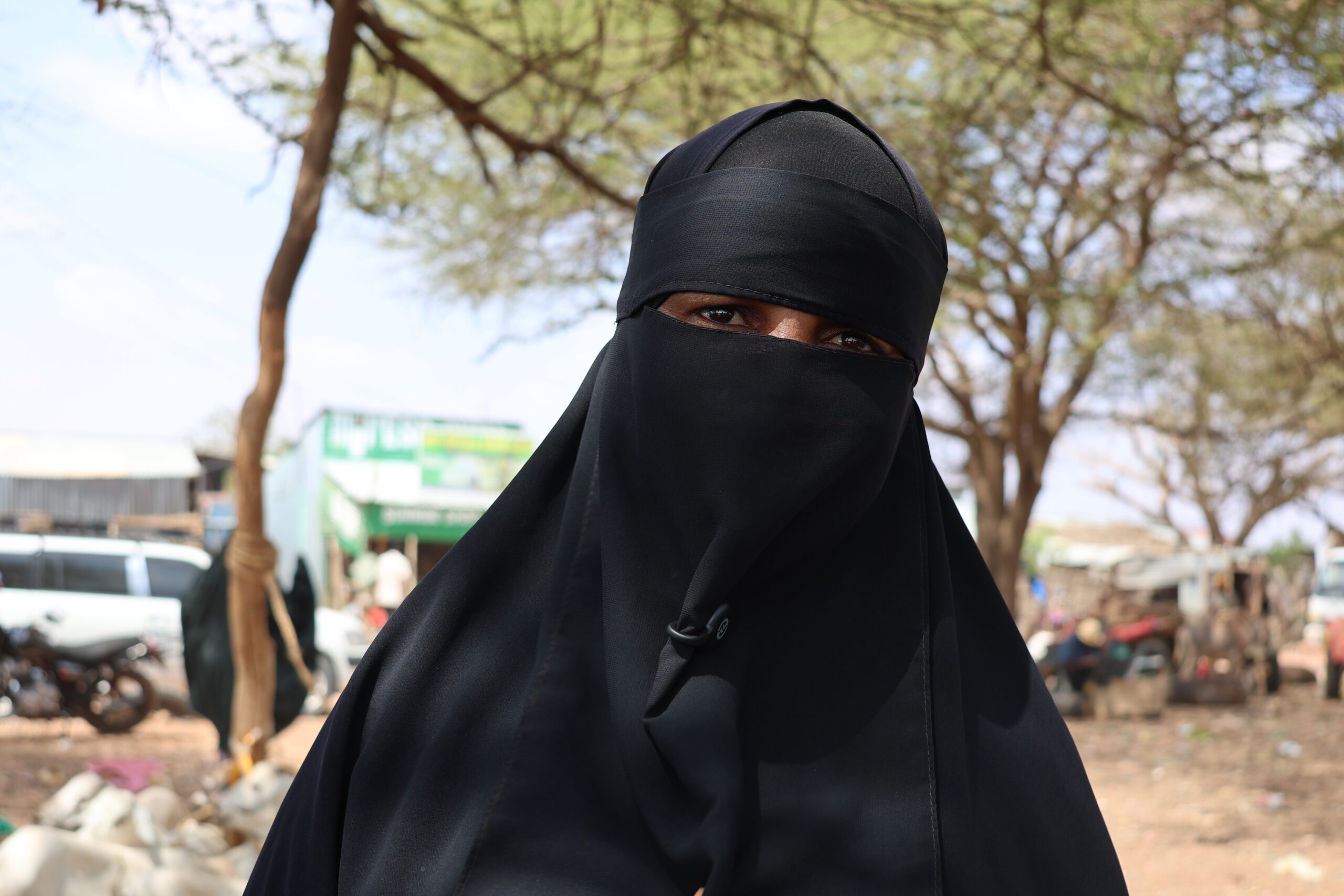
Ms Ahatha Muhumed is a trader in the market, trying to earn a decent living to support her family. Things are not easy, as low prices of goats reduce her profit margins.
“I was previously a housewife, but I am now among the livestock traders here at Qorahey. We are feeling the heat of the dry spell. A she-goat that used to go for about 7,000 is now around 3,500 to 4,000 shillings,” she describes her tribulation.
With goats no longer fetching enough money at the market, Ms Ahatha’s family faces a looming shortage of food and other essentials.
“Before the season worsened, we used to earn around 500 daily, but now we go home sometimes without a penny. When we receive the goats from herders, we keep tethering them around to wait for a better deal that usually does not come.”
Worsening situation
Herders who bring goats to the market many times return them back, as low prices mean they cannot meet their shopping needs.
The situation at the market reflects the growing desperation for survival as the dry spell continues to bite like a malevolent snake, much more in the hinterland where the livelihood crisis is slowly unfolding into a humanitarian catastrophe.
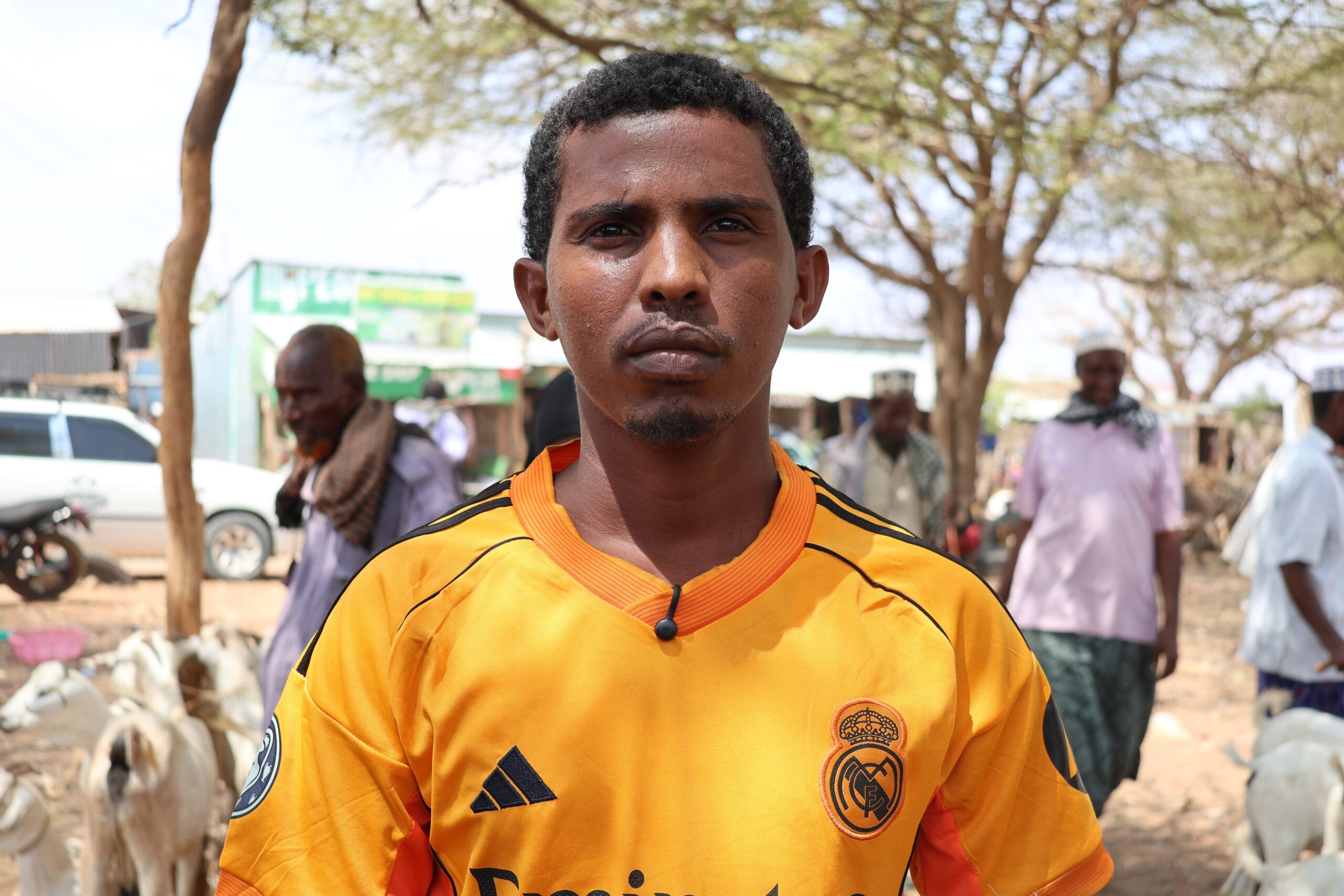
A young trader by the name of Ibrahim Yussuf, who supplies livestock from pastoral villages and brings them to Qorahey market, has a more vivid description of the situation.
“A lot has changed in the market from September up to December. Goats that we used to sell at around 6,000 are now selling at 3,500. Some are selling as low as 2,000,” observes Mr Ibrahim.
According to him, goats with good flesh and appearance are now hard to come by as the season worsens. It takes him two or three trips weekly because it is taking longer to find well-fattened animals.
“We try to bring good-quality livestock but it is no longer easy. Competition has also increased, and we can only make two or three trips per week.”
The suffering of local livestock traders in Wajir is a result of a raging dry spell that continues to undermine the quality and number of livestock.
In its latest report, the National Drought Management Authority (NDMA) has raised the alarm over a worsening drought in Wajir, placing the county on alert phase alongside Garissa, Kilifi, Kitui, Marsabit, Kwale, Kajiado, Isiolo and Tana River.
The county, home to over 870,000 residents, is facing a significant humanitarian challenge. The NDMA estimates that approximately 174,200 people are in urgent need of food assistance, as households struggle to cope with rising hunger and malnutrition.
The drought is also taking a severe toll on livestock, a vital source of income in the arid region. The report notes increased livestock forage deficits, declining body condition, and rising mortality rates.
As the drought situation unfolds, people like Mumin, Osman, Ahatha and Ibrahim will find it harder to keep on relying on livestock as a source of income.
“Life is getting hard” Mumin finally says.


