

By Abdullahi Jamaa
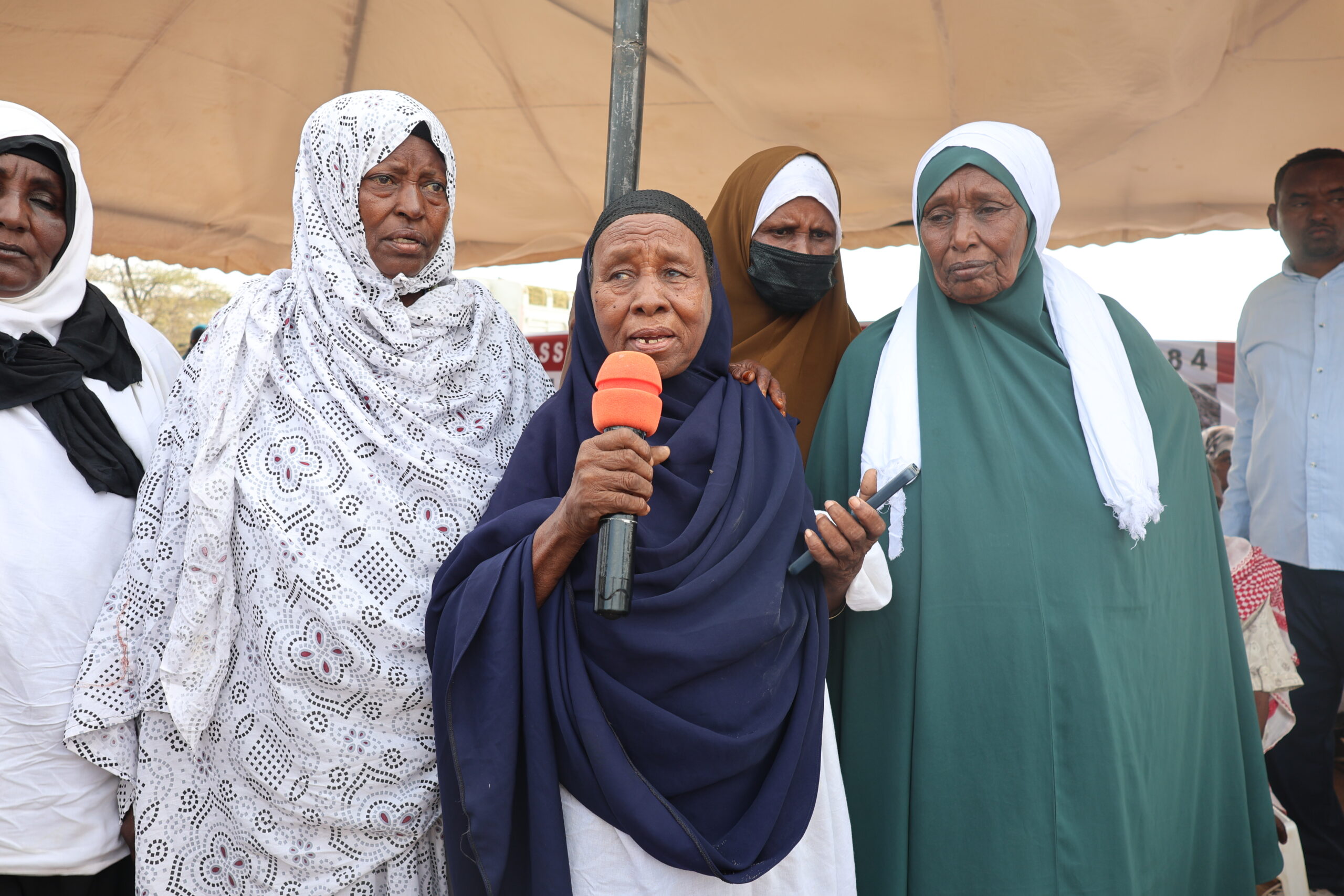
The air in Orahey grounds in Wajir Town was thick with grief and memory as survivors, victims, and orphans of the infamous Wagalla Massacre of 1984 gathered to mark the 42nd anniversary of one of Kenya’s darkest moments.
For Sahara Keinan, a widow and survivor of the massacre, the commemoration was more than a ceremony, it was a solemn reminder of a horror that still haunts her people.
“I still remember the day clearly,” Sahara said as she addressed the crowd. “The government’s security forces descended on our homes, rounding up men, raping women, and torturing members of the Degodia clan. Our people were eaten by the government of Kenya.”
She recounted how thousands of Degodia men were killed, many trapped inside the Wagalla airstrip, surrounded by hundreds of armed security officers.
“They left nobody and nothing behind. They killed our boys, confiscated our camels, and raped our women,” Sahara said
The massacre, which ran from February 10 to 14, 1984, saw families torn apart and a community plunged into fear.
“I remember watching three lorries of dead men buried in the bush,” Sahara said, painting a chilling picture of the scale of the atrocity.
Forty-two years later, the wounds remain raw, and demands for justice and reparations remain unfulfilled.
“People have died, but we still want our rights and compensation. They were killed by the government of Kenya and its military. We want President William Ruto to compensate us,” Sahara appealed.
Her voice was echoed by Zeinab Hussein, another widow of the massacre, who described the widespread torture of men and the sexual violence inflicted upon their wives, daughters, and sisters.
“We have gathered here today to commemorate the Wagalla Massacre. We urge the Kenyan government to compensate us,” Zeinab said. “ we have suffered greatly. Our houses were burned, our bodies violated. We are demanding for compensation.”
The Truth Justic and Reconciliation Commission (TJRC) report, released over a decade ago, outlined comprehensive compensation for victims, including monetary payments and initiatives aimed at economic empowerment and community development. Yet the report is gathering dust with no political will to implement it.
“It has been more than 12 years since the TJRC report was released,” said Ramadhan Jellow, an orphan of the massacre. “What we want is justice and reparations. We want the President to declare compensation for the victims, survivors, orphans, and the wider community when he comes to Wajir for the next Madaraka Day celebrations.”
Professor Mohamed Elmi, a prominent Wajir intellectual and politician, described the massacre as a painful chapter in Kenya’s history.
“The Wagalla Massacre is a stark reminder of gross abuse of office and human rights by officers entrusted and paid by the people to maintain law and order,” Professor Elmi said.
The government of Kenya has acknowledged the security operations that led to the massacre, but survivors remain frustrated by the lack of accountability.
“The Government of Kenya has acknowledged the occurrence of the Wagalla Massacre,” Professor Elmi said. “The TJRC report detailed how the security forces engaged in a systematic operation resulting in the massacre of thousands, while highlighting the gross failure of the government to provide justice, reparations, or compensation.”
Wagalla survivors are now calling for a renewed investigation, prosecution of those responsible, and a transparent process for reparations.
Mzee Noor, another victim, stressed that compensation goes beyond monetary payments to include community development projects such as health facilities, roads, water supply, and education as par the TJRC report.
“The TJRC report’s recommendations included economic empowerment for the Wajir community,” Mzee Noor said.
The survivors have also directed criticism toward local politicians, whom they accuse of failing to advance the interests of the community.
“We have a leadership problem. We must elect leaders who will fight for us,” says Mzee Noor urging the community to hold current politicians accountable.
The 42nd commemoration, organised by the Wagalla Foundation in partnership with the Kenya National Commission on Human Rights (KNCHR), KCB Foundation, Wajir Peace and Development Agency, and the Women Rights Advocacy Initiative (WRAI), aimed not only to remember the victims but to renew calls for justice.
“We are here to support the issue of the Wagalla Massacre. Let’s use this opportunity to push for advocacy through our leadership,” said Hassan Abdi Omar, regional coordinator for KNCHR.
The Wagalla Massacre remains a haunting symbol of human rights abuses in Kenya, and as Wajir marks the 42nd anniversary, survivors remain steadfast in their call for justice and compensation.


