

 By Staff Writer | Wajir Today | Tuesday, 25 November 2025
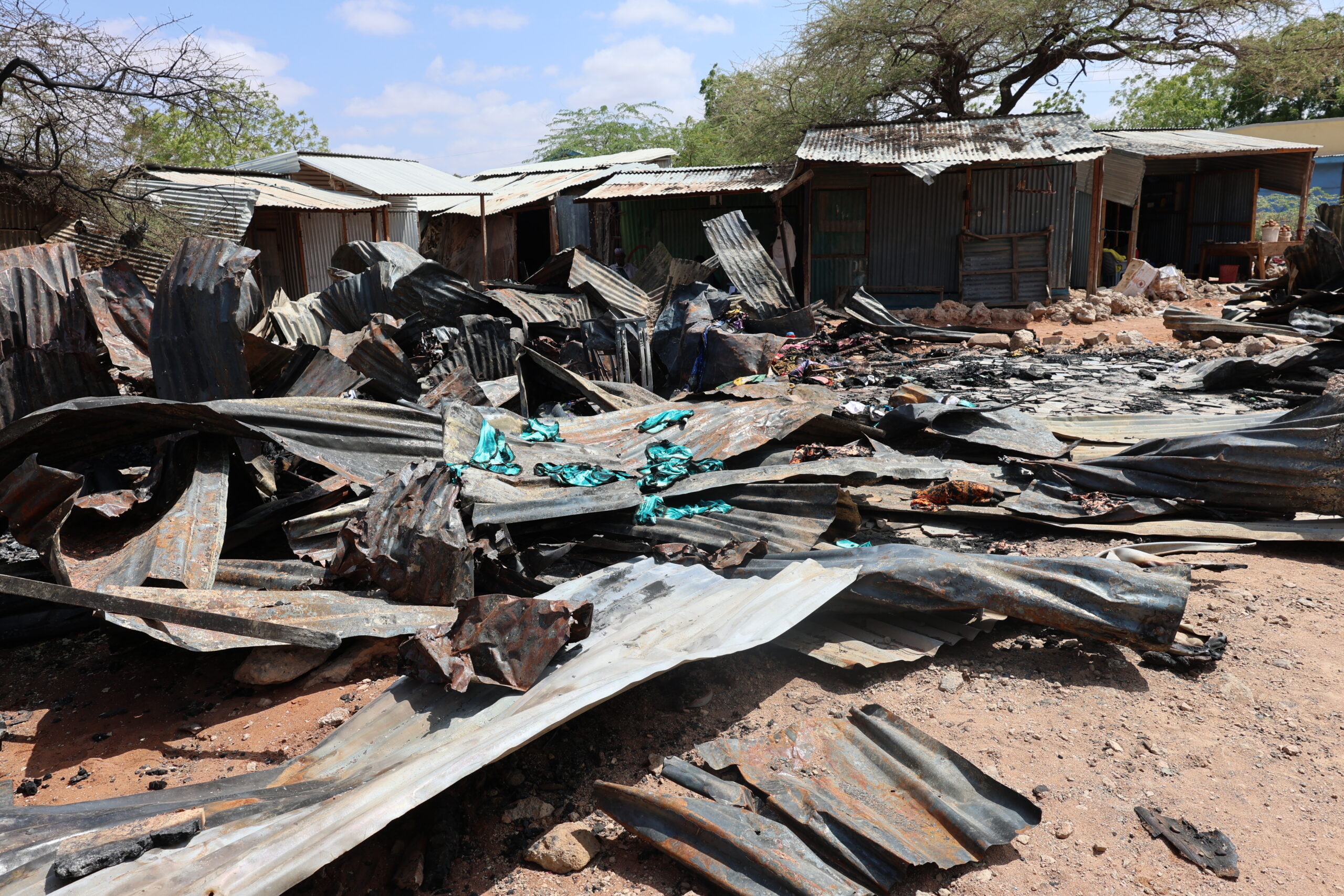
The fire came quietly, stealing through the night as most of Wajir slept. By the time the flames were spotted at Soko Mjinga, a cluster of makeshift stalls on the southern edge of the market were already razed.
Several humble structures that carried the weight of several families’ livelihoods were swallowed by the inferno.
What remained by dawn were twisted iron sheets, blackened earth and the disbelief of traders who had spent decades building their lives.
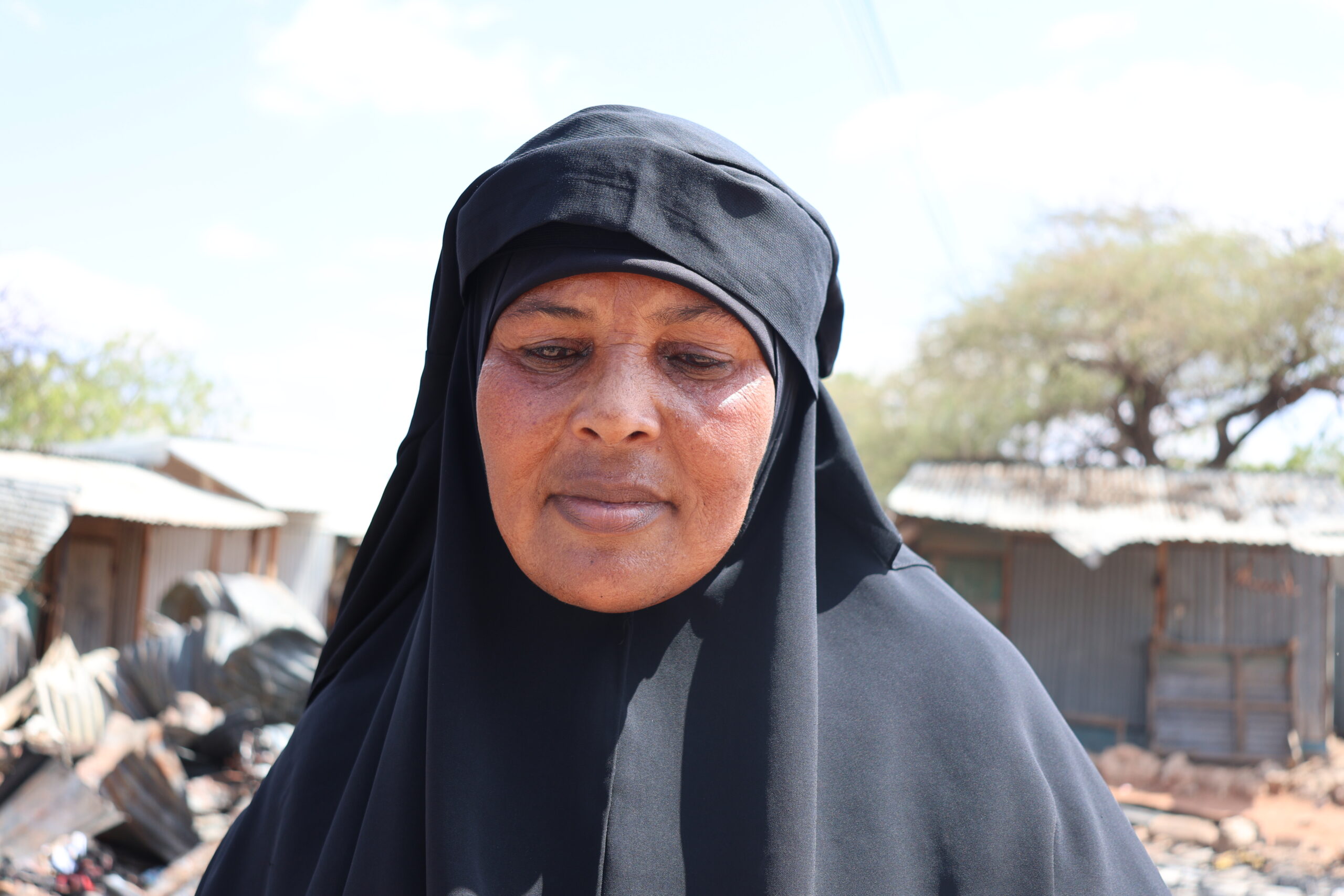
“It started with my shop,” said Ms. Habiba Hassan, a clothes trader who has spent more than 20 years working in the market.
Her voice carried the exhaustion of someone who had repeated the story too many times, searching for meaning where there was none. “It seems people with intention set the fire, but we don’t know who they are.”
The fire broke out around 2 a.m., a time when even the persistent hum of town life grows quiet. Habiba and her neighbours woke to frantic calls.
By the time they ran to the market, firefighters were already trying to tame the blaze. The flames had moved fast, turning every item of clothing, every hanger, every scrap of stock into embers.
“We came when everything was already burnt,” she said. “Everything in my shop and the rest of the affected shops was completely burnt to ashes. Nothing was rescued.”
A Pattern of Loss
Soko Mjinga is no stranger to fire. Market blazes have become an unsettling pattern in Wajir and elsewhere in Northeastern Kenya, so common that many traders now sleep with their phones beside their pillows, ready for the next emergency.
“The issue of burning markets has been a common occurrence here,” Habiba said. “We do not know who is behind it. We left the shops in the evening safe and sound. We do not have electricity at our shops. We really don’t know what happened and why.”
Her stall, which once held decades of savings and sacrifice, is now just debris. She estimates her losses at one million shillings, a staggering sum for a trader supporting a household of eight. Children are in school, relatives depend on her, and now there is nothing left to sell.
“This is what happened to us and God knows who did this,” she said. “The firefighters from the county helped us a lot. That is why the fire didn’t spread to other parts of the market.”
But firefighting alone cannot mend the financial crater left behind. And for many here, the silence from leaders has deepened the wound.
“We have not received anyone from the government except the county fire brigade team,” Habiba said. “This is our county and our government. We want support in whatever form because we have lost a lot. We are asking the governor and the deputy governor to reach out to us for help.”
Burnt to ashes
A few stalls away, Sheikh Mohamed, an Islamic books trader of ten years, stared at the ruins of what had once been a neatly arranged trove of Qur’ans, religious texts and Islamic learning materials.
He remembers the moment he received the call. “I was sleeping,” he said. “I got a distress call at around 2 a.m. I rushed to see what was going on. I saw everything burnt to ashes.”
Books, unlike metal or furniture, do not survive fire. The flames licked through the pages and bindings instantly, leaving behind nothing but curled black fragments scattered on the ground.
“I lost stock worth around 200,000 shillings,” he said, shaking his head slowly, as if still attempting to grasp the figure. “We ask for support, whether from government or from private. If they help with rebuilding, we will appreciate.”
In a county where formal employment is scarce and markets serve as lifelines, a single fire can abruptly push families from stability into uncertainty.
Scale of destruction
Some traders reached the scene with hope, hope quickly crushed by the scale of the destruction.
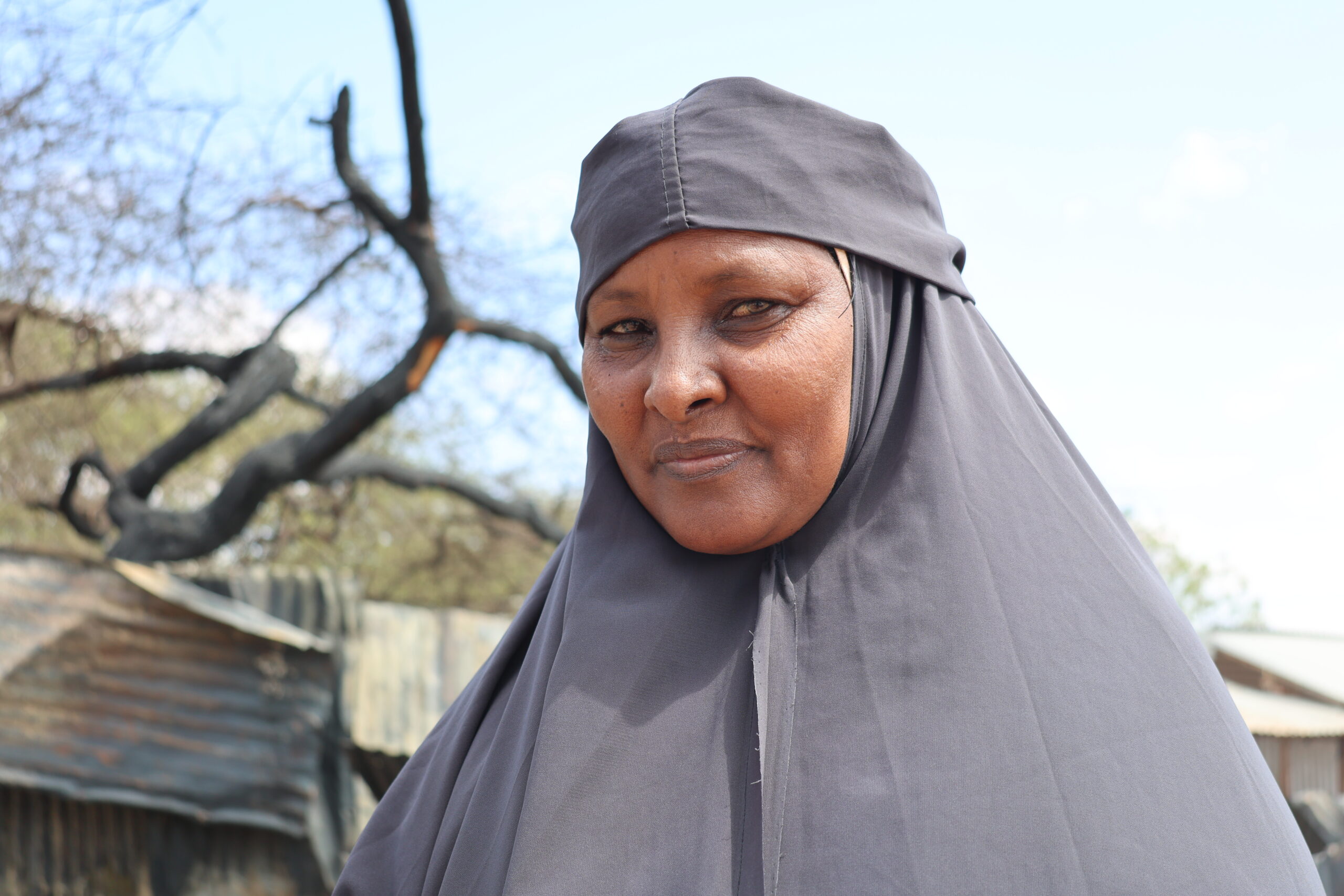
Rukia Jibril, who ran a small eatery in the burnt section, still smelled the smoke hours later. Her utensils had melted into unrecognisable lumps.
“This is a disaster written by God,” she said softly. “My eatery place got burnt.”
Like others, she woke in the wee hours of the night. When she arrived, the inferno has already razed everything to shell.
“All the utensils were destroyed,” she said. “We have not seen those who were elected, especially the MCAs. They have not come to witness what happened to us. But anyway, we thank God for everything.”
She paused, then added the part that weighs most heavily on her: “I am raising orphans and I support a lot of people here. We need support from the government.”
Tragedy does not strike individuals alone, it spills into families, communities, and the fragile social safety nets that hold them together.
Rukia’s eatery was more than a business, it was a source of nourishment for many. Now, she is unsure how tomorrow will look.
Nothing in our hands
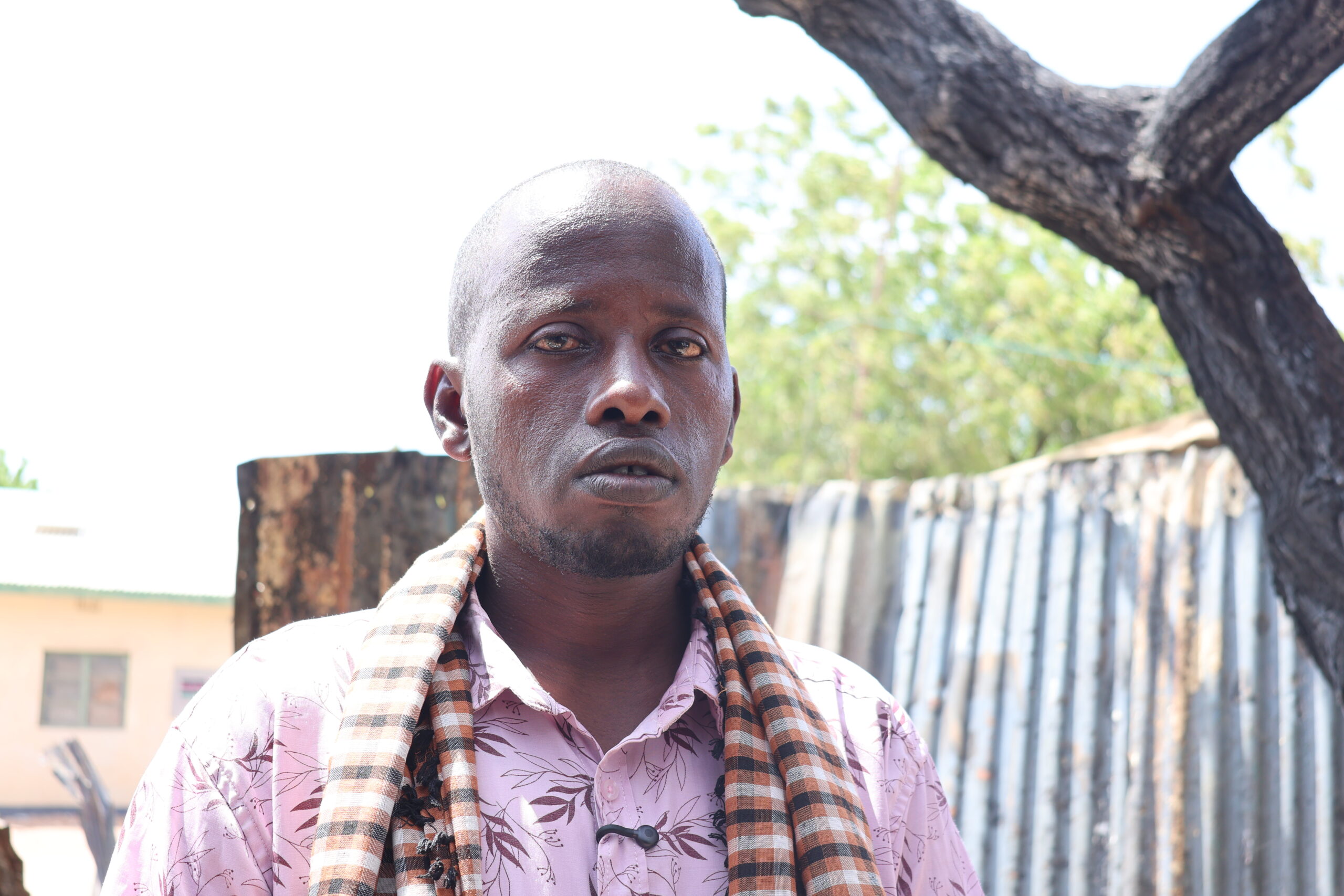
For Mohamed Abdullahi Luqman, the losses were even more staggering. His foodstuff shop was among the largest destroyed in the blaze, stocked with dry goods worth an estimated two million shillings.
“I have lost everything,” he said. “I deal with foodstuff. I have lost stock worth about two million shillings.”
He walked through the remains, carbonised sacks, collapsed metal frames, the acrid smell of burnt grains with the slow steps of someone carrying invisible weight. His appeal was simple, and echoed that of his fellow traders.
“Our appeal is for help from the government and from citizens,” he said. “We have nothing in our hands.”
Mourning market
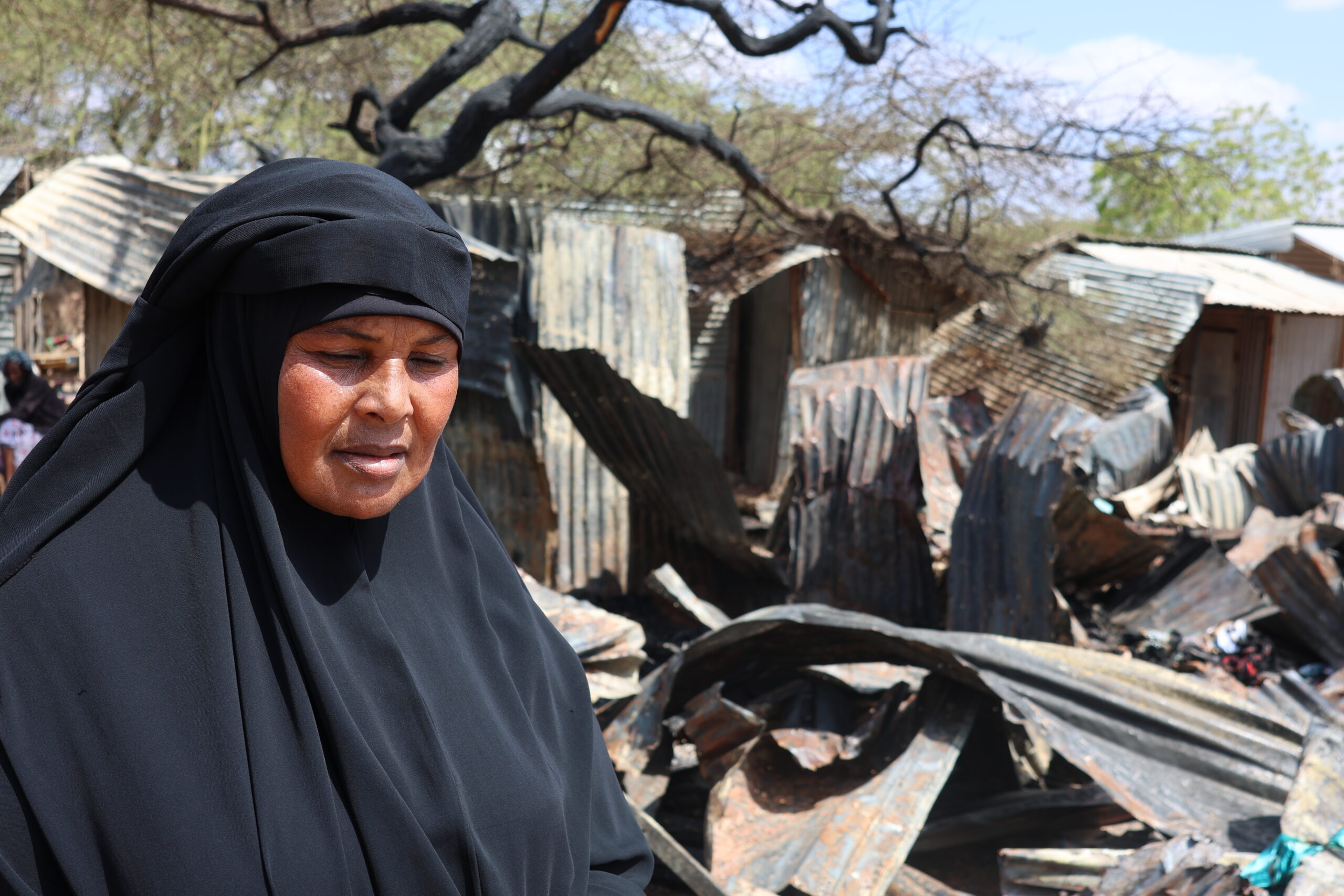
In the aftermath, part of Soko Mjinga feels hollow. Women stand in small clusters, Men lift iron sheets, hoping against hope that something, anything survived. Nothing did.
The fire did not just destroy goods. It destroyed momentum, routine, stability and identity. It robbed people of the pride that comes from honest work.
For now, no one knows what caused the blaze. Traders insist there was no electricity in the affected stalls. They left their shops “safe and sound.” Rumours swirl, arson, sabotage, simple misfortune, but no explanation feels complete.
“We really don’t know what happened and why,” Habiba repeated. “God knows who did this to us.”
The lack of answers deepens the sense of vulnerability. If no cause is known, no safeguards can be put in place. And if no safeguards exist, the next fire may be only a matter of time.
All the traders interviewed expressed gratitude for the county’s firefighters, whose quick action prevented the fire from spreading further into the market. Their efforts saved dozens of other shops from ruin.
However, the fire victims want leaders to visit, listen and respond. They want long-term solutions, improved security, emergency funds for traders hit by disasters, and a serious investigation into repeated market fires.
“This is our county and our government,” Habiba said. “We want support in whatever form.”


