

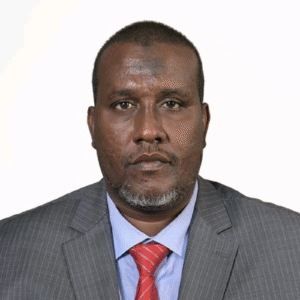
By Abdullahi Maalim
Immediate Former Deputy President Hon. Rigathi Gachagua’s recent media engagement, in which he attributed Northern Kenya’s underdevelopment to poor leadership and corruption within the region, has provoked strong reactions.
Many in the region found the remarks abrasive and dismissive of long-standing historical injustices. Yet beyond the emotion they triggered, the comments invite a deeper and more honest reflection on why, despite decades of advocacy, devolution, and increased resource flows, the region continues to lag behind.
It would be inaccurate and unfair to ignore the historical and structural roots of Northern Kenya’s marginalisation. For decades, the region was deliberately excluded from national development planning, denied infrastructure investment, and treated more as a security frontier than a development priority.
Climate shocks, insecurity, and vast geographic distances have compounded these challenges. These realities continue to shape outcomes today and cannot be wished away by simplistic political soundbites.
However, acknowledging historical injustice should not blind us to contemporary failures. Leadership matters, and in many cases, leadership from the region has fallen short of expectations.
Devolution was meant to be a turning point, placing power and resources closer to the people. Instead, too many counties have become theatres of corruption, elite capture, stalled projects, and weak service delivery. Auditor reports tell a consistent story of mismanaged funds and missed opportunities, even as communities remain trapped in poverty.
Yet the most uncomfortable dimension of this debate lies not with leaders alone, but with the society that produces and protects them. Northern Kenya’s political culture has for too long been dominated by clan-based calculations rather than merit, vision, or integrity.
Elections are often treated as ethnic contests where loyalty outweighs competence, and where a leader’s primary qualification is “being one of us.”
This culture is further corroded by the normalisation of bribery during campaigns. Cash handouts and short-term inducements have replaced serious engagement on policy, development priorities, and accountability.
Votes are exchanged cheaply, while expectations of delivery remain high. In doing so, citizens inadvertently weaken their own bargaining power, having already accepted the price of silence.
When corrupt or ineffective leaders are defended purely on the basis of clan identity, accountability collapses. Poor performance is excused, corruption is rationalised, and development becomes secondary to ethnic arithmetic.
This internal fragmentation also weakens the region’s collective voice nationally, as leaders focus more on outmanoeuvring one another locally than advancing shared regional interests.
In this light, Northern Kenya’s underdevelopment cannot be attributed solely to external neglect or internal leadership failure. It is the product of an unhealthy interaction between the two, sustained by a political culture that rewards mediocrity and punishes reformers.
Leaders who attempt to challenge entrenched interests are often isolated, while those who exploit clan sentiment thrive.
Former Deputy President Gachagua’s remarks, while poorly framed, have inadvertently exposed this reality. The region’s response should not be defensive dismissal, but sober introspection.
Progress will not come from endlessly invoking marginalisation without reforming how leaders are chosen and held to account. Nor will it come from blaming society while excusing those entrusted with public office.
Real transformation demands a dual shift: leaders who prioritise service over self, and citizens who vote with conscience rather than clan, ethics rather than inducement.
Religious leaders, elders, youth, women, civil society, and the media must play a more assertive role in reshaping norms, rejecting corruption, and restoring moral clarity to politics.
Northern Kenya’s future cannot be built on denial or outrage alone. It must be built on truth that underdevelopment is sustained not just by bad leaders, but by a society that too often tolerates, defends, and even rewards them.
Only when both leadership and society change together will the region begin to realise the promise that has eluded it for far too long.
___________________
The views and opinions expressed in this article are solely those of the author and do not necessarily reflect the editorial position of Wajir Today. The article is intended to contribute to public debate, promote responsible leadership, and inclusive discourse. Any reference to individuals or events are made in good faith and in the public interest.
To contribute articles to Wajir Today send your opinion ideas to newsroom@wajirtoday.co.ke


