

By Abdullahi Jamaa
At the heart of Wajir town, beyond the busy wards and echoing corridors of the County Referral Hospital, there is a place most people avoid until they have no choice.
It is quiet and heavy with emotion. For Abdullahi Mohamed Abdi, known popularly as Kauka, this place has been his working life for decades.
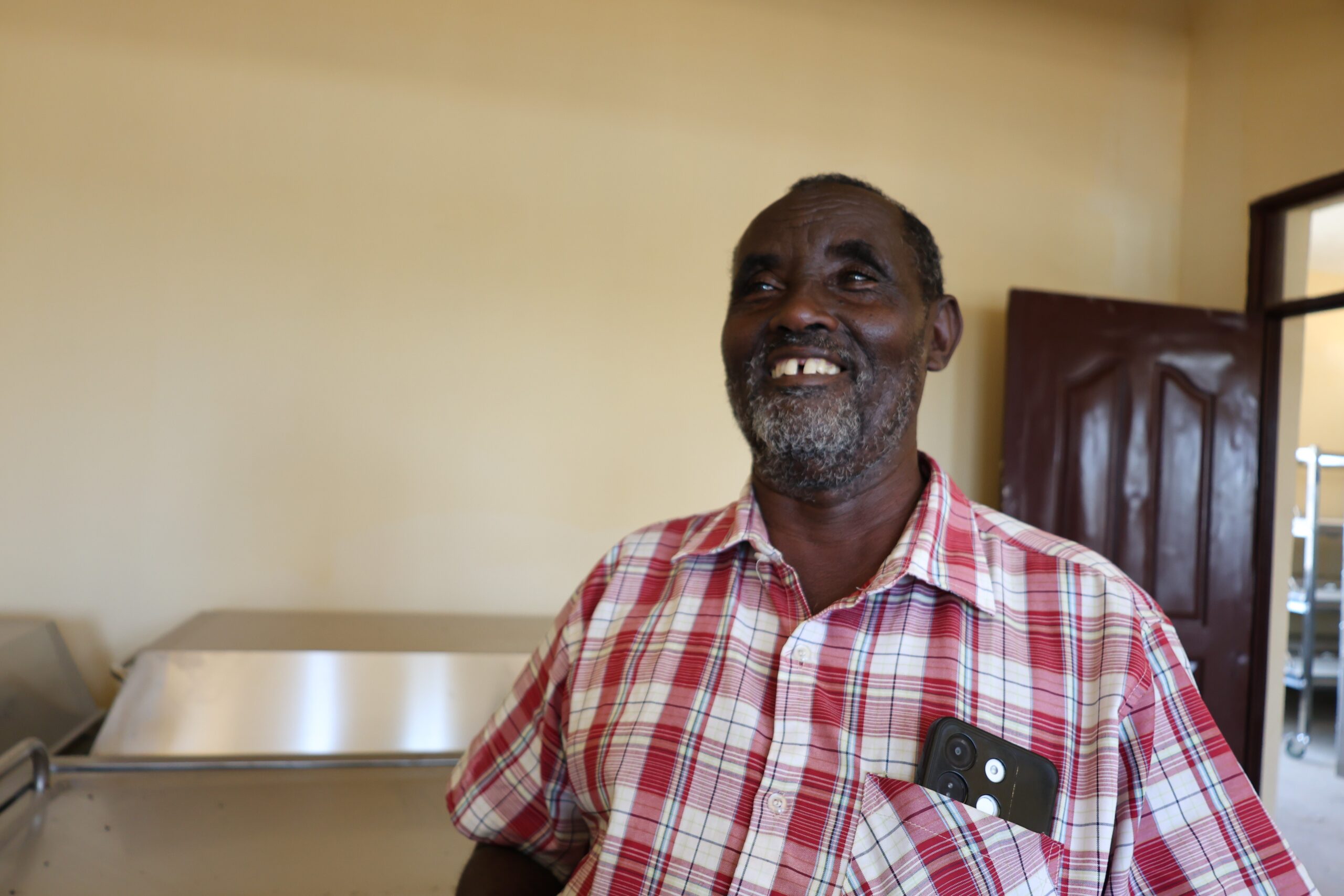
Kauka is Wajir’s longest-serving mortuary attendant.
Born in Elwak and now a father of eight, he has spent 39 years caring for the dead in some of northern Kenya’s public hospitals, from Garissa to Mandera and finally Wajir.
While doctors save lives and nurses comfort the sick, Kauka has handled the part of life that comes after hope has run out.
“In the beginning, it is very hard,” he says softly. “Really hard.”
The work demands more than physical strength. It demands emotional endurance. Yet, Kauka says, the dead themselves are easier to deal with.
“They are better than the living,” he explains. “They don’t argue with you. They don’t insult you. They have patience.”
It is a perspective forged through years of lonely night shifts and long hours spent with bodies waiting to be buried.
No locals
Some images have never left him.
The most frightening moment came years ago in Garissa, after a fatal accident. Among the victims was a pregnant woman.
“The baby had protruded,” Kauka recalls. Doctors had to perform a post-mortem.”
There are lighter moments too, even in a mortuary.
“Sometimes people drink too much,” he says with a small smile. “They are brought here like dead people.” By morning, they wake up confused, asking why they are in a mortuary at all.
Kauka trained formally in Mombasa for one year and six months , a rare qualification in a region where few pursue mortuary practice.
Today, he is the only Somali mortuary attendant at Wajir County Referral Hospital. There is no local student in college training for the job.
Now officially retired, he continues working on a county contract that is nearing its end.
“I am requesting an extension,” he says simply. “So that I can continue because there is no one else.”
He arrived in Wajir at the start of devolution, during the first term of the current governor. Back then, conditions were harsh. The hospital had no perimeter wall and the mortuary itself was outdated and unreliable.
Relief
“The old mortuary gave us many problems,” Kauka says.
Bodies deteriorate quickly in the Wajir heat. Embalming fluids were heavily relied upon. Nights were sleepless.
“I used to stay awake the whole night,” he recalls. “Sometimes treating the dead three times in one night.”
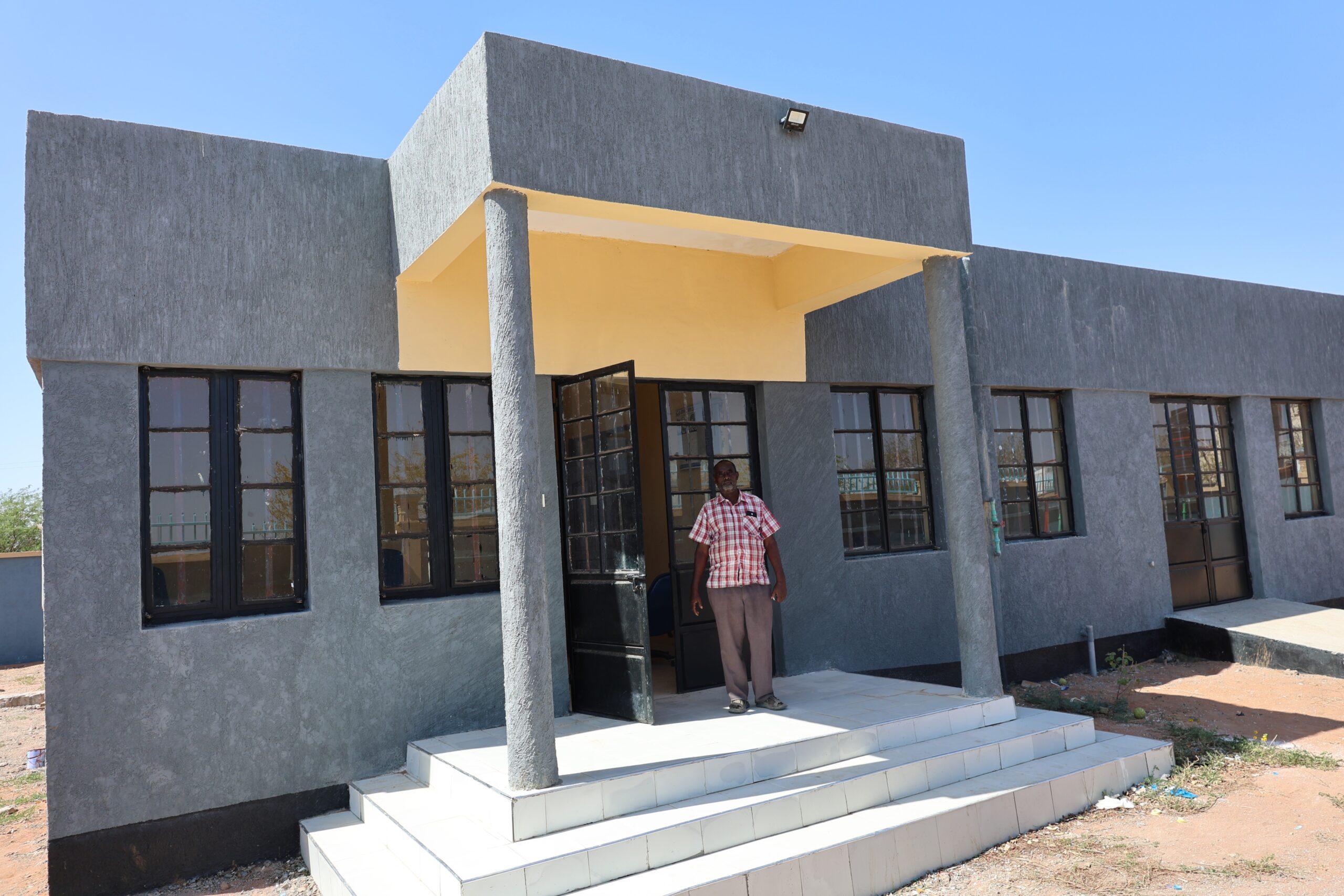
Things are changing with the opening of a new mortuary at the hospital.
The new facility, recently constructed by the Wajir County Government, has cooling machines and bigger storage space.
“We have almost everything we need now,” Kauka says.
The new mortuary has reduced dependence on embalming chemicals and eased the physical strain on attendants.
“I am happy,” he says. “This mortuary is making our work easier.”
Soon, the referral hospital is set to be launched as a Level 5 facility by President William Ruto, marking a major milestone for healthcare in Wajir County.
Several other construction works are ongoing at the facility, including a modern MRI centre that is expected to enhance service delivery by helping doctors accurately diagnose, monitor, and plan treatment for a wide range of medical conditions.
Challenges
But even progress comes with practical challenges.
The new mortuary is located some distance from the main wards. To move bodies, staff now rely on ambulances, an arrangement Kauka describes as inconvenient.
“My request is for a walkway,” he says. “A path connecting the wards to the mortuary.”
Such a connection would allow attendants to use mortuary trolleys, easing their work and enhancing the efficiency of the facility.
He has also requested the management to expand the sanitation facilities at the new mortuary, particularly the septic tank, noting that the large volumes of water used to wash bodies require a larger system.
With the new facility making his work much easier, the veteran mortuary attendant now hopes the county government will renew his contract so he can continue serving the people of Wajir.


