
 By Staff Reporter | Wajir Today | Sunday, 22 February 2026
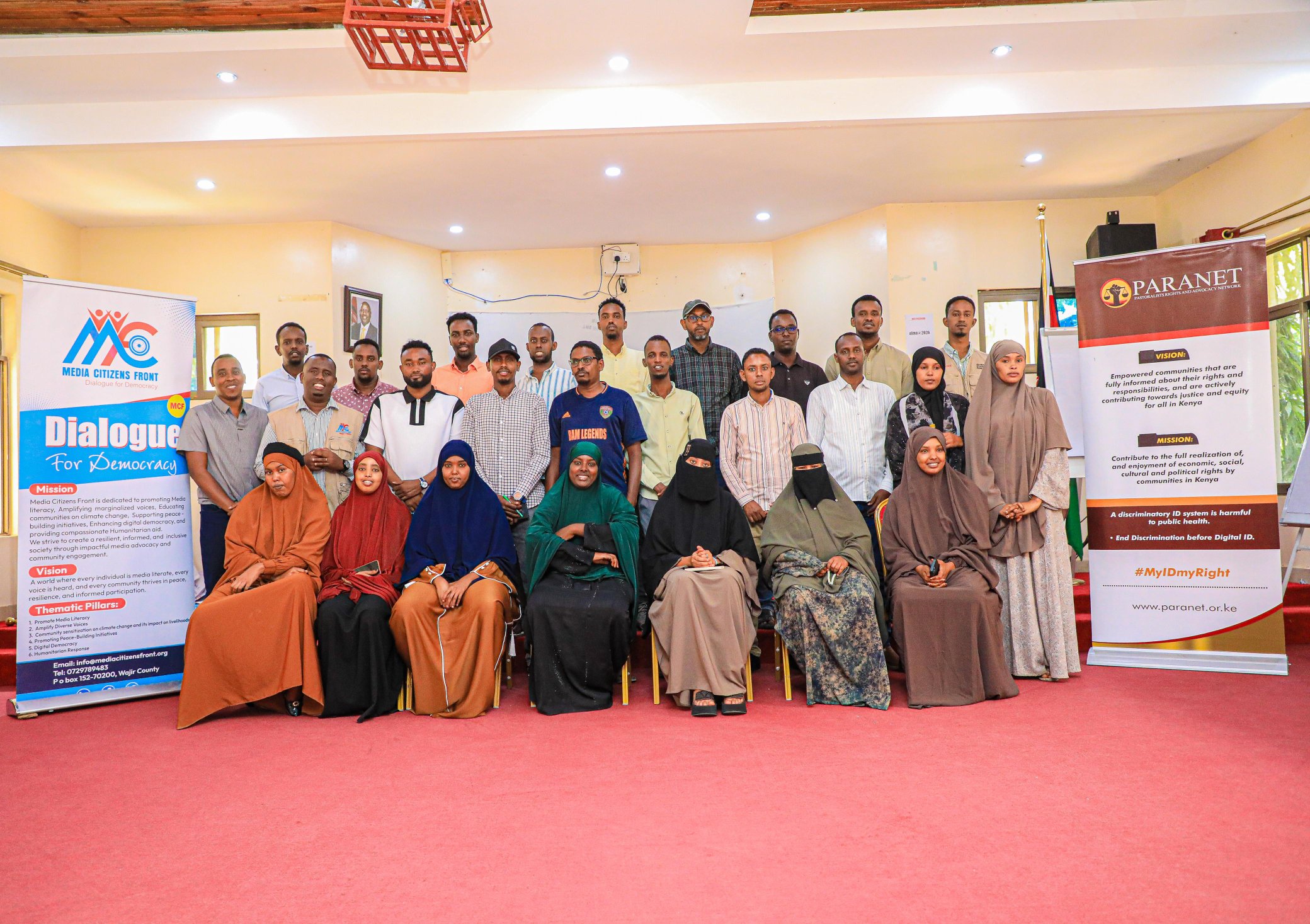
Local journalists in Wajir County have been trained on negotiated democracy in a forum hosted by the Pastoralist Rights and Advocacy Network (PARANET) with support from the Canada Fund for Local Initiatives (CFLI).
The training aimed to equip reporters with the knowledge to scrutinize political processes and promote accountability among elected leaders.
Negotiated democracy, a political system in which clans and elites negotiate electoral outcomes and power-sharing agreements has long been practised in Kenya’s northeastern region.
While it has historically helped prevent conflict, critics say it has contributed to limited voter choice and weak accountability.
“Negotiated democracy affects the people of this region significantly. We are lagging behind in comparison with the rest of the country,” said Ahmed Aden, PARANET programme officer.
“The conversation today is about whether negotiated democracy is good for us or problematic. There is a lack of accountability from elected leaders. With negotiated democracy, accountability goes out the window.”
Aden urged journalists to maintain objectivity in their reporting and highlighted their crucial role in holding leaders accountable.
“We always try to collaborate with the media. The media can interrogate leaders and ensure they answer to the community,” he said.
Governance expert Ahmed Alas emphasised both the advantages and drawbacks of negotiated democracy.
“It is a kind of zero-sum game where some positions are ceded and shared among clans. It enhances cohesion but has significant challenges. Competitive elections are weakened, and voters are often presented with a single agreed-upon option. Elections have become a formality rather than genuine competition,” he said.
Alas warned that political power in this system tends to concentrate among influential elders, wealthy actors, and established political families.
“Policy debates are replaced by elite capture, marginalising youth, women, and minority groups. Leaders are less dependent on voters for legitimacy because they are accountable to elders or political brokers rather than the electorate,” he added.
Hashim Elmoge, an advocate at the High Court of Kenya, called for reforms to address these shortcomings.
“There was consensus that negotiated democracy needs to transform from elite bargaining and elite capture into a system anchored on good governance,” he said.
Elmoge noted that while the system has historically helped prevent conflict and violence in the region, it requires refinement to meet contemporary democratic standards.
“Negotiated democracy has worked for us because it avoided conflict and brought relative stability. Now, democracy must be practised pragmatically to take us to the next level,” he said.
The forum highlighted the role of journalists in interrogating power and strengthening democratic governance.
By equipping local media with knowledge on negotiated democracy, organisers aim to foster transparency and accountability in a system often criticised for consolidating power among a narrow elite.


