

 By Abdullahi Jamaa
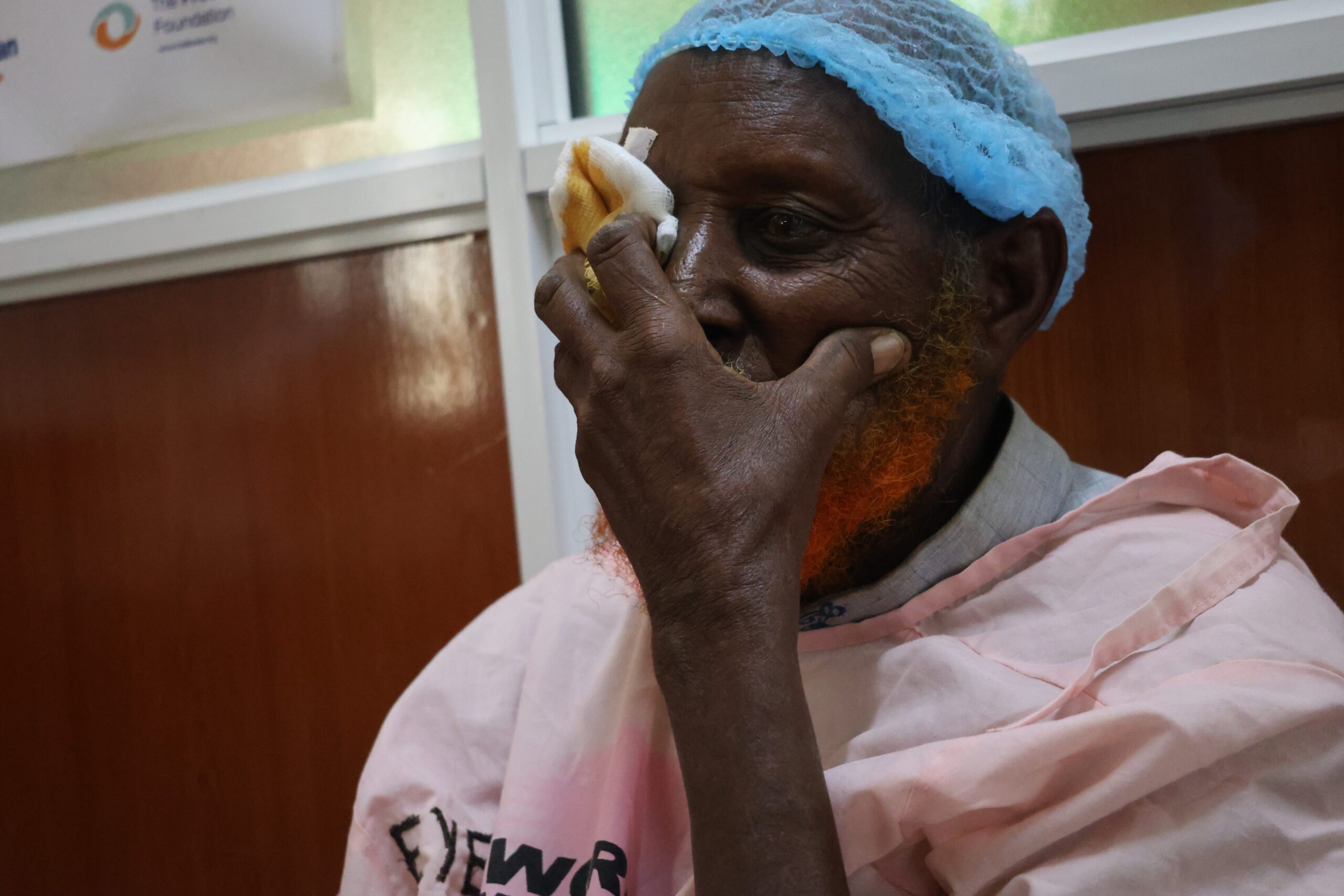
Waiting patiently for the next available eye specialist, ageing Abdullahi Guhad gently holds his left eye with hankie as he sits inside the crowded Wajir County Referral Hospital Eye Unit.
The 85-year-old from Arbajahan, a remote hamlet about 155 kilometres from Wajir town, is among hundreds of eye patients who have thronged the facility, where Baitulmaal has set up a camp offering free eye treatment.
Under the biting midday sun and in the middle of a harsh dry spell, many elderly people like Mr Abdullahi have travelled from various corners of the vast county, all seeking help for long-standing eye ailments that have slowly robbed them of comfort, independence and dignity.
“This is a great initiative from the organisation,” Mr Abdullahi says. “We really appreciate this kind of support. We thank them and we ask Allah to bless them.”
Inside the hospital compound, rows of patients wait quietly, some guided by relatives, others clutching small pieces of paper bearing their details. The atmosphere is heavy with anticipation, but also with hope.
Hundreds packed the facility, all seeking relief and a chance to access treatment for better eyesight, a critical sense many fear they may lose forever.
For many, the camp represents far more than a medical outreach. It is a lifeline. A chance to see faces clearly again. A chance to walk without fear. A chance to live with dignity.
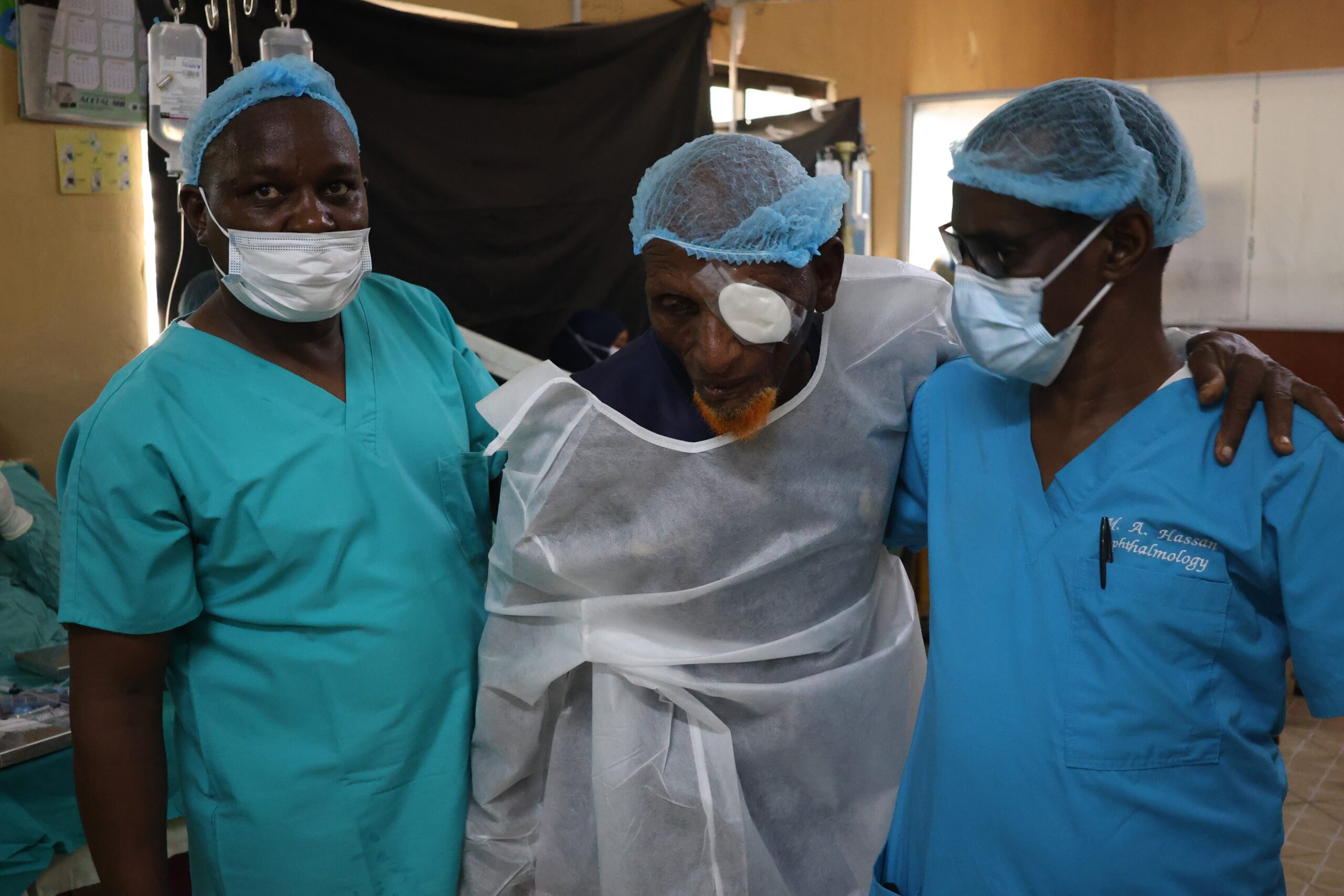
About half a dozen eye specialists set up desks at intervals inside the Eye Centre at the main referral hospital, where diagnosis, treatment and eye operations were carried out in a demanding and fast-paced environment.
It was a race against time to reach the overwhelming number of patients requiring check-ups and treatment.
Doctors worked tirelessly, screening and diagnosing patients with patience and professionalism. Nurses moved swiftly between stations, preparing equipment and dispensing medication with care and reassurance.
“Thanks to Allah. I can now see better again,” Habiba Ali told Wajir Today shortly after undergoing a cataract operation. “We thank the doctors and the organisation for this important work.”
Her smile mirrors the joy shared by many whose eyesight has been restored. More than 100 patients have undergoing cataract removal during the camp.
The sheer turnout alone speaks volumes about how urgent and widespread eye health challenges are within Wajir communities.
According to medics, the most common eye problems in the county include allergic conjunctivitis and cataracts.
“Allergic cases are linked to harsh weather and exposure to dust or unknown allergens,” says Ibrahim Adan, a Registered Ophthalmic Nurse at Wajir County Referral Hospital.
Cataract, the world’s leading cause of blindness, appears to be the most prevalent condition affecting many of those treated at the camp.
“Senile cataract related to ageing is more common,” medics note.
Specialists add that cataract may also be caused by environmental factors such as prolonged exposure to UV rays, chronic systemic conditions like diabetes and hypertension, as well as nutritional deficiencies.
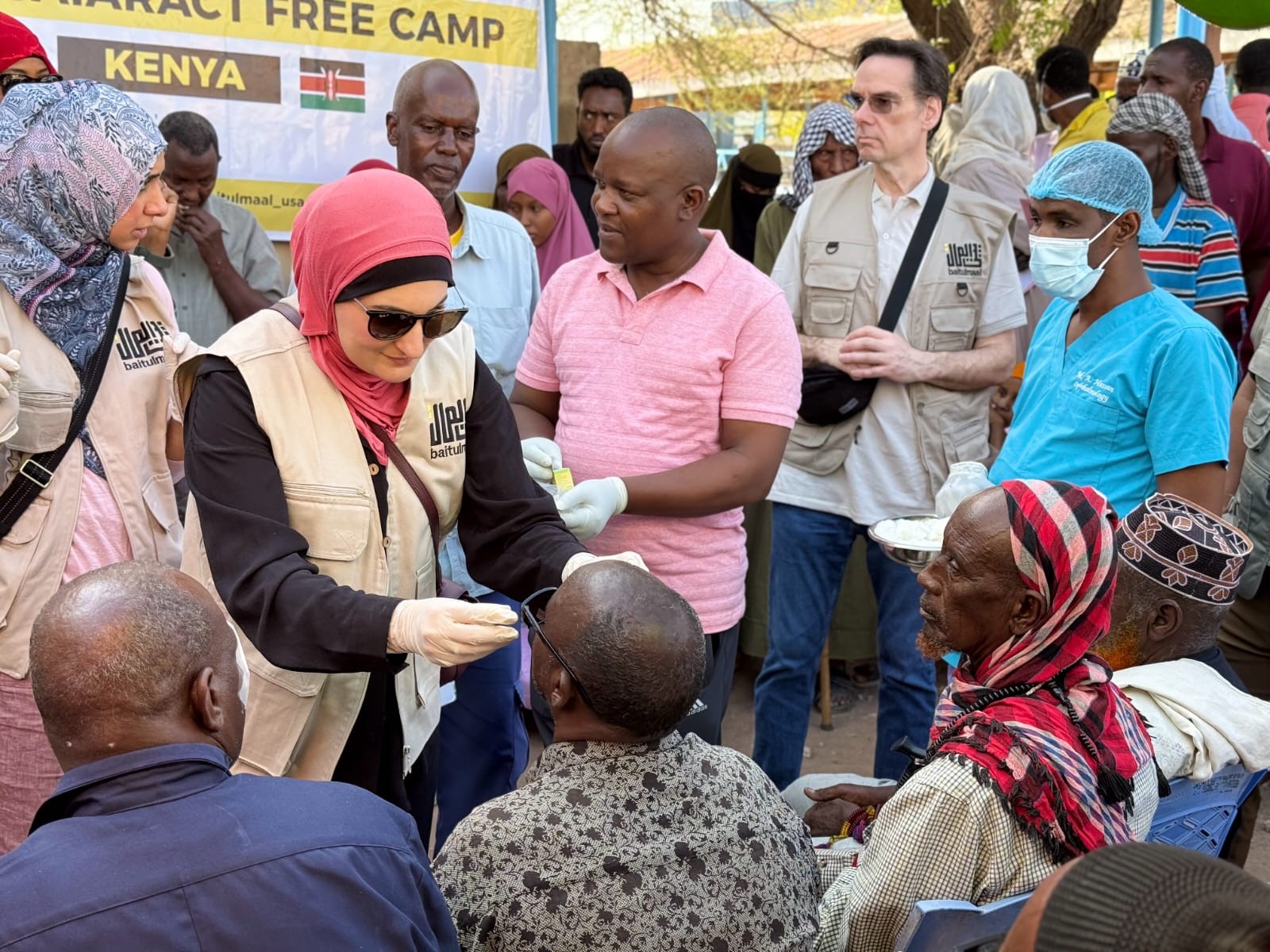
Baitulmaal says it plans to upscale its outreach services to reach even more cataract patients, not only among the elderly but also paediatric cases.
The charity adds that the gap between those needing cataract removal and those accessing surgery is far higher than previously imagined.
“We try our best as Baitulmaal to reach underserved populations, especially in Wajir County, to respond to every moment that requires humanitarian intervention,” says Zahra Harun, Baitulmaal Kenya Director.
“We have been at the forefront in treating cataract for years now and we hope to upscale our efforts just as we are in this free eye camp.”
For the team on the ground, every restored sight is a reminder of why the work matters.
It has been a learning experience for the Baitulmaal team, reinforcing the reality that each individual whose eyesight is restored represents a life transformed and hope renewed.
“We understand the need of such service, that’s why we have had our boots not just in Wajir Referral Hospital but other sub counties for a similar programme in the past,” says Mr. Omar M. Bulle, Baitulmaal Kenya Programmes Manager.
“We have seen lives changed and gift of eyesight restored and that motivates our donors.” adds Mr. Omar


