

 By Abu Islam | Wajir Today | Tuesday, 16 December 2025
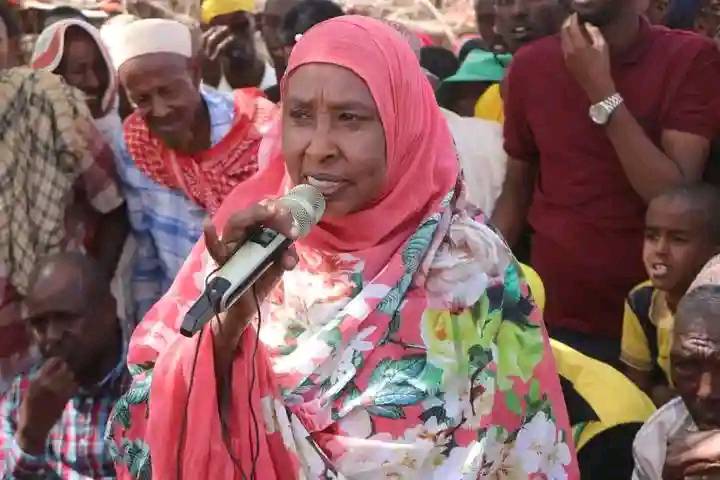
The people of Wajir did not expect the remarks that recently emerged from Hon. Nasri Sahal, a former nominated member of parliament and a leader long admired for her inclusive politics.
For years, she cultivated an image of unity, rising above clan lines and speaking to the collective identity of Wajir. That reputation made her recent utterances all the more jarring.
What many heard was not the measured voice of a seasoned leader, but rhetoric that appeared to flirt with clan supremacy and political exclusion.
In a county exhausted by the corrosive effects of clan-based politics, such language landed badly. It cost her political capital and raised a difficult question, can she recover from this misstep?
Wajir has paid a high price for clan-driven mobilisation. Residents have watched political cartels form and harden along lineage lines, often paralysing development and narrowing leadership choices.
The majority of citizens, especially younger voters, now yearn for a different politics, one rooted in ideas, service delivery, and accountability rather than clan chauvinism.
Against this backdrop, Hon. Nasri’s remarks felt out of step with the moment. They seemed to reinforce the very divisions many are struggling to leave behind.
That disconnect explains the depth of disappointment expressed across villages, marketplaces, and digital spaces alike.
We live in an era where information travels instantly. A statement made at a local rally no longer remains local. It circulates rapidly, stripped of context, amplified by emotion, and debated across entire communities. Any leader, especially one of Hon. Nasri’s experience, understands this reality.
In fragile environments such as Wajir, where poverty, underdevelopment, and historical marginalisation already strain social cohesion, reckless rhetoric can inflame tensions that take years to heal.
Equally concerning is the timing. Across northern Kenya, citizens are increasingly questioning the logic of negotiated democracy anchored solely on clan arithmetic.
While such arrangements once provided temporary stability, they have also entrenched elite capture and recycled leadership.
Devolution has shown, election after election, how negotiated consensus can be manipulated to block genuine competition and silence reformist voices.
Hon. Nasri, more than most, understands this history. As a former teacher, she shaped young minds. As a public servant, she benefited from public trust built over decades. Her stature rests not only on political office, but on moral authority earned through service.
That is why expectations of her remain high, higher than narrow political expediency or emotional outbursts. Until recently, she stood as a household name synonymous with dignity and restraint. Many still want to believe that image remains intact.
Politics, of course, allows for human error. Leaders stumble. They misjudge moments. They speak before reflecting. Redemption often lies in acknowledgement and course correction.
However, what unsettled many people from Wajir was not merely what was said, but how it was said. The tone appeared charged with anger, delivered with intensity that suggested loss of composure. It was an unfamiliar version of Hon. Nasri, one that alarmed supporters and critics alike.
History offers sobering lessons. Societies fracture when leaders normalise divisive speech. Too often, the drums of conflict are beaten rhetorically, while ordinary people bear the cost.
Our region does not need reminders of how quickly clan polarisation can spiral, neighbouring Somalia provides a painful cautionary tale.
Wajir stands at a crossroads. It requires leadership that cools tempers, not inflames them. Leadership that builds bridges across clans, generations, and ideas. Leadership that recognises how fragile social trust remains, and how easily it can be undone.
The message to Hon. Nasri Sahal, therefore, is not one of condemnation, but of responsibility. She must reflect deeply on the weight her words carry. She must consider the impact of her rhetoric on a community striving to rise above poverty and political stagnation through unity.
If she chooses humility, clarity, and recommitment to inclusive politics, a comeback remains possible.
At this critical moment, the county needs voices that elevate discourse, not reduce it to clan impulses. Hon. Nasri still has an opportunity to be one of those voices. It is now over to her.
__________________
The views and opinions expressed in this article are solely those of the author and do not necessarily reflect the editorial position of Wajir Today. The article is intended to contribute to public debate, promote responsible leadership, and encourage peaceful, inclusive political discourse. Any references to individuals or events are made in good faith and in the public interest.


1 Comment. Leave new
Thank you. Good message, well delivered.