

 By Correspondent | Wajir Today | Wednesday, 26 November 2025
Garissa County Executive for Gender, Hawa Abdisahal, has called for the fast-tracking of sexual and gender-based violence cases, saying survivors continue to suffer delays in the justice system.
Hawa, who is also a member of the Protection and Gender Technical Working Group, urged the Judiciary to adopt survivor-centred procedures that shield victims from trauma.
“We need to fast-track GBV cases,” she said. “The courts should prioritise in-camera hearings for sexual offences.”
She proposed dedicated hearing days, safe waiting areas away from alleged perpetrators, and child-friendly spaces equipped with toys and visual aids to ease testimony for minors.
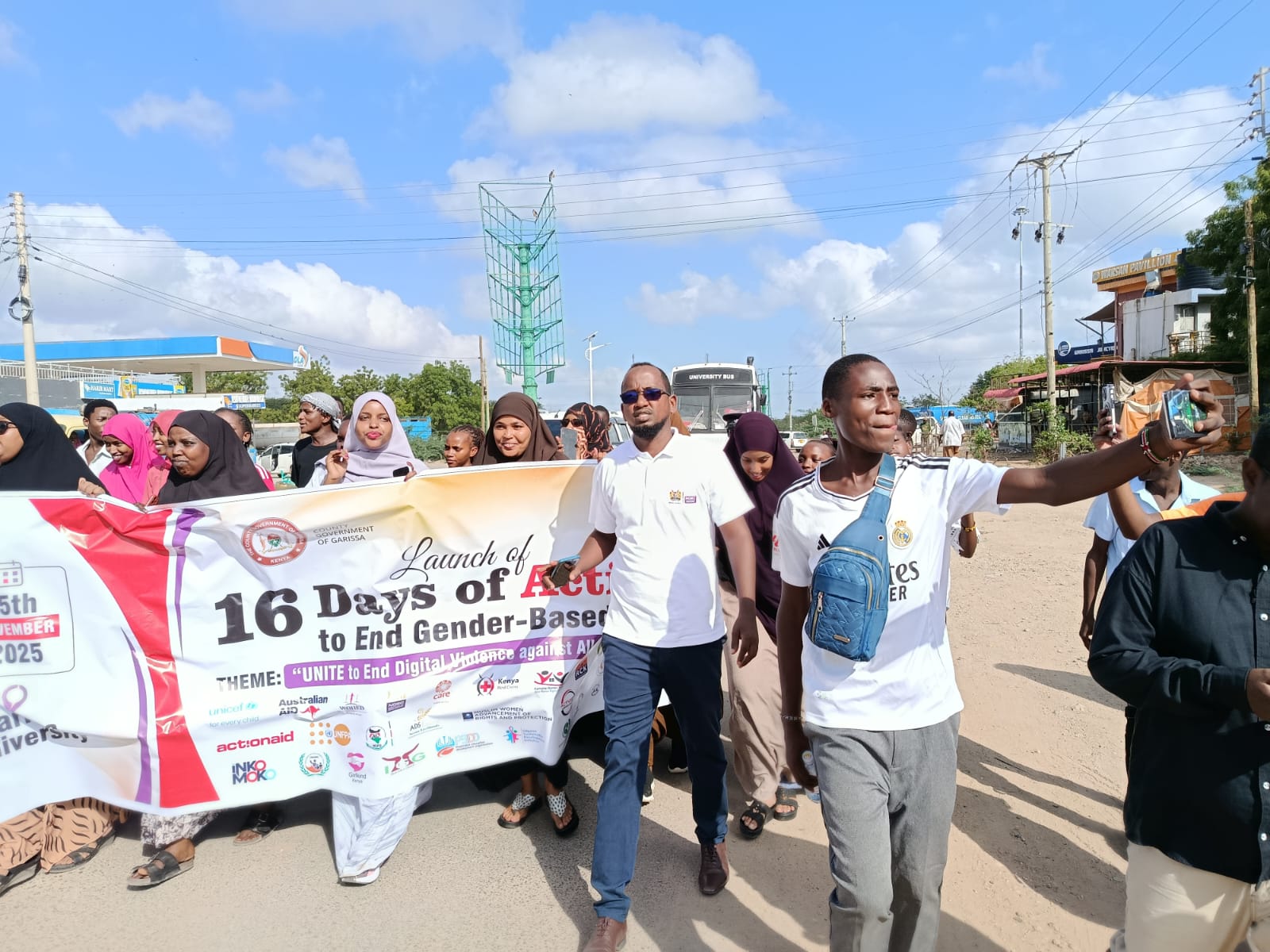
Her remarks came during the launch of the 2025 16 Days of Activism Against Gender-Based Violence in Garissa, where concerns over rising SGBV cases dominated the discussions.
Garissa High Court Presiding Judge John Onyiego echoed the alarm, warning that sexual offences in the region remain rampant despite the courts imposing the most punitive penalties under the law.
“Sexual-related offences remain quite rampant,” Justice Onyiego said “This is despite the strict sentences we continue to enforce.”
He attributed part of the problem to the growing reliance on Maslaha, a traditional dispute-resolution system which he said is undermining the criminal justice process.
“The use of Maslaha has been the biggest challenge,” he said. “It has resulted in withdrawal of cases. We don’t advocate for reconciliation on that ground.”
He warned that elders who preside over such informal settlements risk serious legal consequences if they continue handling GBV matters outside the judicial system.
“So we want to urge elders to avoid encouraging reconciliation on GBV cases,” he said. “They should not touch those cases at all.”
Justice Onyiego urged the police, the Department of Children Services, and the Office of the Director of Public Prosecutions to expedite investigations and charge suspects promptly to allow the courts to proceed without delay.
Abdiwahab Ibrahim of the National Gender and Equality Commission said the region faces rising cases of defilement, intimate partner violence, sexual assault, FGM, and forced marriage.
He warned that informal justice systems continue to shield perpetrators and deny survivors the justice they deserve.
He cited stigma, low reporting, discrimination, and limited services including the lack of rescue centres and psychosocial support as major gaps in the GBV response.
The launch of the 2025 activism campaign renewed calls for stronger protection systems, survivor-focused justice processes, and firm community accountability in tackling GBV across the region.


