

By Staff Reporter | Wajir Today | Sunday, 25 January 2026
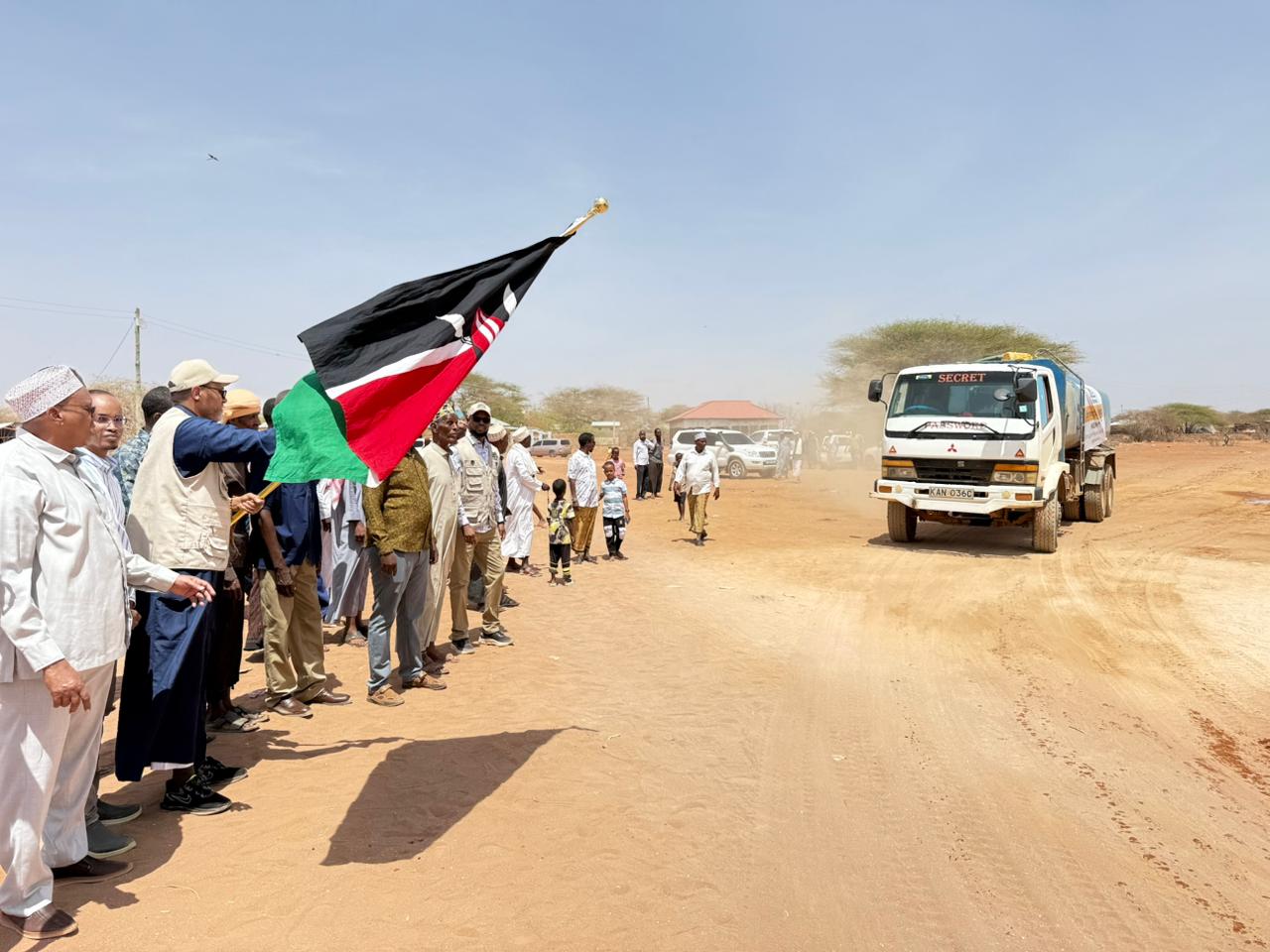
Baitulmaal Kenya has launched an emergency water trucking project to support communities hit hardest by the ongoing drought in Wajir County.
The initiative, flagged off on Saturday, covers 37 locations across all six sub-counties, bringing relief to families struggling to access clean water.
“Today, I officially flagged off a life-saving drought response water trucking project sponsored by Baitulmaal Kenya, aimed at supporting the most water-scarce communities across all six constituencies of Wajir County,” said Ugas Sheikh Mohamed, Baitulmaal Founder.
The launch ceremony was attended by the Wajir Senator Hon. Abass Sheikh, County officials, Members of the County Assembly, religious leaders, elders, and community representatives.
“This intervention targets dozens of severely affected locations, ensuring immediate access to clean and safe water for households, livestock, and vulnerable groups whose daily survival depends on this critical resource,” Ugas added.
Wajir County is experiencing one of the harshest droughts in recent years, following multiple failed rainy seasons. Water scarcity has forced families to trek long distances, while livestock losses and food insecurity continue to rise.
Through this water trucking project, Baitulmaal Kenya aims to meet urgent humanitarian needs, restore dignity, and offer hope to affected communities.
“We have flagged off this water trucking project that will continue for a couple of months to respond to the escalating drought situation in the county. We commit ourselves to stay at the forefront in cushioning affected locations in the six constituencies of the county,” Ugas said.
Issadin Hajji, Baitulmaal East Africa Communications Officer, noted that this is not the organisation’s first intervention in the county.
“This is not the only time we have responded to natural disasters such as drought in Wajir County. We just concluded a two-month water trucking project in the county, and here is another one. It is our prayer that rains come soon so that communities in the region can have instant relief,” Hajji said.
The National Drought Management Authority (NDMA) currently classifies Wajir County in the “Alarm” drought phase, the most severe stage before catastrophe.
According to NDMA, the classification reflects rapidly declining water availability, severe pasture depletion, and worsening livestock conditions.
With months of dry weather showing no sign of abating, humanitarian agencies are calling for urgent support to protect vulnerable populations and prevent further loss of life and livelihoods.


