

By Hodan Warsame | Wajir Today | Saturday, 13 September 2025
In Wajir town, the sight of plastic bottles scattered across dusty roads has become so common that people hardly notice. It is as if these stubborn pieces of rubbish have blended into the harsh landscape. Yet, they speak of a deeper story: a community struggling with waste, unemployment, and hopelessness among its young people.
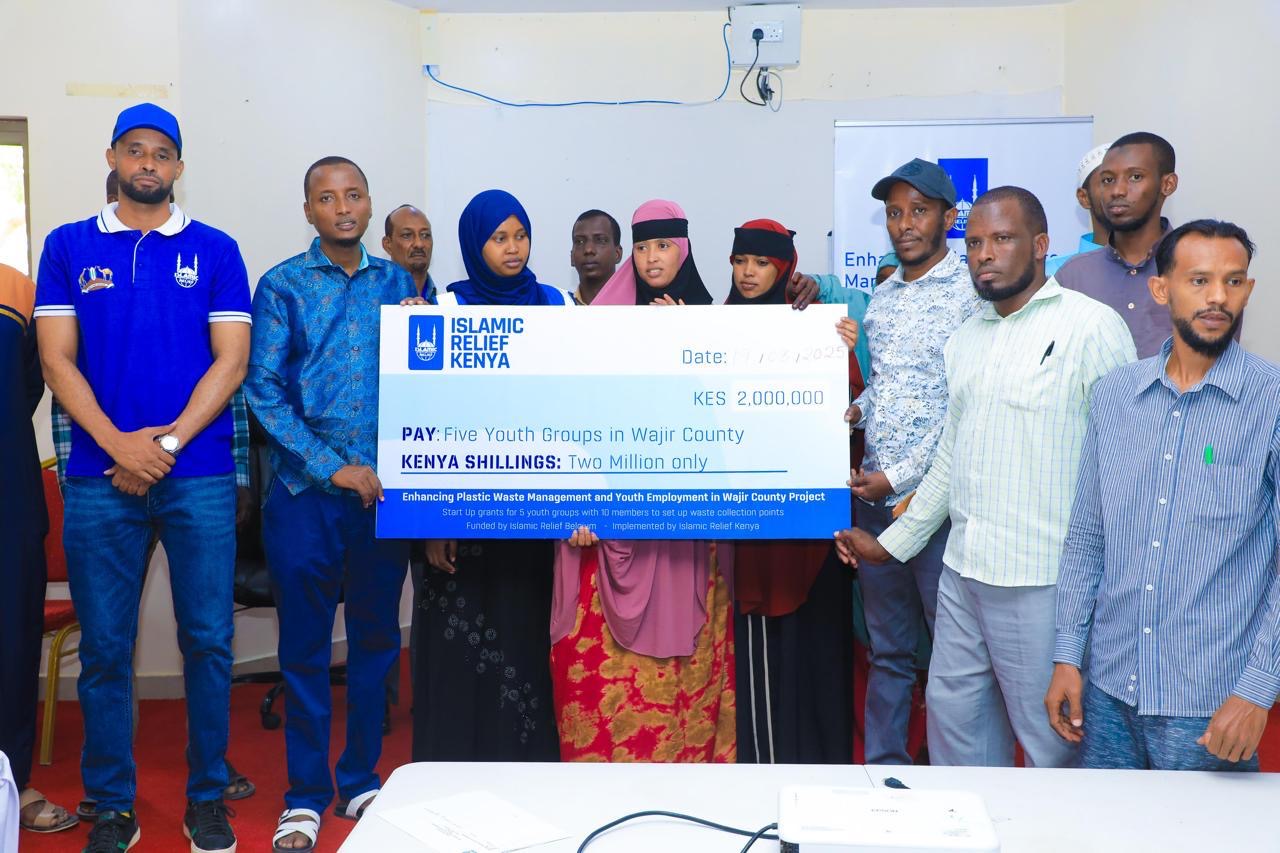
This is why the Islamic Relief initiative to support youth groups in turning plastic waste into employment is more than just a project. It is a lifeline, a vision of possibility. With Sh2 million seed money shared among youth groups, the plan is simple: collect plastic, clean the town, and create income. But in Wajir, nothing is ever just simple. Every good idea must fight against poverty, lack of infrastructure, and years of neglect.
For years, young people in Wajir have felt crippled by lack of jobs. Many spend their days chewing khat, others fall into drug abuse, and some even risk their lives through tahrib (illegal migration) in search of a better future abroad. When Islamic Relief hands them not only funds but also dignity through work, it begins to restore what many had lost: hope.
The challenge of plastic in Wajir is real. With no established recycling plant until recently, rubbish piles grew along the town’s edges. Goats, donkeys and marabou stork, desperate for food, nibbled at plastic bags, which later choked them. Children played around heaps of discarded bottles.
The Wajir County government has recently taken a major step by establishing a plastic recycling plant to handle the mounting crisis. This facility not only ensures that collected plastics can be transformed into useful products but also provides a structured market for youth-led waste collection groups. The combination of NGO support and government infrastructure gives hope that this initiative can move beyond short-term intervention into lasting change.
So when youth groups are funded to tackle waste, it is not just an economic intervention. It is environmental healing, it is protecting livestock, it is reclaiming the pride of Wajir. The youth, once seen as idle and hopeless, are being given the chance to lead by example.
But here lies the real question: will this project last, or will it end up as another short-lived NGO activity that shines for a season and fades? Wajir is littered not only with plastic but also with abandoned initiatives, boreholes that no longer pump water, youth centres that fell silent, cooperatives that collapsed after funding dried up. Sustainability must be the guiding principle.
If the county links with these youth groups, providing technical support, training at the recycling plant, and guidance on how to create a sustainable market for recycled products, then the project can live beyond the NGO funding cycle. Otherwise, once the Sh400,000 given to each group is spent, Wajir will sink back into the same old cycle of waste and joblessness.
There is also a cultural shift required. Too often, waste work is seen as dirty and undignified. Yet, dignity is not in the nature of the job, but in its purpose. “Shaqo kasta sharaf bay leedahay” — every job has honour. Parents, elders, and religious leaders must champion this project, reminding our youth that cleaning the environment is also an act of faith, since Islam teaches us that cleanliness is half of faith.
Moreover, schools can join in, making waste collection part of education. Imagine a generation that grows up sorting plastics, understanding recycling, and seeing the environment not as something to be consumed but as something to be cared for. That is how transformation happens, not only through projects, but through culture.
Above all, we must keep in mind the human side of this. The young woman in Township ward who now earns from collecting plastics will be able to pay her siblings’ school fees. The young man in Barwaqo who no longer dreams of dangerous migration because he sees a future in green jobs. These are not statistics; these are our sons and daughters.
Wajir has long been painted as a place of drought, dependency, and despair. But perhaps, through this simple project of turning waste into income, now reinforced by the county recycling plant , a new story can emerge: one of resilience, innovation, and pride. It means every community must find its own solutions.
In the end, this is about dignity. A town free of plastic waste, youth free of idleness, and families free of despair. Islamic Relief has opened the door, the county has built the plant, and it is up to Wajir , its leaders, its elders, and especially its youth, to walk through it.


